How Structured Analysis Tools Reduces Screenplay Errors?
Poetika Blog2. April 20245 Min. Lesezeit
A screenplay is not a short text. It is a 100 to 150 page document, often written over weeks, months, sometimes years. It carries characters, locations, time jumps, dialogue systems, and narrative continuity across dozens, sometimes hundreds of scenes.
And within that complexity, even experienced writers make small mistakes. Not dramatic story problems. Not structural failures. But simple, material errors that quietly weaken the clarity of the script.
For producers and script readers, these details matter more than writers often assume. Structure is usually the first layer they evaluate, but presentation comes immediately after. Even minor inconsistencies spelling errors, naming variations, or careless formatting can create a perception that the script has not been carefully handled. And once that perception forms, it becomes significantly harder for the project to move forward into serious consideration.
The hidden layer of screenplay writing: execution errors
When we think about screenwriting, we usually focus on story, character, or structure. But there is another layer that is often underestimated:execution consistency.
These are the small details that keep a script readable and professional:
A character name written differently across scenes
A supporting character appearing with inconsistent naming
Scene headings that don’t match established locations
Repeated dialogue fragments that were meant to be revised
Continuity errors between scenes
Misnumbered or duplicated scenes
Small spelling inconsistencies that accumulate over time
Individually, none of these errors break a screenplay.
But together, they affect how the script is perceived especially in professional reading environments where clarity is essential.
Why these errors happen?
Screenwriting is not a linear writing process. Most writers do not write from page 1 to 120 in a straight line.
They rewrite scenes out of order,
Revise character arcs mid-process,
Move sequences between acts,
Rename characters during development,
And restructure locations and timelines.
In that process, the script evolves constantly. And because the writer is deeply focused on story and emotion, not formatting consistency, small contradictions naturally appear. The issue is not carelessness. It is cognitive overload. When you are inside a story, you are not reading it like a document. You are living inside it.
Why manual proofreading is not enough
Traditionally, these problems are solved in two ways:
The writer reviews the script repeatedly
Or someone else reads it and gives feedback
Both approaches have limitations. Self-review is unreliable because familiarity creates blind spots. External readers help, but they are time limited, expensive, subjective in what they notice and not always available during revision cycles
For independent filmmakers and writers, this creates a bottleneck. Scripts often move forward with small inconsistencies simply because there is no efficient way to systematically detect them.
What structured analysis actually solves?
This is where structured analysis becomes important not for storytelling decisions, but for technical clarity. A structured system can quickly identify:
Character name inconsistencies across scenes,
Location mismatches in scene headings,
Repeated or duplicated scenes,
Formatting irregularities,
Timeline or sequence inconsistencies,
Textual repetition patterns,
Structural gaps created by missing or altered scenes.
These are not creative judgements. They are document level consistencies that affect readability and professional presentation. And the impact is practical. A cleaner script is easier to read, easier to evaluate, and easier to take seriously in professional contexts.
Why speed matters?
One of the biggest challenges in screenplay development is iteration speed. A writer may revise a script multiple times before submission to festivals, funding bodies, producers, development labs.
But each revision introduces the possibility of new inconsistencies. Without fast feedback loops, writers either slow down their revision process or move forward with unresolved errors. Both outcomes reduce efficiency. A structured system that can scan and highlight these issues in minutes changes this dynamic completely. It allows writers to focus on creative decisions, while the technical layer is continuously checked in the background.
The real value: clarity, not correction
The goal is not to “fix writing”. It is to ensure that the script on the page accurately reflects the story the writer intends to tell. Because even a strong screenplay can be misunderstood if names are inconsistent, scenes are misaligned, structure appears unclear due to formatting noise. Clarity is not cosmetic in screenwriting. It is functional. It directly affects how the work is read, evaluated, and ultimately received.
A shift in how scripts are prepared
Screenwriting has always combined creativity with precision. But the balance between the two is changing. Writers today are expected to deliver not only strong narratives, but also clean, consistent, professionally structured documents especially when submitting to competitive environments.
This is where structured analysis tools, such as Poetika, become part of the workflow. Not as creative replacements, but as technical safeguards that support clarity and consistency across the script. They remove friction from the writing process, allowing writers to spend more time on what actually matters: the story itself.
The timeless art of storytelling: A writer captures raw ideas on a vintage typewriter, setting the foundation for the screenplay that will eventually evolve into a cinematic narrative.
In the End, It’s the Details That Hold It Together
Most screenplay problems are not dramatic failures of imagination. They are small inconsistencies accumulated over time. And while they do not define the quality of a story, they do affect how that story is experienced on the page. The more complex a screenplay becomes, the more important it is to have systems that ensure its internal logic remains intact. Because in the end, writing a screenplay is not only about creating a story. It is also about maintaining it clearly, consistently, and without losing control of the details that hold it together.
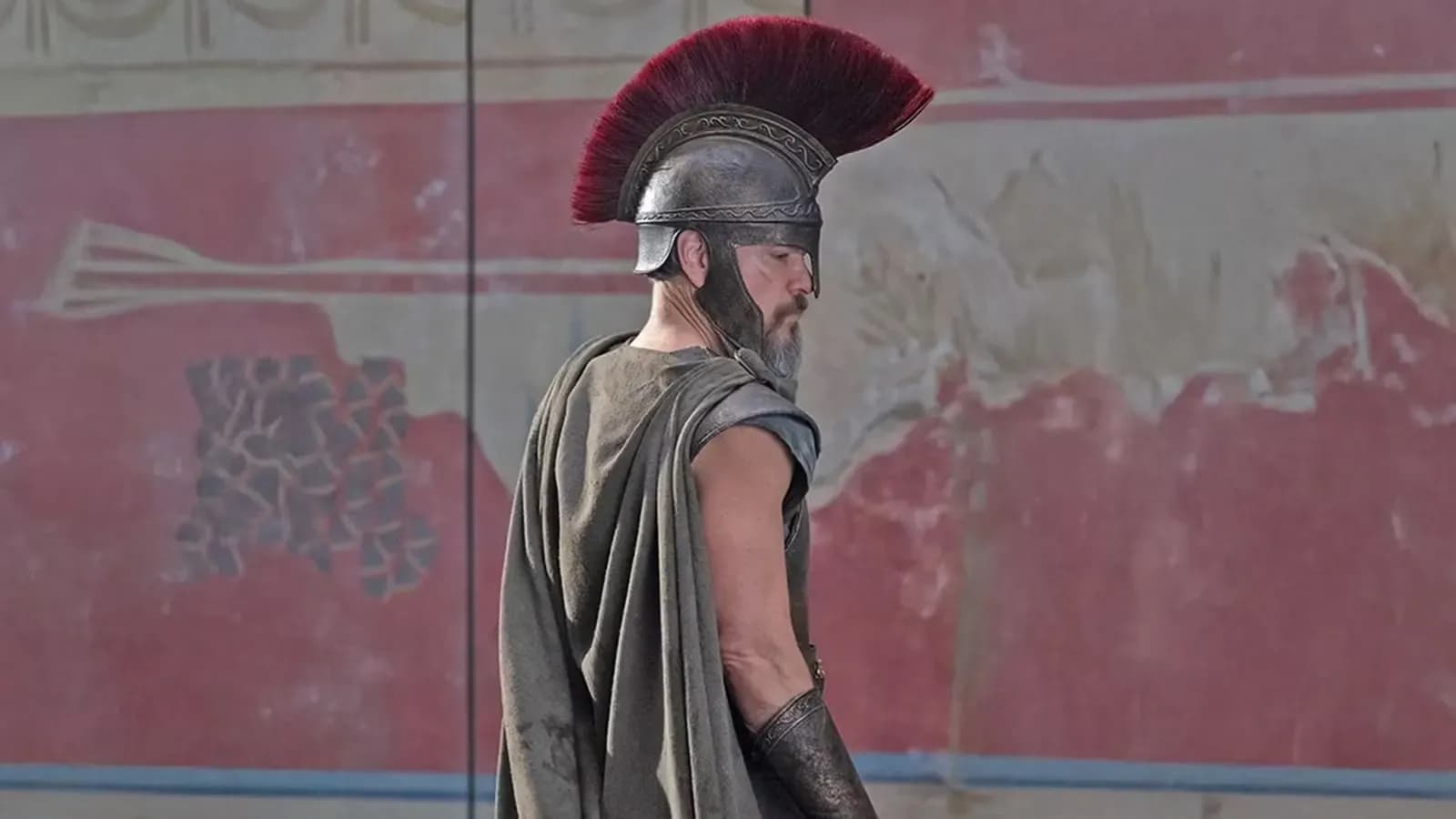
Christopher Nolan's The Odyssey may be his biggest production yet, but it also feels like the inevitable destination of a career built around memory, time, and the impossible journey home.
Every few years, a beloved novel gets adapted into a film. The announcement generates excitement; finally, that book is becoming a movie. And then, more often than not, something goes wrong. The film arrives and feels thin, rushed, or strangely hollow. The characters who felt so vivid on the page seem flat on screen. The story is technically all there, but whatever made the book extraordinary has somehow failed to survive the journey.
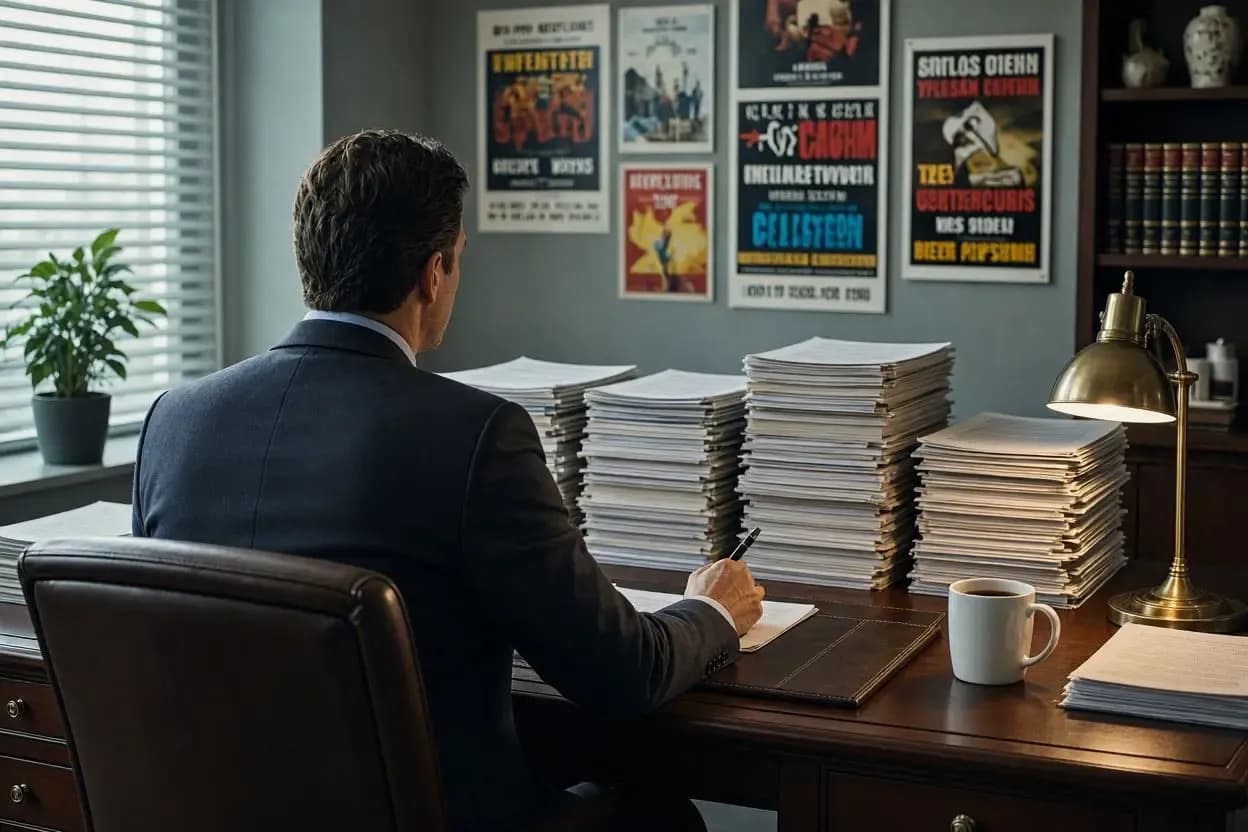
It is Monday morning. Over the weekend, twelve new scripts arrived. Nine more came in the week before. Somewhere in the inbox are scripts that have been waiting since last month, along with a few that have been there even longer. In two hours, the development meeting starts, and there is still a stack of material that nobody has had time to read.