Ask a room full of beginning writers to define a protagonist, and most of them will say: the hero. Ask them to define an antagonist, and they will say: the villain. The bad guy. The one in the dark cape.
It is an understandable answer. It is also, in most cases, the wrong one.
Protagonist and antagonist are not moral categories. They are structural roles descriptions of what a character does in a story, not what kind of person they are. Understanding this distinction is one of the most important shifts a young writer can make. It changes how you build characters, how you construct conflict, and ultimately how honest your stories become.
What Is a Protagonist?
The protagonist is the character whose journey drives the story forward. They are the one the audience follows the consciousness through which we experience the events of the narrative, and the person whose goal gives the story its direction.
Three qualities define a protagonist. First, they have a clear want a specific goal they are actively pursuing. Second, they take action to pursue it; they do not simply have things happen to them. Third, the outcome of the story turns on whether they succeed or fail. Remove the protagonist, and the story ceases to exist.
Notice what is not on that list: goodness, likability, or moral integrity. A protagonist does not need to be a good person. They need to be a compelling one someone whose pursuit is interesting enough that we cannot look away, even when we do not admire them.
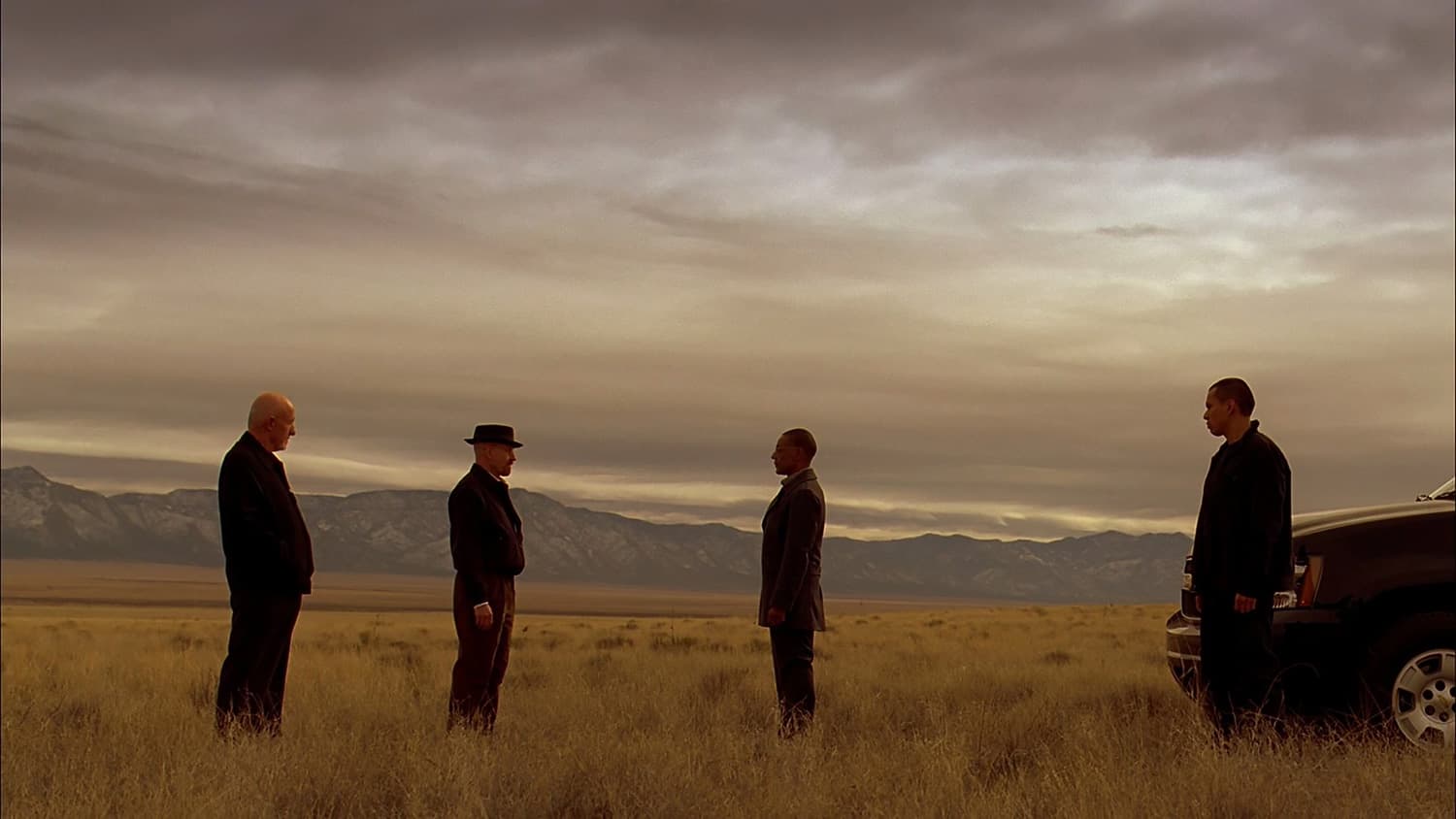
Some of the most powerful protagonists in modern storytelling are deeply flawed, morally compromised, or outright reprehensible. Walter White in Breaking Bad is a man who chooses pride over family, vanity over decency, and violence over every available alternative and yet the show spent five seasons asking us to follow him, to understand him, to feel the pull of his choices even as we recognized their ugliness. Amy Dunne in Gone Girl is a manipulator and, eventually, a murderer. Humbert Humbert in Lolita is a predator who destroys a child's life while narrating it in gorgeous prose. None of these characters are heroes. All of them are protagonists.
The test is simple: whose goal is this story about? That character is your protagonist.
What Is an Antagonist?
The antagonist is the force that stands between the protagonist and their goal. It is the source of resistance, complication, and conflict the pressure that makes the story difficult and, therefore, worth telling.
The word "force" is deliberate. The antagonist does not have to be a person. It can be, and often is, but the category is broader than a single villainous character. Consider the four main types:
A person. The most familiar form a character who actively opposes the protagonist, with their own goals, their own logic, and their own claim on the outcome of the story. Nurse Ratched in One Flew Over the Cuckoo's Nest. Iago in Othello. Anton Chigurh in No Country for Old Men.
A system or institution. An organization, a society, or a set of rules that prevents the protagonist from getting what they want. The totalitarian state in 1984. The class system in virtually every Jane Austen novel. The legal and corporate machinery in Erin Brockovich.
Nature or circumstance. The ocean in The Old Man and the Sea. The mountain in Touching the Void. The virus in countless medical dramas. An antagonist of this kind cannot be reasoned with or understood — it simply is, and the protagonist must contend with it.
The protagonist themselves. Internal conflict — the character's own fears, self-deceptions, or destructive patterns — can be the most powerful antagonist of all. The alcoholism in Leaving Las Vegas. The grief that paralyzes the father in Ordinary People. The ambition that corrodes the soul of Macbeth.
The test, again, is simple: what is standing between the protagonist and their goal? Whatever it is whoever it is that is your antagonist.
The Most Common Mistake
The mistake most beginning writers make is treating protagonist and antagonist as synonyms for hero and villain. This leads to flat characters, predictable conflict, and stories that feel like they are telling the audience what to think rather than asking them to feel something.
Here is the distinction, stated as plainly as possible:
Hero and villain are moral judgments. Protagonist and antagonist are structural roles.
A character can be a protagonist and a villain simultaneously. Walter White is the clearest modern example he is the character whose journey drives the story, and he is also the most morally destructive force in his own narrative. By the final season, his brother-in-law Hank has become, in functional terms, the antagonist the force standing between Walter and his goal while being the closest thing the story has to a moral hero.
This is not a clever trick or a postmodern subversion. It is simply what happens when a writer stops assigning moral labels to structural roles and starts asking more honest questions about what their characters actually want, and what they are willing to do to get it.
Stories built on the hero-versus-villain model tend to produce one kind of conflict: the good side tries to defeat the bad side. Stories built on the protagonist-versus-antagonist model can produce any kind of conflict because the roles carry no moral weight. The protagonist might be wrong. The antagonist might be right. Both of them might be partially right and partially terrible. This is closer to how actual human conflict works, and it is why the stories that endure are rarely simple morality plays.
What Makes an Antagonist Great?
A weak antagonist produces a weak story. If the force opposing your protagonist is easily overcome, poorly motivated, or present only to be defeated, your story has no real tension and tension is what keeps a reader or viewer engaged.
A great antagonist has four qualities:
Their own goal. The antagonist should want something for reasons that make sense from their own perspective. Not "I want to stop the protagonist" that is a reactive function, not a character. Nurse Ratched does not think of herself as a villain; she believes she is maintaining order in an institution that requires it. Iago wants what he believes he deserves and has been denied. Anton Chigurh operates according to a philosophy of fate and chance that is internally consistent, however monstrous its consequences. Each of these antagonists has a logic.
Understandable motivation. The audience does not need to agree with the antagonist. They need to understand them. The moment an antagonist becomes comprehensible — when we can follow the chain of reasoning that leads them to their actions, even as we reject those actions — they become genuinely frightening, because they are no longer alien. They are recognizable.
The ability to force growth. The antagonist is the pressure that shapes the protagonist. Without genuine resistance, the protagonist has no reason to change, to learn, or to reveal what they are truly made of. The antagonist does not just obstruct the story — they reveal it. They are the instrument by which we discover who the protagonist really is.
Proportional strength. The strength of a story is directly proportional to the strength of its antagonist. A brilliant, motivated, well-resourced antagonist makes the protagonist's eventual victory (or defeat) meaningful. An antagonist who is easily overcome makes the story feel unearned. When you are building your antagonist, the instinct to give your protagonist an easier path is almost always the wrong instinct. Make it harder. The story will be better for it.
Want vs. Need - The Heart of Both Characters
Every strong protagonist operates on two levels simultaneously: what they want, and what they need.
The want is the conscious goal the thing the protagonist is actively chasing throughout the story. Catch the killer. Win back the person they love. Survive the disaster. It is the engine of the plot.
The need is deeper, and often hidden even from the protagonist themselves. It is the truth about themselves or their situation that the story will force them to confront. The detective who wants to catch the killer may need to confront the violence within themselves. The character who wants to win back their partner may need to understand why they keep destroying the relationships that matter to them.
The gap between want and need is where character development lives. A protagonist who achieves their want without confronting their need has completed a plot but not a story. A protagonist who confronts their need who is transformed by the events of the narrative, for better or worse has taken a genuine arc.
Now consider the antagonist. The best antagonists do not merely block the protagonist's want. They embody the protagonist's need. They force the confrontation the protagonist has been avoiding. The antagonist who pursues the protagonist so relentlessly that escape is no longer possible is the antagonist who makes growth inevitable because the protagonist is finally out of room to run.
A practical exercise: write your protagonist's want in one sentence. Then write their need in another. The gap between those two sentences is your story. Now ask what kind of antagonist would make it impossible for your protagonist to close that gap without changing.
Write Both Characters as if They're Right
The most enduring stories are not ones where the right side wins. They are ones where both sides feel real — where the protagonist and the antagonist each have a legitimate claim on the audience's understanding, even if not on their sympathy.
Your job as a writer is not to decide, in advance, who is morally correct. Your job is to construct a collision between two forces each with its own logic, its own wants, its own reasons and then follow that collision to its honest conclusion.
Before your next draft, try this: write one paragraph from your antagonist's point of view. Not a caricature of villainy, but a genuine, first-person account of their situation what they want, why they want it, and why they believe their actions are justified. It does not need to appear in the story. It is for you, the writer.
The moment you understand why your antagonist believes they are the hero of the story, your writing will change permanently. Because at that point, you are no longer writing about good versus evil. You are writing about people which is the only thing a story has ever really been about.