The greenlight is scheduled for next month. A major Hollywood studio has already soft-committed $150 million to a highly anticipated sci-fi epic. The locations are scouted, the director is hired, and an A-list movie star is attached to the lead role. There is only one glaring, terrifying problem: the script is dead on the page.
After four rounds of rewrites by three different screenwriters, the narrative has become a bloated, unrecognizable monster. The protagonist’s motivations are muddy, the second act drags like wet cement, and the studio executives are panicking. If they delay production, they lose the star. If they shoot the current draft, they face a critical and financial disaster.
The studio doesn't need another standard rewrite. They need an emergency surgical intervention.
A courier discreetly delivers a secure digital file to a quiet home in the Hollywood Hills. Within forty-eight hours, a writer whose name will never appear on the movie poster is sitting in a closed-door meeting with the director. Armed with a red pen and an elite understanding of dramatic structure, this invisible architect will spend the next three weeks fundamentally reshaping the story.
Welcome to the hidden, high-stakes world of the script doctor.
The Anatomy of a Sick Script: Why Development Fails
To understand what a script doctor does, one must first understand how a screenplay gets "sick" in the first place. In the contemporary studio system, a script rarely goes from a writer’s laptop straight to the camera. It passes through a brutal gauntlet known as Development Hell.
Along the way, the original creative vision is subjected to an endless barrage of "Studio Notes" from executives, producers, and marketing departments. “Can we make the tone lighter?” “Can we add a romantic subplot for demographic appeal?” “Can we change the setting from Chicago to London to secure international tax credits?”
As the original writer tries to satisfy these conflicting demands, the script undergoes multiple drafts. Like a game of telephone, the core theme of the story evaporates. The characters begin to speak in exposition rather than emotion. The narrative loses its spine.
Furthermore, screenwriters often suffer from "writer blindness" they have spent so many years with their characters that they can no longer see the structural flaws staring them in the face. This is where the script doctor enters the diagnostic room. They are hired precisely because they have no emotional attachment to the material. They look at the 120 pages not as a piece of art, but as a machine that needs to work.
What Does a Script Doctor Fix?
A script doctor's work is methodical, efficient, and deeply technical. Depending on the ailment of the manuscript, a doctor will perform one of three primary surgical procedures:
1. The Dialogue Punch-Up
Sometimes, the plot of a film is perfectly functional, but the dialogue feels wooden, dated, or monotonous. Comedies frequently utilize script doctors for a "comedy pass"—hiring a brilliant humorist to go through the script page by page just to inject sharper jokes, punchlines, and witty banter. In dramas, a punch-up ensures that every character speaks with a distinct, memorable voice rather than sounding like the screenwriter talking to themselves.
2. The Structural Overhaul
The most common and difficult ailment occurs in the infamous Second Act. Many scripts have a thrilling opening (Act I) and a clear climax (Act III), but they sag horribly in the middle. A script doctor will locate the Midpoint—the central turning point of the film—and rebuild the stakes. They prune subplots that lead nowhere, accelerate the pacing, and ensure that every scene logically and dramatically forces the next scene to happen.
3. Sharpening Character Arcs
If an audience doesn't care about the protagonist, the grandest visual effects in the world cannot save the movie. Script doctors are frequently brought in to clarify a character’s want versus their need. They strengthen the antagonist to create formidable conflict, and they give the protagonist distinct agency, ensuring that the hero actively drives the plot forward rather than merely reacting to events around them.
Hollywood’s Legendary Ghosts: Master Classes in Deletion
Because of the anonymous nature of the trade, the true history of script doctoring is whispered in studio hallways rather than celebrated at award ceremonies. However, a few legendary "ghosts" have left an undeniable mark on cinema history.
Carrie Fisher: The Queen of the Red Pen
While the world revered her as Princess Leia, Hollywood knew Carrie Fisher as one of its sharpest, most sought-after script doctors throughout the 1990s. Fisher possessed a unique genius for fixing deeply flawed female characters who had been written as one-dimensional tropes by male writers.
When Steven Spielberg’s Hook (1991) was struggling, Fisher was brought in specifically to rewrite the dialogue for Tinkerbell (played by Julia Roberts), giving the character a fierce, melancholic wit. She went on to polish the scripts for Sister Act (1992), The Wedding Singer (1998), and was even quietly tasked by George Lucas to inject much-needed emotional realism into the dialogue of the Star Wars prequels.
"I earn a lot more money fixing scripts than I ever did writing them or acting in them. It's a very lucrative form of anonymity." Carrie Fisher
Quentin Tarantino: The Pop-Culture Transfusion
In 1995, Tony Scott was directing the military thriller Crimson Tide, starring Denzel Washington and Gene Hackman. The tension inside the nuclear submarine was palpable, but the script lacked a certain contemporary, youthful energy. Enter an uncredited Quentin Tarantino.
Tarantino didn't alter the plot; instead, he performed a brilliant dialogue punch-up. He wrote the now-iconic, pop-culture-infused argument between the submarine crew members regarding the artistic merits of the comic book character Silver Surfer. That single scene gave the military characters a grounded, relatable texture that elevated the entire film’s realism.
Robert Towne: A Midnight Saving Grace
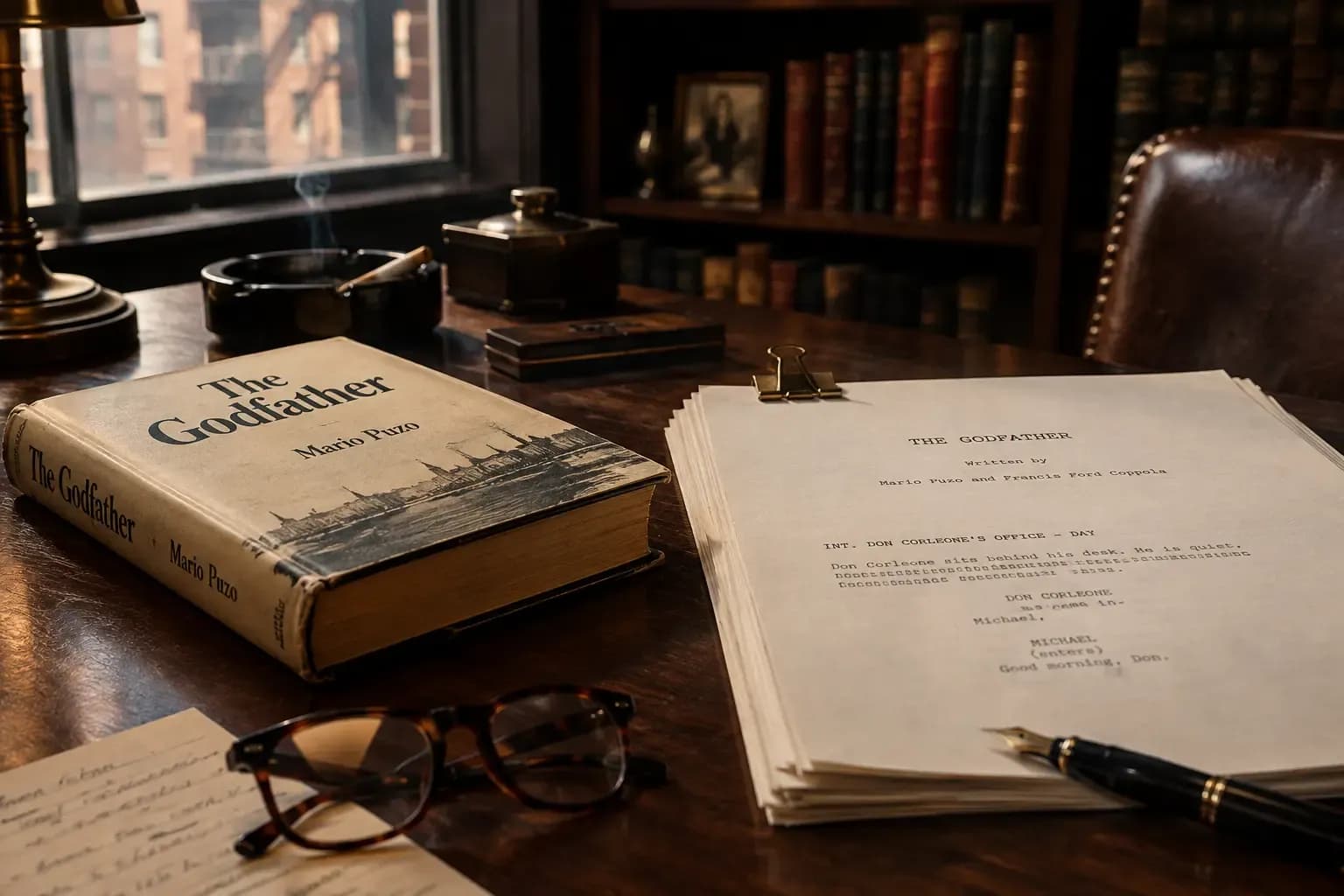
Perhaps the most famous single-scene intervention occurred during the production of The Godfather (1972). Director Francis Ford Coppola felt that the upcoming transition of power from the aging Don Vito Corleone (Marlon Brando) to his son Michael (Al Pacino) lacked emotional weight.
Coppola called Robert Towne, the legendary screenwriter of Chinatown. In a single, intense overnight session, Towne wrote the beautiful, heartbreaking garden scene where a father expresses his regret that his son had to enter the family's violent business. Towne received no credit on screen, but when Coppola accepted his Academy Award for Best Screenplay, he publicly thanked Towne from the stage for writing the film’s finest scene.
The Conflict: Ego, Extravagant Wealth, and the WGA
Why do these brilliant writers agree to hide in the shadows? The answer lies in a complex mix of guild politics and massive financial compensation.
The Writers Guild of America (WGA) enforces incredibly strict rules regarding screen credits. For a writer to receive a screenplay credit on a film based on original material, they must be responsible for at least 33% to 50% of the final shooting script. Because script doctors are brought in during the final stages of development to patch holes, sharpen lines, and adjust pacing, their contributions—though vital—rarely meet this mathematical threshold.
Stubs and studios also prefer anonymity. If a studio publicly admits that a script required four different emergency doctors to fix it, it signals to the industry and film critics that the project is troubled, potentially harming its box-office prospects.
To compensate for the loss of ego and credit, studios pay script doctors astronomical sums of money. The industry’s elite doctors can command anywhere from $100,000 to $300,000 per week. For a highly skilled writer, a two-week polish can yield a half-million dollars without the exhausting burden of attending press junkets or dealing with public scrutiny.
Yet, this process introduces a poignant psychological tragedy to the craft. The original screenwriter must watch from the sidelines as their creative "child" is handed over to a highly paid stranger for cosmetic and structural surgery. It is a transactional, cold reality that reminds everyone involved that Hollywood is, above all else, an industry of commerce.
Script Doctors Don't Only Work in Hollywood
Script doctoring is often associated with blockbuster filmmaking, but the practice exists far beyond the studio system.
Independent productions rarely fly in a celebrity writer for a two-week rewrite. Yet almost every serious film passes through other hands.
At Sundance Labs, TorinoFilmLab, Berlinale Talents, and countless public funding programs across Europe, writers encounter dramaturgs, consultants, producers, and trusted collaborators whose role is remarkably similar.
They ask difficult questions.
Why this scene?
Why now?
What does the protagonist really want?
Why does the second act lose momentum?
The names change. The work does not.
Script doctoring is not a Hollywood luxury.
It is simply another name for inviting another intelligence into the room.
Can Writers Be Their Own Script Doctors?
One reason script doctors exist is proximity. Writers spend years inside a screenplay. Eventually, familiarity becomes blindness. Problems that would be obvious to a first reader become invisible to the writer who created them.
This is why even experienced screenwriters seek outside eyes. The challenge, of course, is that not every writer has access to Robert Towne or Carrie Fisher. Independent filmmakers often rely on trusted friends, dramaturgs, coverage services, workshops, or increasingly, analytical tools that can provide a degree of distance.
Because script doctoring is not magic. It is perspective.
How Poetika Works?
Explore a complete sample analysis and understand the feedback format.
Conclusion: Honoring the Invisible Architects
The next time you are moved to tears by a profound cinematic line, or find yourself on the edge of your seat during a perfectly paced thriller, remember that the words you are hearing might not belong to the name listed under "Written By."
Behind the curtain of every great blockbuster stands a ghost a literary surgeon who stepped into a dark room, diagnosed a failing narrative, and breathed life back into its lungs. They trade public glory for financial fortune, content to let others take the applause as long as the story works.