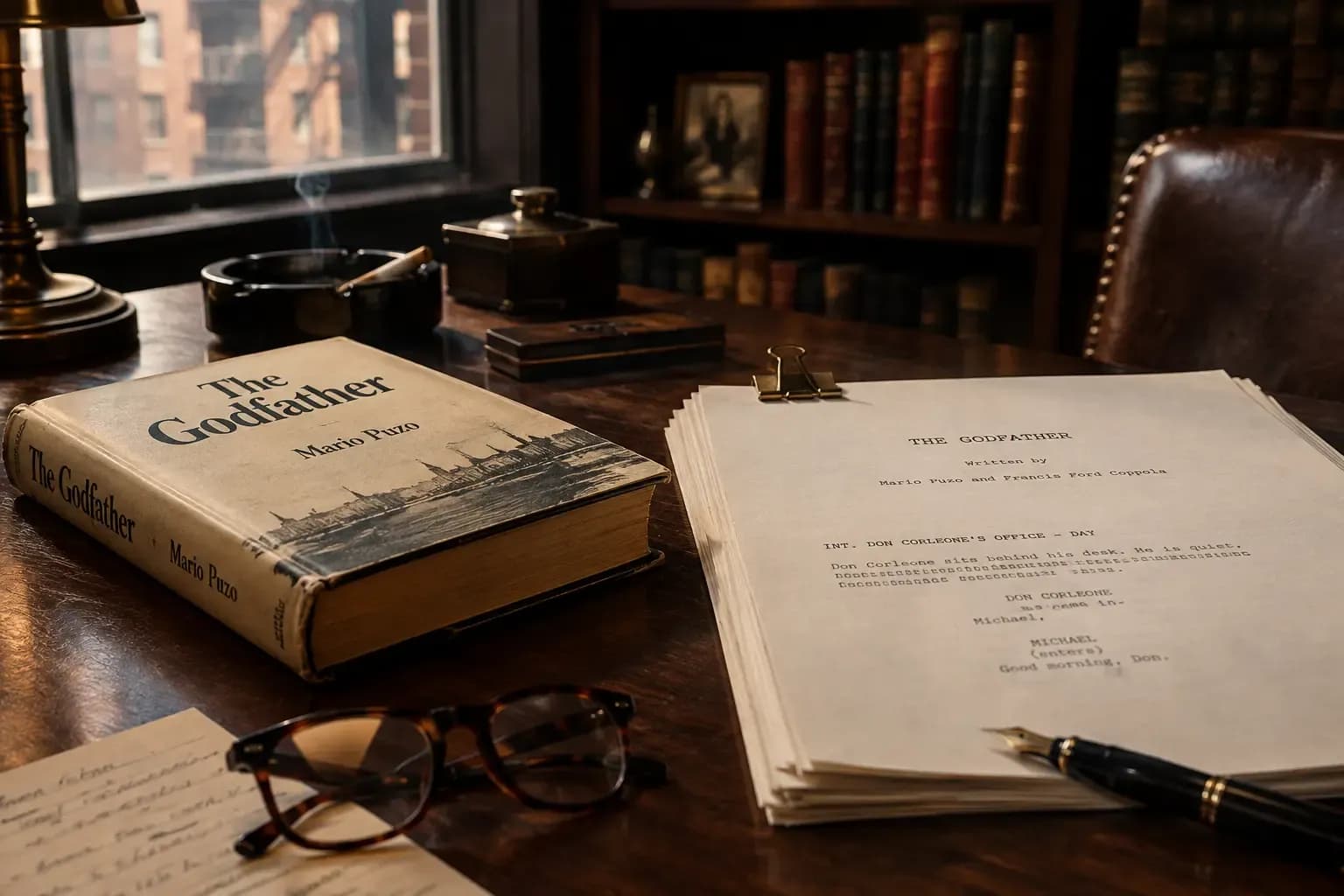
Font Selection in Screenwriting: Tradition or Technical Necessity?
Why Hollywood still types in a 1950s typeface and why changing it would cost more than you think?
Senaryo yazımı, film yapımı, dramatik hikaye yapısı ve senaryo analizine dair rehberler.

Why Hollywood still types in a 1950s typeface and why changing it would cost more than you think?

Most screenwriting books promise the same thing: a better screenplay. They offer structures, principles, checklists, and story models designed to help writers solve narrative problems. What they rarely explain is that each book is built on a different idea of what a screenplay actually is.

Great films are often remembered through their protagonists. We speak of Michael Corleone rather than the structure of The Godfather, Travis Bickle rather than the plot of Taxi Driver, Charles Foster Kane rather than the investigative framework of Citizen Kane. This is not because character is more important than story, but because story is often experienced through character.

There is no shortage of books about screenwriting. They will teach you structure, character, dialogue, and conflict. They will explain the three-act model, the midpoint, the dark night of the soul. What they cannot teach you is what it actually feels like to be a writer; the obsession, the paralysis, the strange relationship between the person who writes and the work that gets written.

There is a document that most filmmakers underestimate, rush through, or write as an afterthought. It is not the script. It is not the pitch deck. It is the synopsis; the one or two pages that, in most cases, determine whether anyone reads the script at all.

There is a moment every screenwriter knows. The script is almost finished. The story has built, the characters have struggled, the themes have accumulated. And then comes the final scene the moment that will determine how every scene before it is remembered.

The film industry has survived every technological disruption thrown at it. Sound. Color. Digital cameras. Streaming. Each time, the industry adapted, evolved, and found a way to absorb the new without abandoning what made it essential in the first place. Artificial intelligence may be different. Not because it threatens the technology of filmmaking — but because it threatens something more fundamental: the authorship at the center of it. For the first time, the question of who wrote a script is no longer a simple one. And for producers, development executives, and script readers, that question is becoming one of the most consequential they will face.

There is a familiar feeling every viewer recognizes, even if they do not have a name for it. A film is nearing its final act. The characters are trapped. The story has tightened itself into a corner. The outcome seems inevitable. And then suddenly something happens. An event, a revelation, a character, or a force arrives from outside the logic of the narrative and resolves what the story itself has not resolved.
Explore a complete sample analysis and understand the feedback format.