The Last Frame: Why Endings Are the Hardest Thing to Write
Poetika Blog30 Nisan 202410 dk okuma
There is a moment every screenwriter knows. The script is almost finished. The story has built, the characters have struggled, the themes have accumulated. And then comes the final scene the moment that will determine how every scene before it is remembered.
It is also, almost universally, the hardest scene to write.
Not because writers run out of ideas. But because an ending is not just a conclusion. It is a reckoning. Everything the film has promised; emotionally, thematically, narratively must be addressed in the final frames. The audience has invested an hour and a half or more in these characters and this world. What the ending gives them, or withholds from them, shapes the entire experience retroactively.
This is why great endings are so rare, and why so many otherwise strong films falter at the finish line. The mechanics of ending a story well are distinct from the mechanics of telling one and they are worth understanding carefully.
The Contract With the Audience
Before examining how endings work, it is useful to understand what an ending is expected to do.
Joseph Campbell's formulation of the Hero's Journey; the monomyth that underlies so much of Western storytelling describes a fundamental contract between narrative and audience. A protagonist is called to action, faces escalating obstacles, reaches a point of maximum crisis, and either triumphs or falls. The audience follows this arc not merely for entertainment but for catharsis: the emotional release that comes from witnessing a complete human experience, however fictional.
Aristotle identified catharsis as the purpose of tragedy the purging of pity and fear through the structured experience of watching someone else suffer and resolve. Classical Hollywood cinema inherited this framework and industrialized it. The three-act structure, the inciting incident, the midpoint, the dark night of the soul these are all mechanisms designed to deliver catharsis reliably, at scale, to mass audiences.
The ending is where the catharsis either arrives or fails to arrive. And the way it arrives or the way it is deliberately withheld defines what kind of film you are making, and what kind of experience you are offering.
Two words that can make or break a two-hour script. If you're struggling with how to end a story, here is a look at different types of film endings and why writing a movie ending is easily the most brutal part of screenwriting.
Three Theories of the Ending
There is no single correct way to end a film. But there are distinct theoretical frameworks that illuminate the different choices available and the different effects they produce.
1. The Aristotelian Model: Closure as Catharsis
The classical model, derived from Aristotle and refined through centuries of narrative tradition, holds that a satisfying ending must resolve every significant tension the story has introduced. Characters must reach a definitive state transformed, destroyed, or renewed and the audience must be left with no meaningful questions unresolved.
Michael Hauge's structural analysis of this model identifies three essential phases of the final act: the major setback, in which all hope appears lost; the final push, in which the protagonist draws on their deepest resource to make one last attempt; and the aftermath, which shows the world as it now is, transformed by the events of the story.
The Shawshank Redemption is perhaps the purest contemporary example of this model executed at the highest level. Every element of the film Andy's patience, Red's cynicism, the corrupted institution of Attica, the symbolic weight of hope itself converges in a final sequence that resolves every thematic and emotional thread with absolute precision. The crawl through the sewer pipe, the outstretched arms in the rain, the reunion on the beach: each image completes something the film began.
What makes this model demanding is not its structure which is learnable but its internal logic. A classical ending must be inevitable in retrospect. The audience should feel, when the credits roll, that the story could not have ended any other way. Achieving that sense of necessity requires that every earlier scene be in conversation with the finale, consciously or not.
2. Todorov's Equilibrium: The World That Cannot Return
The structuralist theorist Tzvetan Todorov offered a model that complicates the classical framework in a productive way. For Todorov, every narrative begins in a state of equilibrium a world in which things are as they are. That equilibrium is disrupted; the story is the process of attempting to restore it; and the ending establishes not the original equilibrium but a new one. The world after the story is not the world before it. It cannot be.
This model is particularly useful for understanding endings that feel satisfying without being triumphant films in which the protagonist succeeds, or survives, but arrives somewhere irrevocably different from where they began.
The Dark Knight offers a precise illustration. Bruce Wayne's stated goal to create conditions in which Gotham no longer needs Batman appears to be within reach as the film builds toward its conclusion. By the final scene, the city has been saved from the Joker's chaos and Harvey Dent's transformation into Two-Face has been concealed. The equilibrium is nominally restored. But the cost has been total: Batman has become a fugitive, the truth has been buried, and the moral framework on which Wayne built his identity has been permanently compromised. The new equilibrium is one of necessary dishonesty. The world has been saved; the man who saved it has been consumed by the saving.
Todorov's framework helps writers understand that an ending does not need to answer the question "did the protagonist succeed?" in order to be complete. It needs to answer the question "what world exists now that did not exist before?" That is a different question, and a more interesting one.
3. Brechtian Theory: The Ending as Provocation
The most radical theoretical model for the film ending comes not from narrative theory but from theater specifically from Bertolt Brecht's concept of the Verfremdungseffekt, or estrangement effect. Brecht believed that conventional narrative structure with its cathartic resolution, its emotional immersion, its invitation to identify with characters functioned as a kind of sedative. By delivering emotional satisfaction, it discouraged critical thought. The audience left the theater feeling resolved, when they should have left feeling disturbed.
Brecht's solution was to systematically deny catharsis to construct narratives that refused to resolve, to remind audiences that they were watching a constructed fiction, and to replace emotional release with political or philosophical discomfort. The ending, in this model, is not a resolution. It is an accusation.
Bong Joon-ho's Parasite operates within a recognizably commercial genre framework thriller, dark comedy, social satire but its ending is thoroughly Brechtian in its effect. The Kim family's scheme has failed catastrophically; Ki-woo has survived but is broken; his father has retreated into the Parks' basement, unreachable. The film concludes with Ki-woo imagining a future in which he earns enough money to buy the house and free his father an image the film itself immediately reveals to be fantasy. The audience is left not with catharsis but with the cold recognition that the system the film has been anatomizing does not allow for the ending Ki-woo imagines. The comfort of resolution is explicitly withdrawn. What remains is the question: what are you going to do about it?
What Writers Get Wrong
The most common failure in ending a screenplay is not structural. It is motivational. As the screenwriting teacher Gordy Hoffman has observed, the worst endings are those in which a character does something the rest of the film has established they would never do not because they have changed, but because the writer needed the plot to move.
An ending that violates character is an ending that retroactively undermines everything the film has built. The audience's investment in a character is an investment in their coherence their predictability, their recognizable humanity. When that coherence breaks, not in a dramatically earned way but in a convenient one, the audience feels cheated. The catharsis fails not because the ending is sad or ambiguous, but because it is dishonest.
The second most common failure is what might be called the false summit an ending that resolves the external plot while leaving the internal conflict untouched. Tyler Mowery's analysis of what he calls the three levels of stakes external, relational, and philosophical is useful here. A story that resolves only its external stakes has answered the least interesting of its own questions. The audience may feel that something has been concluded, but not that anything has been understood.
Finding Your Ending
The theoretical frameworks outlined above are not prescriptions. They are lenses different ways of asking the same fundamental question: what does this particular story require?
A classical Aristotelian ending is not inherently superior to a Brechtian one. The question is whether the ending is right for the specific emotional and thematic architecture of the specific film. No Country for Old Men would be destroyed by a cathartic resolution. The Shawshank Redemption would be destroyed by one withheld. The endings these films have are the only endings they could have because they emerge from the films' internal logic, not from an external formula.
This is where the act of analysis becomes essential. A writer who understands the structure of their own script what it has promised, where its tensions lie, what questions it has raised is in a far better position to construct an ending that answers those questions honestly than a writer who is feeling their way forward without that understanding.
Poetika approaches this through structural analysis of the script as a whole mapping the dramaturgical arc, identifying where tensions are established and where they remain unresolved, and offering specific notes on the final act. More usefully, it surfaces alternative possibilities: other ways the story's threads might be drawn together, other emotional registers the ending might inhabit. The goal is not to prescribe an ending but to expand the writer's sense of what is available to them to replace the anxious search for the right answer with a more productive understanding of the full range of options.
The Last Frame
The final image of a film carries a disproportionate weight. It is the last thing the audience sees before the lights come up, and it will be the image that persists the one they carry with them when they try to describe the film to someone who hasn't seen it.
Andy Dufresne on the beach. Michael Corleone as the door closes. Sheriff Bell describing a dream he cannot interpret. Ki-woo writing a letter he cannot send.
Each of these images completes something. Each of them is the inevitable destination of a journey that, in retrospect, could not have ended anywhere else. That sense of inevitability of an ending that feels discovered rather than constructed is the goal every screenwriter is working toward.
It is also what makes the final frame the hardest thing to write. Not because it requires invention, but because it requires honesty: the courage to follow the logic of the story wherever it leads, even when especially when that destination is not the one the writer originally imagined.
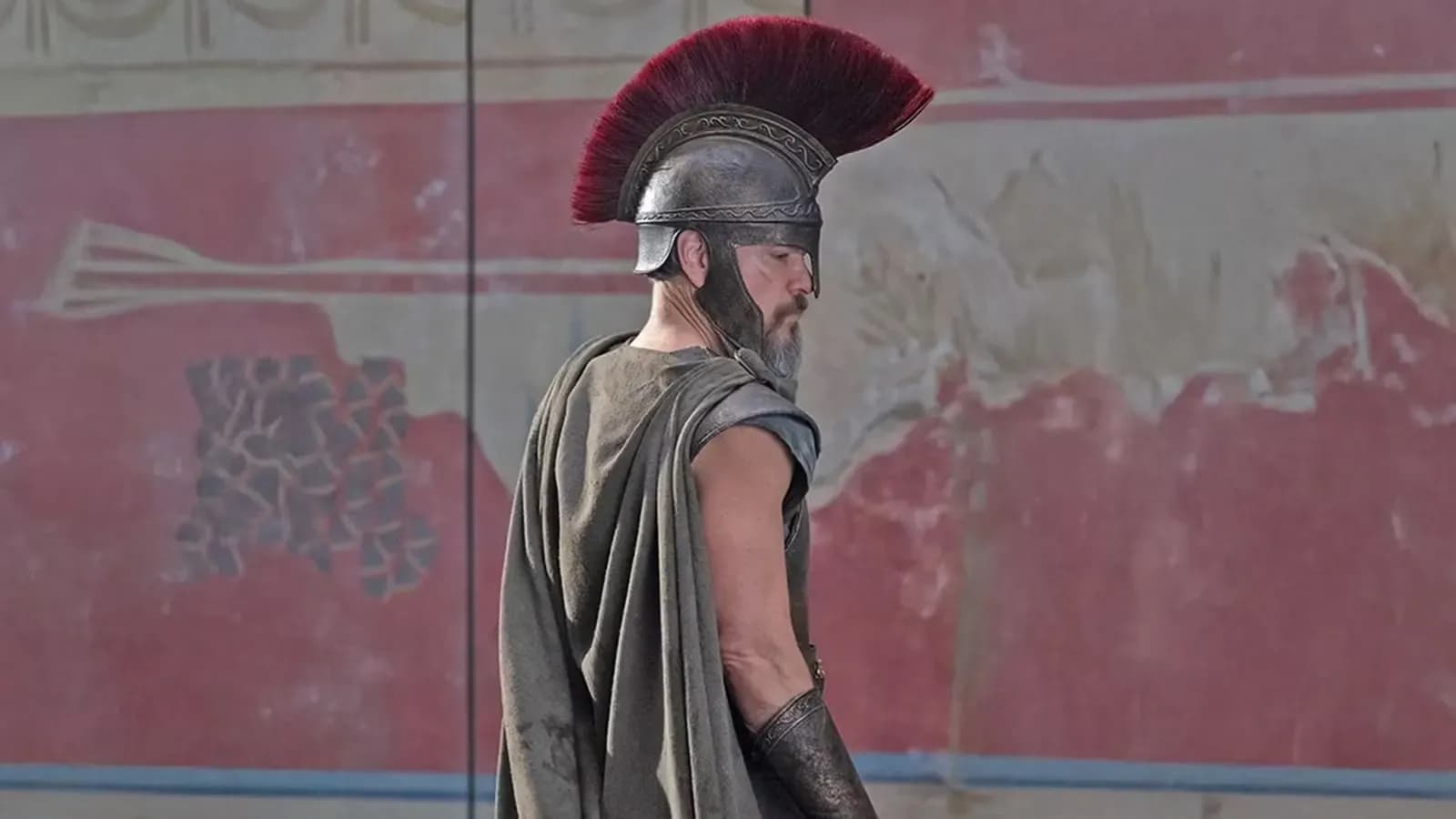
Christopher Nolan's The Odyssey may be his biggest production yet, but it also feels like the inevitable destination of a career built around memory, time, and the impossible journey home.
Every few years, a beloved novel gets adapted into a film. The announcement generates excitement; finally, that book is becoming a movie. And then, more often than not, something goes wrong. The film arrives and feels thin, rushed, or strangely hollow. The characters who felt so vivid on the page seem flat on screen. The story is technically all there, but whatever made the book extraordinary has somehow failed to survive the journey.
It is Monday morning. Over the weekend, twelve new scripts arrived. Nine more came in the week before. Somewhere in the inbox are scripts that have been waiting since last month, along with a few that have been there even longer. In two hours, the development meeting starts, and there is still a stack of material that nobody has had time to read.