Before They Read Your Script, They Read Your Synopsis
Poetika BlogNovember 11, 20257 min read
There is a document that most filmmakers underestimate, rush through, or write as an afterthought. It is not the script. It is not the pitch deck. It is the synopsis; the one or two pages that, in most cases, determine whether anyone reads the script at all.
A synopsis is not a summary. It is not a plot outline. It is the first real test of whether a filmmaker understands their own story well enough to tell it to someone else. And in an industry where producers, development executives, and festival programmers receive more material than they can ever fully read, it is often the only test that matters.
Your entire story, distilled into its purest form. Mastering the art of the synopsis is the first step toward turning a complex script into a powerful, pitch-ready narrative.
The First Filter
The reality of how scripts are evaluated is rarely discussed openly, but everyone in the industry knows it. A producer does not sit down with a screenplay and read it cover to cover without prior context. They read the synopsis first. If the synopsis is unclear, generic, or structurally incoherent, the script may never be opened.
This is not laziness. It is a rational response to an overwhelming volume of material. A well-written synopsis tells a reader, within minutes, whether a project is worth their time what kind of story it is, where it goes, and whether it has the shape of something that can be made and seen by an audience.
A poorly written synopsis, by contrast, creates doubt. If a writer cannot explain their story in two pages, the reader wonders whether the writer truly understands it. That doubt rarely resolves itself in the script.
What a Synopsis Actually Does
A synopsis serves several distinct functions, and understanding each of them changes how you approach writing one.
For a producer or development executive, the synopsis is a viability assessment. Does this story have a clear protagonist? Is there dramatic conflict with genuine stakes? Does the narrative move toward a resolution that an audience could find satisfying? These are not questions about quality they are questions about structure. A synopsis that answers them clearly signals a script worth reading.
For a co-production partner or international distributor, the synopsis is a market document. It tells them where the film sits genre, tone, audience, comparable titles. A German co-producer evaluating a project from a Swedish filmmaker does not have time to read a full script before deciding whether to take the conversation further. The synopsis is the conversation starter, and it needs to carry enough information to make that conversation possible.
For a festival programmer, the synopsis is a curatorial tool. Festivals program with intention building lineups that speak to each other, to their audience, and to the moment. A synopsis that clearly communicates a film's thematic concerns, its emotional register, and its place in a broader conversation gives a programmer the material they need to make that decision.
In each case, the synopsis is doing the same underlying work: translating a complex creative object into a form that someone else can quickly and accurately understand. That translation is harder than it sounds.
The Most Common Mistakes
The most frequent error in synopsis writing is confusing plot with story. A plot summary lists what happens. A synopsis communicates why it matters what is at stake for the characters, what the film is ultimately about, and what emotional experience it offers its audience.
A synopsis that reads as a scene-by-scene account of events "then this happens, then that happens" tells a reader nothing about whether the film is worth watching. It demonstrates that the writer knows their plot. It does not demonstrate that they understand their story.
The second most common mistake is burying the protagonist. A synopsis should establish its central character immediately who they are, what they want, and what stands between them and what they want. This is the dramatic engine of the film, and a synopsis that takes three paragraphs to arrive at it has already lost the reader.
The third mistake is tonal inconsistency. A synopsis for a dark psychological thriller should not read like a lighthearted adventure story. The tone of the writing should reflect the tone of the film not in an exaggerated way, but in a way that gives the reader an accurate sense of the emotional experience they would be entering.
The Discipline of the Synopsis
There is something valuable in the constraint itself. Writing a good synopsis requires a filmmaker to make decisions about their story that they may have been avoiding what the film is really about, what its central conflict truly is, where it ends and why.
Many writers discover, in the process of writing a synopsis, that their script has structural problems they had not fully seen. A third act that does not resolve the central conflict. A protagonist whose motivation shifts without explanation. A theme that the story sets up but never pays off. These problems are visible in a synopsis in a way that they are not always visible inside a hundred-and-ten page document.
In this sense, a synopsis is not just a marketing tool. It is a diagnostic one. The clarity it demands or fails to find reflects the clarity of the story itself.
How Poetika Helps?
Writing a synopsis from the inside is one of the hardest things a writer can do. The problem is proximity: you know too much about your story to see it the way a first reader will. You know why a scene matters, what a character is feeling beneath what they say, where a subplot is going three acts later. A reader encountering your synopsis has none of that context. They only have what you give them.
Poetika generates a synopsis of your script automatically producing an objective, external summary of your story based on its actual content, rather than your intentions for it. This gives you something that is genuinely difficult to create from inside your own work: a view of how your story reads to someone encountering it for the first time.
The gap between the synopsis you would write and the synopsis Poetika generates is often where the most useful information lives. If Poetika's summary of your protagonist's goal differs from what you believe that goal to be, that is not a failure of the tool it is a signal about the script. If the central conflict reads differently than you intended, that is worth knowing before a producer reads it.
Used alongside your own synopsis, Poetika's output becomes a calibration tool a way of checking whether what you put into the script is actually coming through on the page.
One Page That Changes Everything
The synopsis is the document that opens doors. Not because it replaces the script nothing replaces the script but because it determines whether the script gets the chance to speak for itself.
A producer who finishes a synopsis thinking "I need to read this" is a producer who will read the script. A festival programmer who finishes a synopsis with a clear sense of what a film is and why it belongs in their lineup is a programmer who will give it serious consideration. A co-production partner who finishes a synopsis understanding exactly what kind of project they are being invited into is a partner who can say yes.
The script is the work. The synopsis is the key. And a key that does not fit the lock, however well-crafted what it opens might be, will not open anything. Write the synopsis with the same care you gave the script. It deserves it.
Christopher Nolan's The Odyssey may be his biggest production yet, but it also feels like the inevitable destination of a career built around memory, time, and the impossible journey home.
Every few years, a beloved novel gets adapted into a film. The announcement generates excitement; finally, that book is becoming a movie. And then, more often than not, something goes wrong. The film arrives and feels thin, rushed, or strangely hollow. The characters who felt so vivid on the page seem flat on screen. The story is technically all there, but whatever made the book extraordinary has somehow failed to survive the journey.
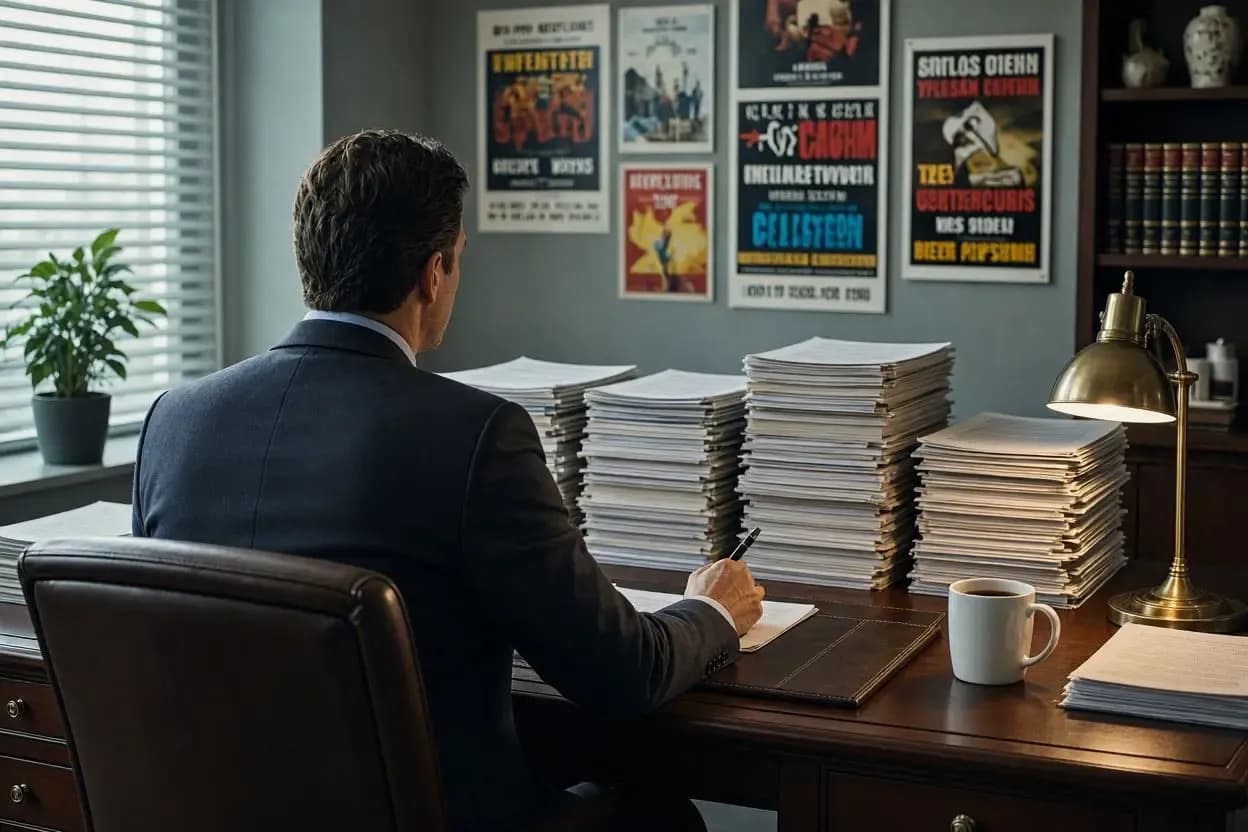
It is Monday morning. Over the weekend, twelve new scripts arrived. Nine more came in the week before. Somewhere in the inbox are scripts that have been waiting since last month, along with a few that have been there even longer. In two hours, the development meeting starts, and there is still a stack of material that nobody has had time to read.