You have a script. You have a director. You might even have funding. And somewhere in the back of your mind, you are already thinking about the shoot. But before a single camera is set up, before a single actor is called, before anyone books a hotel room or rents a van, someone needs to sit down with that script and take it apart. Scene by scene, line by line. This is the script breakdown. And for small and mid-sized productions, it is the step that determines whether the shoot runs smoothly or falls apart.
What a Script Breakdown Actually Is
A breakdown is not a summary. It is not a shot list. It is a systematic analysis of everything your script requires translated into the language of production. How many scenes are there, and where does each one take place? How many of those locations are interiors, and how many are exteriors? How many scenes happen at night, and how many during the day? Which characters appear in which scenes, and how many shooting days does each actor actually need? How long is each scene, and how does that affect your schedule?
These are not creative questions. They are logistical ones. And the answers determine your budget, your schedule, your crew size, and your casting decisions long before you step on set.
Why Small Productions Get This Wrong
On a large studio production, there is usually a dedicated team for this work. A line producer, a production manager, a coordinator. The breakdown is done thoroughly, checked multiple times, and fed into scheduling software before anyone makes a single phone call.
On smaller productions, this process often gets compressed. The director is also producing. The producer is also writing. Everyone is doing three jobs, and the breakdown gets done quickly, informally, or not thoroughly enough.
The result shows up on set. A night scene that wasn't properly flagged means the wrong equipment was booked. A location that appears in twelve scenes gets overlooked during scouting. An actor who is needed for nine days was only scheduled for six. These are not creative problems, they are breakdown problems. And they are expensive.
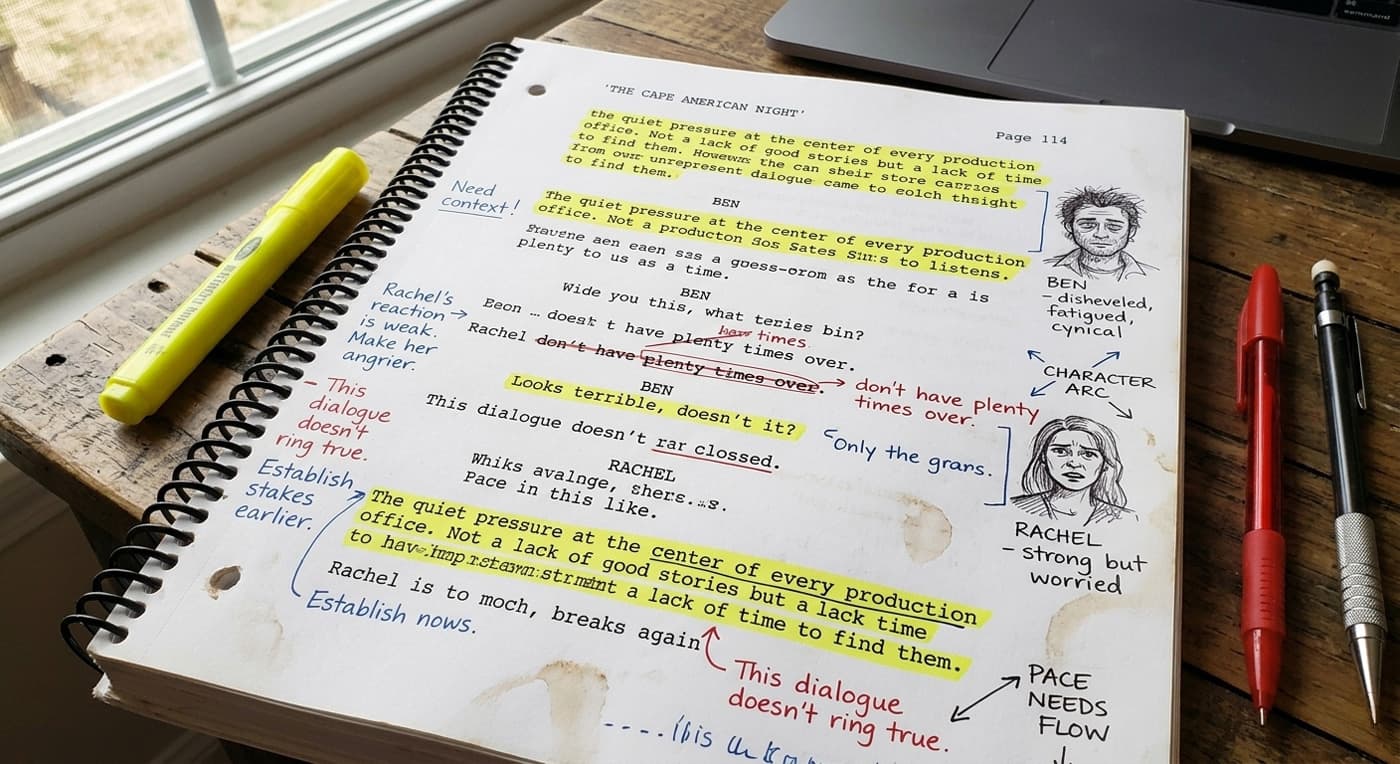
The raw reality of script doctoring. A closer look at a screenplay in mid-analysis, filled with critical notes, highlights, and structural corrections.
What a Good Breakdown Gives You
When a script breakdown is done properly, it becomes the foundation of everything that follows.
Your location breakdown tells you exactly how many scenes take place in each setting and therefore which locations are worth investing in versus which can be simplified or combined. For a small production with a limited location budget, this information is not optional. It is the difference between a manageable shoot and a logistical nightmare.
Your character and cast breakdown shows you which actors are needed on which days, and for how long. For a mid-sized production trying to work with actors who have limited availability or limited fees this shapes your entire casting conversation. You don't offer a lead role to someone without knowing they are in forty scenes.
Your day and night scene breakdown affects your crew schedule, your equipment needs, and your post-production rhythm. Night shoots cost more, tire your crew faster, and require different lighting setups. Knowing exactly how many you have and clustering them efficiently can save significant time and money.
Your scene length breakdown helps your director and editor understand the weight of each sequence before production begins. A script might have eighty scenes, but if twenty of them are single-page exchanges and three of them are ten-page centerpieces, your shooting schedule needs to reflect that reality.
The Matching Problem
Here is something that gets overlooked in most conversations about breakdown: it is not just about logistics. It is also about alignment.
A script breakdown forces everyone on the team to look at the same document and understand the same project. The producer sees a budget. The director sees a schedule. The line producer sees a crew plan. But they are all working from the same breakdown — and when that document is clear, accurate, and detailed, the conversations between them become faster and more productive.
On small productions where one person is often doing multiple roles, this alignment is even more critical. You cannot afford to discover on day three of the shoot that your director and your producer had two different versions of the same scene in their heads.
From Manual Work to Automated Analysis
Traditionally, a script breakdown is done by hand. Someone, usually the first AD or the line producer goes through the script page by page, marking each element, categorizing each scene, and building the breakdown document manually. On a feature-length script, this can take days.
Poetika automates the structural layer of this work. When you upload your script, it gives you an immediate breakdown of your scenes, characters, locations, and day and night sequences the kind of data that usually takes days to compile manually. You can see at a glance how many scenes each character appears in, how your interior and exterior locations are distributed, and how your shoot days might begin to take shape.
For a small or mid-sized production that doesn't have a full pre-production team, this is not a small thing. It means you can walk into your first production meeting with a clear picture of what your script actually requires before anyone has spent a euro or made a single commitment.
The Step You Cannot Skip
Pre-production is full of steps that feel optional until they aren't. The script breakdown is not one of them. It is the step that makes every other step possible.
A well-prepared breakdown doesn't guarantee a perfect shoot. But a poorly prepared one or a missing one almost guarantees problems. The scenes that weren't flagged, the locations that weren't counted, the actors that weren't scheduled they all show up eventually. The only question is whether they show up in pre-production, where they can be fixed, or on set, where they cannot.
Do the breakdown. Do it properly. Everything else follows from there.
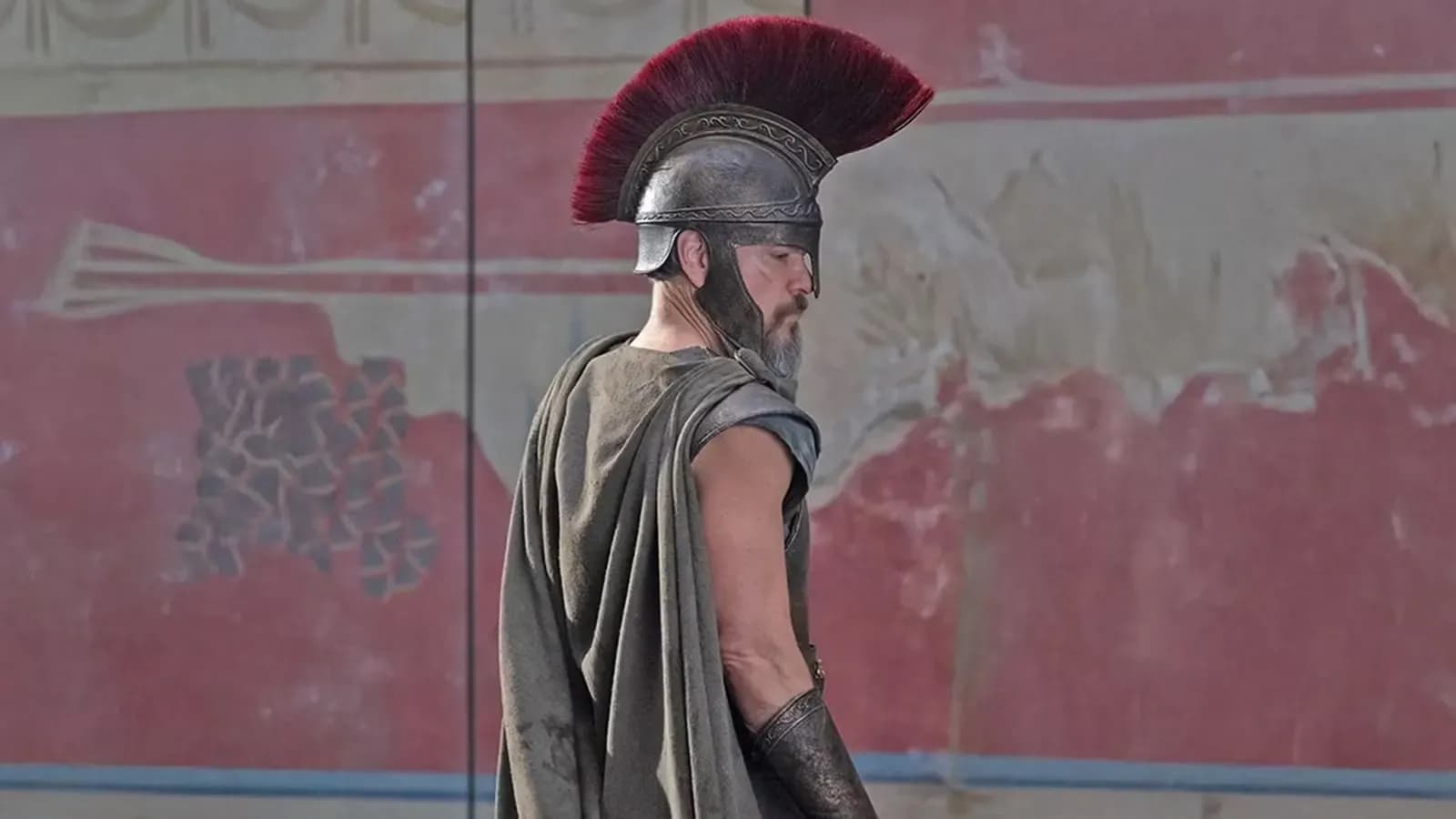
Christopher Nolan's The Odyssey may be his biggest production yet, but it also feels like the inevitable destination of a career built around memory, time, and the impossible journey home.
Every few years, a beloved novel gets adapted into a film. The announcement generates excitement; finally, that book is becoming a movie. And then, more often than not, something goes wrong. The film arrives and feels thin, rushed, or strangely hollow. The characters who felt so vivid on the page seem flat on screen. The story is technically all there, but whatever made the book extraordinary has somehow failed to survive the journey.
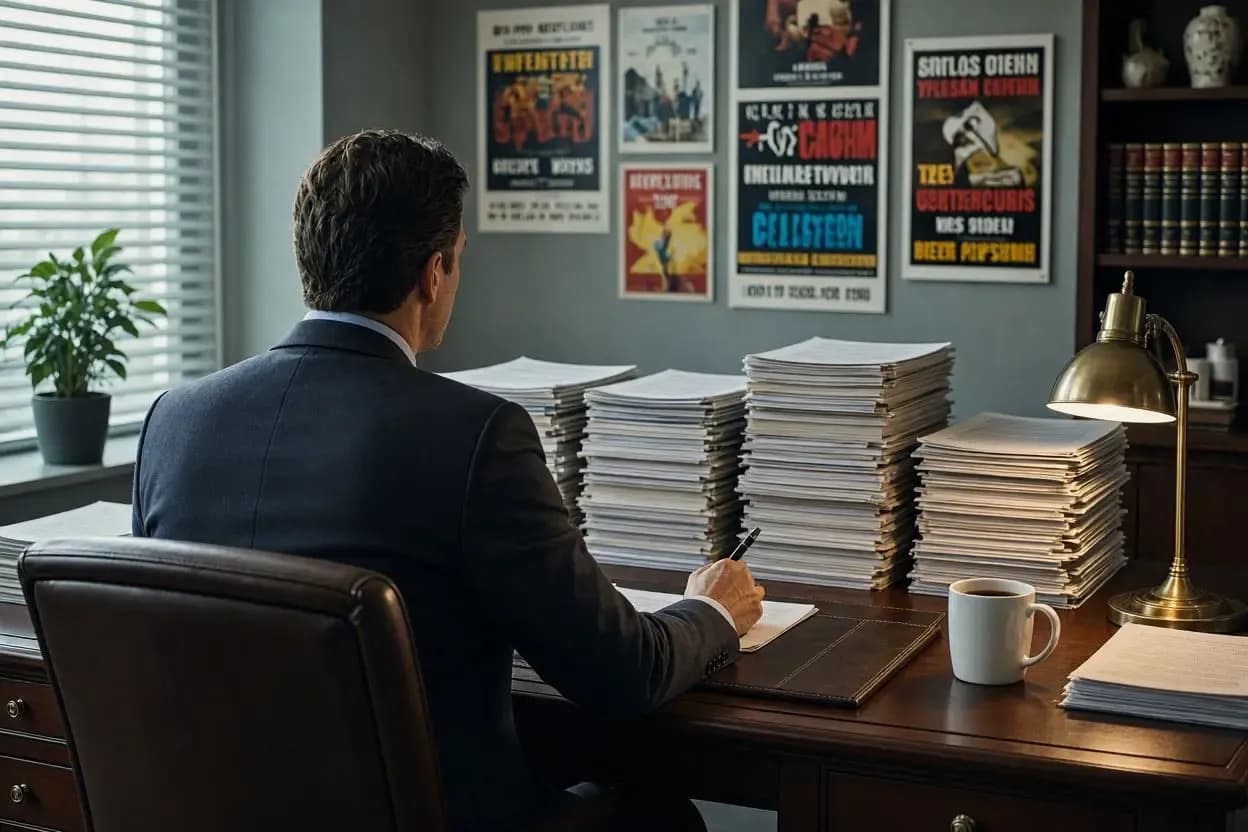
It is Monday morning. Over the weekend, twelve new scripts arrived. Nine more came in the week before. Somewhere in the inbox are scripts that have been waiting since last month, along with a few that have been there even longer. In two hours, the development meeting starts, and there is still a stack of material that nobody has had time to read.