Before You Write Your First Script: 10 Films About the Writing Life
Poetika BlogJanuary 8, 20261 min read
There is no shortage of books about screenwriting. They will teach you structure, character, dialogue, and conflict. They will explain the three-act model, the midpoint, the dark night of the soul. What they cannot teach you is what it actually feels like to be a writer; the obsession, the paralysis, the strange relationship between the person who writes and the work that gets written.
There is no shortage of books about screenwriting. They will teach you structure, character, dialogue, and conflict. They will explain the three-act model, the midpoint, the dark night of the soul. What they cannot teach you is what it actually feels like to be a writer; the obsession, the paralysis, the strange relationship between the person who writes and the work that gets written.
These ten films do not teach screenwriting. They do something more useful: they show the writing life from the inside. The loneliness of it, the cost of it, the occasional exhilaration of it. Some of them are cautionary tales. Some of them are portraits of creative destruction. All of them are essential viewing for anyone who has ever sat down in front of a blank page and wondered what they were doing there.
1. Barton Fink (1991) - Joel and Ethan Coen
A New York playwright arrives in Hollywood to write a wrestling picture. He checks into the Hotel Earle a decaying, almost empty building where the wallpaper peels off the walls in the heat and proceeds to write nothing at all.
Barton Fink is built around a specific kind of creative failure: not the absence of ideas, but the collapse of attention and connection. Barton believes he writes for “the common man,” yet he is fundamentally unable to listen to one when he is right in front of him. His neighbor Charlie is a loud, generous insurance salesman repeatedly tries to share his stories, but Barton is too absorbed in his own intellectual self-image to hear them.
What the film exposes is not simply writer’s block, but a deeper disconnection between artistic identity and lived reality. Barton’s problem is not that he lacks inspiration, but that he refuses contact with anything that might challenge his pre-existing ideas of what writing should be.
In this sense, Barton Fink is less about a blocked writer than about a writer who mistakes isolation for depth. The page stays empty not because there is nothing to say, but because he has stopped participating in the world that would give his writing meaning.
What Barton needed was not more time alone with his thoughts, but an external mirror someone to interrupt his certainty and force confrontation with what he cannot see. That kind of friction, where perspective breaks self-deception, is often what unlocks creative paralysis. Poetika is designed exactly for this moment; to help writers step outside their own assumptions and see their story from the outside, so they can move past that invisible wall.
2. Adaptation (2002) - Charlie Kaufman / Spike Jonze
Adaptation begins with a screenwriter hired to adapt a book about orchids, only to discover he cannot seem to turn it into a screenplay. What initially appears to be a straightforward adaptation slowly becomes something else: a confrontation with the limits of adaptation itself, and with the writer’s inability to resolve what the story is supposed to be.
The film is not simply about writer’s block, but about writing as a process of splitting the self. Charlie Kaufman writes himself into the narrative alongside a fictional twin brother, and in doing so turns adaptation into a structure that constantly turns against its own logic.
Formally, the film keeps expanding and destabilizing its own frame until it collapses the boundary between adaptation, invention, and failure. Yet beneath this formal experimentation, its core remains grounded: writing is not the translation of ideas into form, but an ongoing negotiation with resistance.
Anyone who has tried to adapt a book, shape an idea, or even translate a lived experience into narrative will recognize that resistance. The difficulty is not something to overcome before writing begins it is what writing is made of.
3. Sunset Boulevard (1950) - Billy Wilder
Sunset Boulevard begins with a broke screenwriter, Joe Gillis, who stumbles into the decaying mansion of a forgotten silent film star, Norma Desmond, and agrees to help her write a screenplay for her long-delayed comeback. What starts as a transactional arrangement slowly turns into a closed system one where storytelling, identity, and survival become indistinguishable.
The film is not simply about Hollywood as an industry, but about Hollywood as a machine that produces stories while simultaneously erasing the people who write them. Joe Gillis is not just a compromised writer; he is a narrator who has lost ownership over his own narrative. His voice tells the story, but it is already trapped inside a structure he cannot control.
Billy Wilder constructs the film as a paradox: a screenplay about storytelling that gradually reveals storytelling itself as a form of entrapment. Joe’s writing is no longer expressive; it is adaptive, reactive, and ultimately survival-based. Each compromise moves him further away from authorship and closer to being a character inside someone else’s fantasy.
In that sense, Sunset Boulevard becomes less a story about ambition than about narrative exhaustion: what happens when a writer no longer believes in what they are writing, but continues writing anyway because stopping is no longer an option.
It remains one of the most precise constructions of Hollywood storytelling ever made not because it celebrates the craft, but because it exposes how easily the craft can consume the storyteller.
4. In a Lonely Place (1950) - Nicholas Ray
In a Lonely Place begins with a Hollywood screenwriter, Dixon Steele, whose volatile temperament and creative intensity place him at the center of a murder investigation. When a neighbor provides him with an alibi, a relationship begins to form one that slowly reveals how fragile the boundary is between intimacy, suspicion, and violence.
Nicholas Ray uses the framework of a murder mystery not to solve a crime, but to examine the psychological structure of its writer-protagonist. Dixon is not simply “difficult” or “self-destructive”; he is a figure in whom creative force and aggression are no longer distinguishable. The act of writing, for him, is inseparable from a kind of internal pressure that spills into every relationship he enters.
The film gradually shifts its focus away from external suspicion toward a more unsettling question: whether the same impulse that produces art can also destroy the conditions under which human connection becomes possible.
Humphrey Bogart’s performance anchors this tension in a character who is both compelling and increasingly unreadable. As the narrative unfolds, what appears to be a crime story becomes a study of emotional instability disguised as creative brilliance.
The result is not a resolution, but a rupture a final realization that the space between inspiration and harm may be far narrower than the characters are willing to admit.
5. Day for Night (1973) - François Truffaut
Day for Night is often described as a love letter to cinema, but what makes it more interesting is how unsentimental it actually is about the filmmaking process itself. The story follows a director trying to complete a production while everything around him begins to fracture actors lose focus, relationships break down, equipment fails, and even weather becomes part of the instability.
François Truffaut presents filmmaking not as a controlled execution of vision, but as a continuous state of adjustment. The film reveals cinema as a collective process of improvisation, where the original script is only a starting point and the finished work is shaped as much by accident, constraint, and compromise as by intention.
From a screenwriting perspective, the film quietly dismantles a common illusion: that the screenplay is the blueprint of the film. Instead, it shows how fragile that blueprint actually is once it enters production. Scenes are rewritten on the fly, meaning shifts in real time, and the gap between what was imagined and what is ultimately shot becomes a defining condition of the work itself.
At its core, Day for Night is about that gap the distance between authorship and execution. It is a reminder that filmmaking is not the realization of a fixed idea, but the survival of an idea through constant revision by everyone involved in its making.
6. Providence (1977) - Alain Resnais
Providence follows an aging, dying novelist who spends a sleepless night constructing a new novel inside his mind populating it with distorted, sometimes cruel versions of the people in his life. By morning, those same people arrive in reality to celebrate his birthday.
Alain Resnais structures the film not as a simple contrast between imagination and reality, but as a gradual collapse of the boundary between the two. What we first perceive as invention begins to assert its own internal logic, shaping characters with emotional intensity that feels more real than the people who eventually appear on screen.
The second half of the film quietly inverts this structure. The “real” guests enter the narrative already contaminated by the novelist’s prior imaginings, forcing us to reconsider whether we are ever actually outside his creative process at all.
From the perspective of writing, Providence is less about where characters come from than about what happens once they are created how invention reshapes perception, and how authorship continues to operate even when the writer is no longer actively writing.
The result is deliberately unstable, and that instability is precisely the point: the film treats imagination not as content, but as a living structure that organizes reality itself.
7. Naked Lunch (1991) - David Cronenberg
Naked Lunch, William S. Burroughs’un “filmleştirilemez” olarak anılan romanından gevşek bir uyarlama gibi görünür: bir haşere imha görevlisi, halüsinatif bir komploya çekilir ve yazmaya başladığı raporlar giderek canlı bir böceğe dönüşen bir daktilo etrafında şekillenir.
David Cronenberg’in yaklaşımı aslında romanın kendisini uyarlamaktan çok, onun ortaya çıkma koşullarını yeniden kurar: bağımlılık, sürgün, kayıp ve gerçeklik algısının çözülmesi. Film, Burroughs’un yazısını bir “tema” olarak değil, bir bilinç hali olarak ele alır.
Daktilo-böcek imgesi bu anlamda sembolik bir süs değil, yazının doğasına dair doğrudan bir modeldir: üretimin bilinçten kısmen ayrıldığı, metnin yazarın kontrolünden bağımsız hareket etmeye başladığı bir süreç. Yazı, burada ifade edilen bir şey değil; yazarın içine çekildiği yabancı bir mekanizmadır.
Bu yüzden Naked Lunch, yazarlıkla ilgilenen biri için yalnızca bir uyarlama değil, yazmanın kendisinin ne kadar “dışsal”, rahatsız edici ve zaman zaman kontrol dışı olabileceğine dair radikal bir deneyimdir.
8. Trumbo (2015) - Jay Roach
Trumbo tells the story of Dalton Trumbo, one of Hollywood’s most successful screenwriters, who was blacklisted during the McCarthy era and forced to continue writing under pseudonyms while publicly fighting for the right to put his own name on his work.
Rather than treating this as a conventional biographical drama, the film frames Trumbo’s career as a question of authorship under constraint: what happens when a writer can still produce work, but loses the legal and social recognition of having written it?
The McCarthy blacklist does not simply interrupt his career it splits it. One half of Trumbo’s writing becomes visible and credited to others; the other half continues invisibly, circulating through the industry without his name attached. In this sense, the film is less about censorship in the abstract than about the fragmentation of identity that occurs when authorship is removed from visibility.
The central tension is not only political, but structural: writing becomes separated from ownership, and success becomes detached from recognition. Trumbo’s resistance is therefore not just ideological, but existential a refusal to accept a system in which the act of writing and the right to be named as its author no longer coincide.
For screenwriters, the film quietly shifts the question from “what do you write?” to “what does it mean to be seen as the one who wrote it?” a distinction that sits at the center of the profession more often than it is acknowledged.
9. Stranger Than Fiction (2006) - Marc Forster
Stranger Than Fiction follows an IRS auditor who suddenly begins to hear a narrator describing his life in real time, and slowly comes to the unsettling realization that he may be a character in a novel whose author is deciding how and when he will die.
The film uses this high-concept premise not as a fantasy device, but as a way to externalize a very real question about narrative control: what happens when a life becomes legible as structure rather than experience? The protagonist is no longer simply living events; he is being written through them.
Emma Thompson’s novelist character embodies a different, but parallel tension the problem of finishing a story when the act of ending requires a form of creative violence. The film treats this not as melodrama, but as a structural necessity of narrative itself: endings demand resolution, even when resolution feels ethically or emotionally costly.
At its core, Stranger Than Fiction is less about a man discovering he is fictional than about the strange comfort and violence of structure how a story can make a life feel both meaningful and predetermined at the same time. What appears arbitrary from inside a life often reads as inevitable from outside it, and the film exists in that tension.
10. Capote (2005) - Bennett Miller
Capote follows Truman Capote as he travels to Kansas to research a multiple murder that will become In Cold Blood. What starts as journalistic curiosity slowly turns into an intimate and ethically unstable relationship with one of the killers, Perry Smith a relationship that becomes the emotional core of both the book and Capote’s own undoing.
The film is not simply about a writer “using real life as material,” but about what happens when the distance between observer and subject collapses without disappearing. Capote does not stand outside the story he is writing; he becomes part of its emotional economy, dependent on it, shaped by it, and ultimately trapped by it.
Philip Seymour Hoffman’s performance reveals a more uncomfortable truth beneath the surface: Capote’s writing is not driven by cruelty, but by a form of attachment that cannot be sustained without damage. The closer he gets to his subject, the less neutral his position becomes and the more the act of writing turns into a negotiation between care, control, and extraction.
The result is not just a masterpiece of journalism, but a quiet study of cost. In Cold Blood is completed, but the writer who produced it is fundamentally altered by the process. The film suggests that for some forms of writing, the work does not end on the page it continues in the person who wrote it.
These ten films will not teach you how to write a screenplay. They will do something more important: they will show you the landscape you are entering. The obsession, the self-doubt, the compromises, the occasional moments of genuine discovery. The gap between the writer's ambition and the work's reality. The cost of taking the work seriously and the cost of not taking it seriously enough.
Watch them before you write. Watch them again after. They will mean different things each time.
There is a document that most filmmakers underestimate, rush through, or write as an afterthought. It is not the script. It is not the pitch deck. It is the synopsis; the one or two pages that, in most cases, determine whether anyone reads the script at all.
There is a moment every screenwriter knows. The script is almost finished. The story has built, the characters have struggled, the themes have accumulated. And then comes the final scene the moment that will determine how every scene before it is remembered.
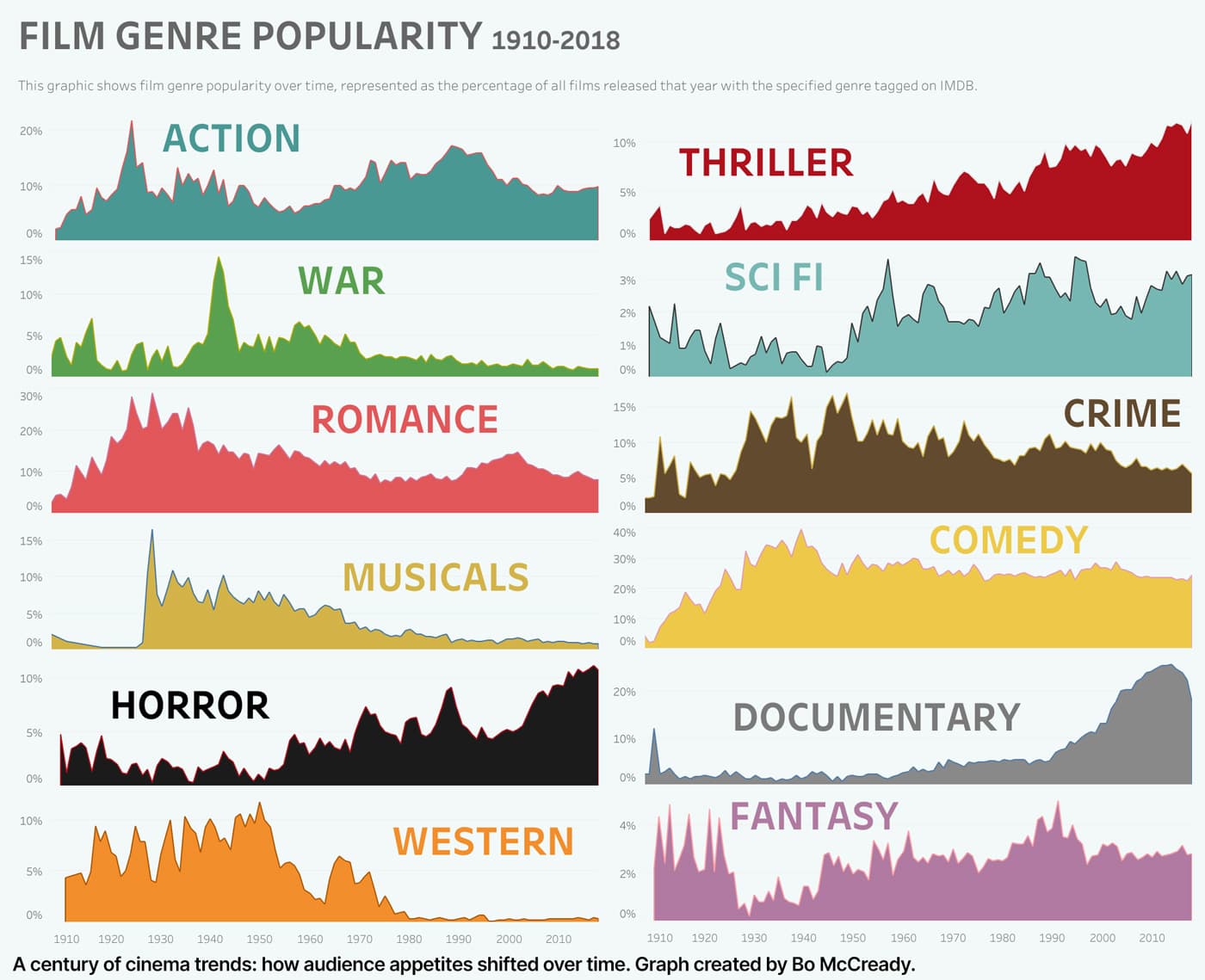
Ask a filmmaker what genre their film is, and you will often get a hesitant answer. A list of influences. A comparison to three other films. A long pause. But genre is not something a story chooses it is something a story has. And the sooner a filmmaker understands what their story is carrying, the better every decision that follows will be. Genre is not a marketing label applied after the fact. It is a language that audiences, producers, and distributors have been speaking for centuries long before cinema existed. Understanding it is not a commercial compromise. It is a creative advantage.