Font Selection in Screenwriting: Tradition or Technical Necessity?
Why Hollywood still types in a 1950s typeface and why changing it would cost more than you think?
January 27, 202614 min
Read 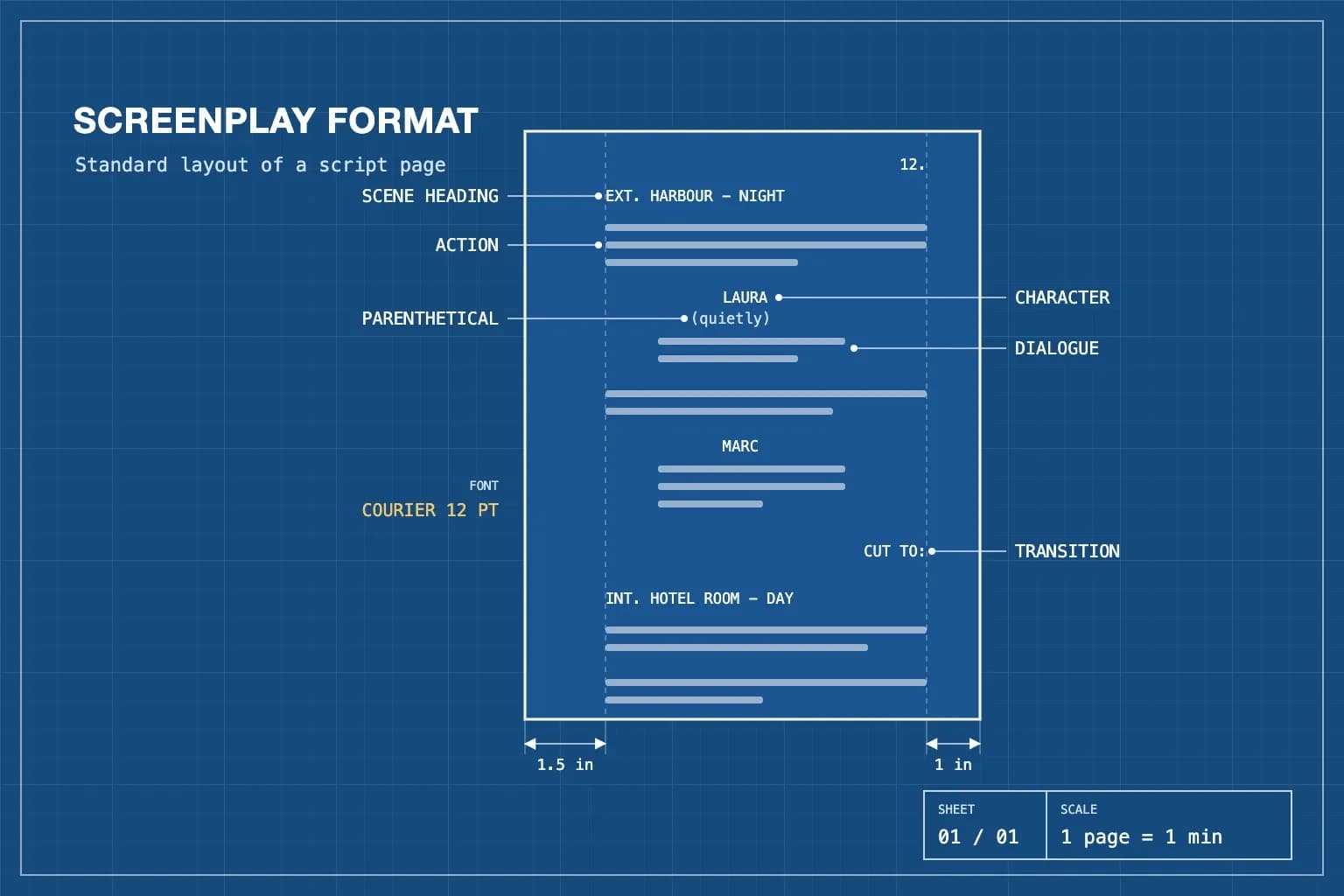
When a producer or script reader opens a screenplay for the first time, the question of whether to take it seriously often begins well before the first line of dialogue, because the way the page is laid out, from the placement of the scene headings to the length of the action paragraphs, can tell an experienced reader quickly whether the writer understands how a script is meant to work. Format is rarely the part of screenwriting that writers enjoy talking about, since it feels like a set of technical rules sitting far away from story and character, yet it is the layer that carries every other layer to the reader, and when it is handled well it simply disappears and lets the story take over.
This article looks at why screenplay format matters beyond appearances: how it works as a professional signal and as a shared language across a film crew, how it quietly feeds the planning and budgeting of a production, how it shapes the way a script reads on the page, and what you can do to get it right. Along the way we will also look at where a tool such as Poetika can help and where only a human eye will do.
Screenplay format is the standard way of laying out a script on the page, and it covers both the typography and the structure of the document. In practice that means a monospaced font, usually 12-point Courier, a wide left margin that leaves room for binding and consistent spacing, which together give a page a predictable amount of text. Competitions such as the Academy Nicholl Fellowships, for example, ask for scripts in "standard industry format (12 point Courier)."
On top of that typography sits a small set of building blocks, and each one tells the reader something different about what is happening on screen.

None of these rules were invented to make writing harder. Each one exists so that a reader, and later a whole production team, can find the same information in the same place on every page.
Script readers and producers often work through a great many screenplays, and a script that follows the conventions they know by heart is easier to read, easier to evaluate and easier to take seriously. A script that ignores them can give the impression, fairly or not, that the writer is new to the craft or has not handled the document with care, and that impression can make it harder for the story to get a proper hearing.
Format is also the common language of a production. A screenplay is read by the director, the producer, the actors, the department heads and eventually the editor, and each of them needs to find the same things in the same places: who is speaking, where the scene takes place and whether it happens in daylight or at night. Because the layout is standardized, nobody has to learn a new system for every script, which is why format works less like a matter of style and more like a protocol that lets many different people work from one document.
The practical value of format becomes most visible once a script moves toward production. Every scene heading states whether a scene is interior or exterior, names the location and gives the time of day, and a production team builds its breakdown and shooting schedule from exactly that information. A set that appears in fourteen scenes is scheduled very differently from fourteen separate locations, so the way a location is named on the page has a direct effect on how the script is planned and, in the end, on how much it is expected to cost.
Page count works in a similar way. Under the familiar rule of thumb, one page of a correctly formatted script equals about one minute of screen time, which is why a typical feature screenplay runs between 90 and 120 pages; recent Nicholl Fellowships rules suggest 80 to 125, though competitions update their limits from year to year. The rule is only an approximation, since dialogue-heavy pages usually play faster than dense action, and it holds only when the formatting is uniform: wrong margins or a different font size make the timing unpredictable.
This is also where small inconsistencies, such as a location written three different ways, stop being cosmetic and start distorting the numbers that people use to make decisions.
Format does not only serve the production, because it also shapes the way a script feels to read. White space is part of the rhythm of a screenplay, and short action paragraphs, clearly separated scenes and dialogue set in its own narrow column let the eye move quickly down the page in a way that mirrors the pace of the film. A page crowded with long blocks of description slows the reader down, while a page with room to breathe tends to make a scene feel lighter and faster.
In that sense good format is a quiet form of storytelling. A reader who never has to think about margins, headings or where a line of dialogue begins is a reader whose attention stays on the characters, and that is exactly the attention a writer wants.
Most format problems are small and easy to fix once you know where to look. These are the ones that appear most often:
A common objection is that strict format limits creativity, but the conventions govern how information is placed on the page and have very little to say about what the story is. Because the layout is predictable, the writer's choices of character, image and structure are the only things left for the reader to notice, which is why rules and creativity tend to work together here rather than against each other.
That does not mean the rules can never be bent. Writers sometimes stretch format on purpose, for example to give a fast sequence a different rhythm, and it can work when the choice is deliberate, rare and clearly in service of the story. It also helps to remember that a script written to be read, often called a spec script, is held to a different standard than a shooting script: scene numbers and revision marks, for instance, are typically added when a script goes into production, and a script submitted to a competition or a reader should follow that venue's own guidelines.
You do not need to memorize every rule to get format right, because most of the work is done by good defaults and a short final check. Here is a list to run through before a script leaves your hands.
Writing software takes care of the layout while you type, but it does not tell you whether the script as a whole holds together, and that is where a structured analysis tool such as Poetika can be useful. Poetika reads the scene headings of a finished script and turns them into a clear overview: how many scenes take place indoors and outdoors, how they split between day and night, which locations come up most often, and what the page count and estimated runtime look like. Because that overview is built from the headings, it also makes inconsistencies easy to spot, such as one location that appears under two names.
It is worth being clear about the limits. A tool can show you what is on the page, but it cannot judge whether the story works, and a flagged detail is not always a mistake, since a repeated line or an unusual layout can be a deliberate choice. It supports a careful read and does not replace one.
Screenplay format matters because it does several jobs at once: it signals professionalism to the people who read your work, gives a whole production a shared language, feeds the planning and budgeting that follow, and shapes how the script feels on the page. When it works, nobody notices it, and the story is all that remains.
If you would like to see how your own script looks from the outside, you can run it through Poetika and get a structured overview before anyone else reads it.
Does screenplay format really matter?
Yes. Format will not rescue a weak story, but it affects how professionally a script is received, how easily it can be read and how reliably it can be planned for production.
What font and margins should a screenplay use?
The standard is 12-point Courier on US Letter paper, with margins of about 1.5 inches on the left and 1 inch on the top, bottom and right. Screenwriting software applies these settings automatically, and any competition you enter may state its own requirements.
Can I break format rules on purpose?
Occasionally, as long as the choice is deliberate and serves the story. Most writers are better off following the conventions closely and saving any rule-bending for the rare moment where it clearly adds something.
Why Hollywood still types in a 1950s typeface and why changing it would cost more than you think?
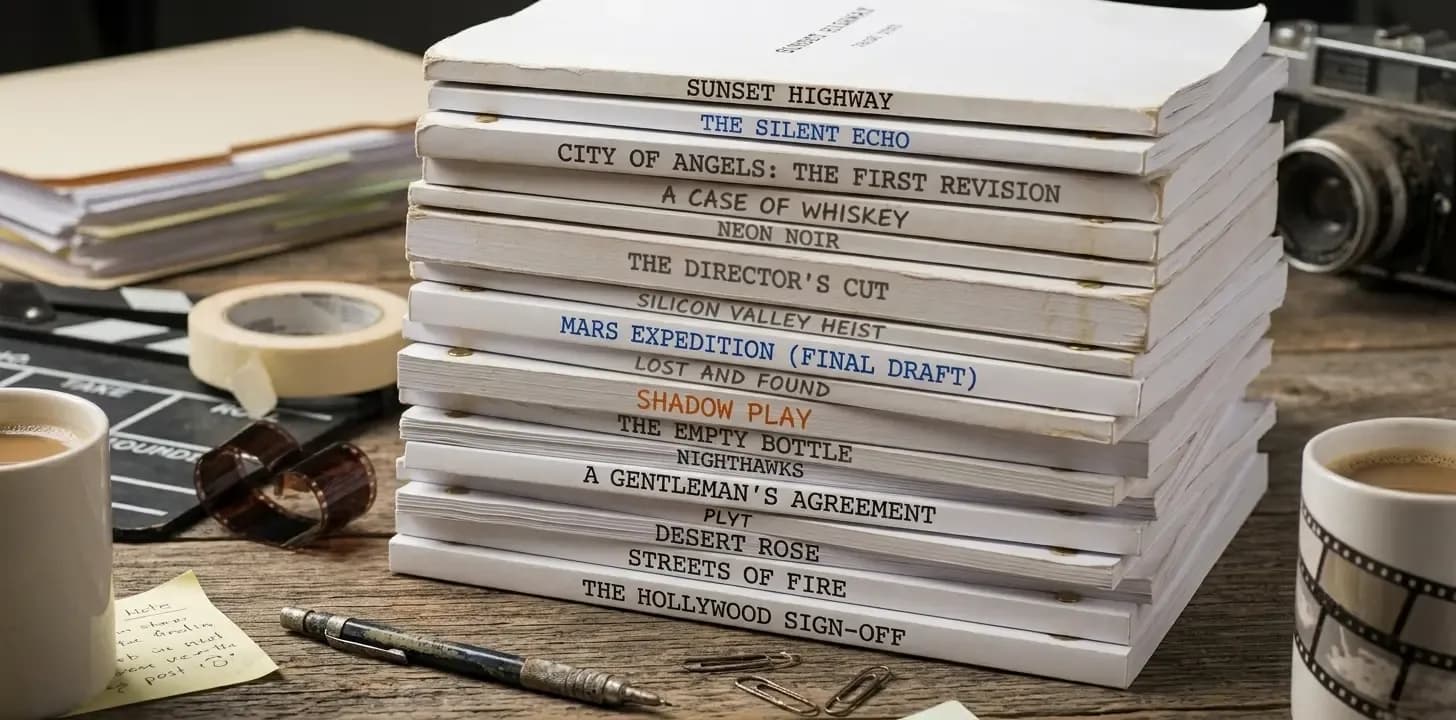
Ask a screenwriter how long their script is and they will almost certainly answer in pages, not words. A novelist measures their work in word count. A screenwriter measures theirs in pages. The reason for this is one of the most practical conventions in the industry, and understanding it changes how you think about the physical document in your hands. The rule is simple: one page of properly formatted screenplay equals approximately one minute of screen time. A 100-page screenplay is, in theory, a 100-minute film. This is not a precise formula; action-heavy sequences can move faster, dialogue-heavy scenes can run slower but as a working approximation, it is reliable enough that the entire industry has organized itself around it.
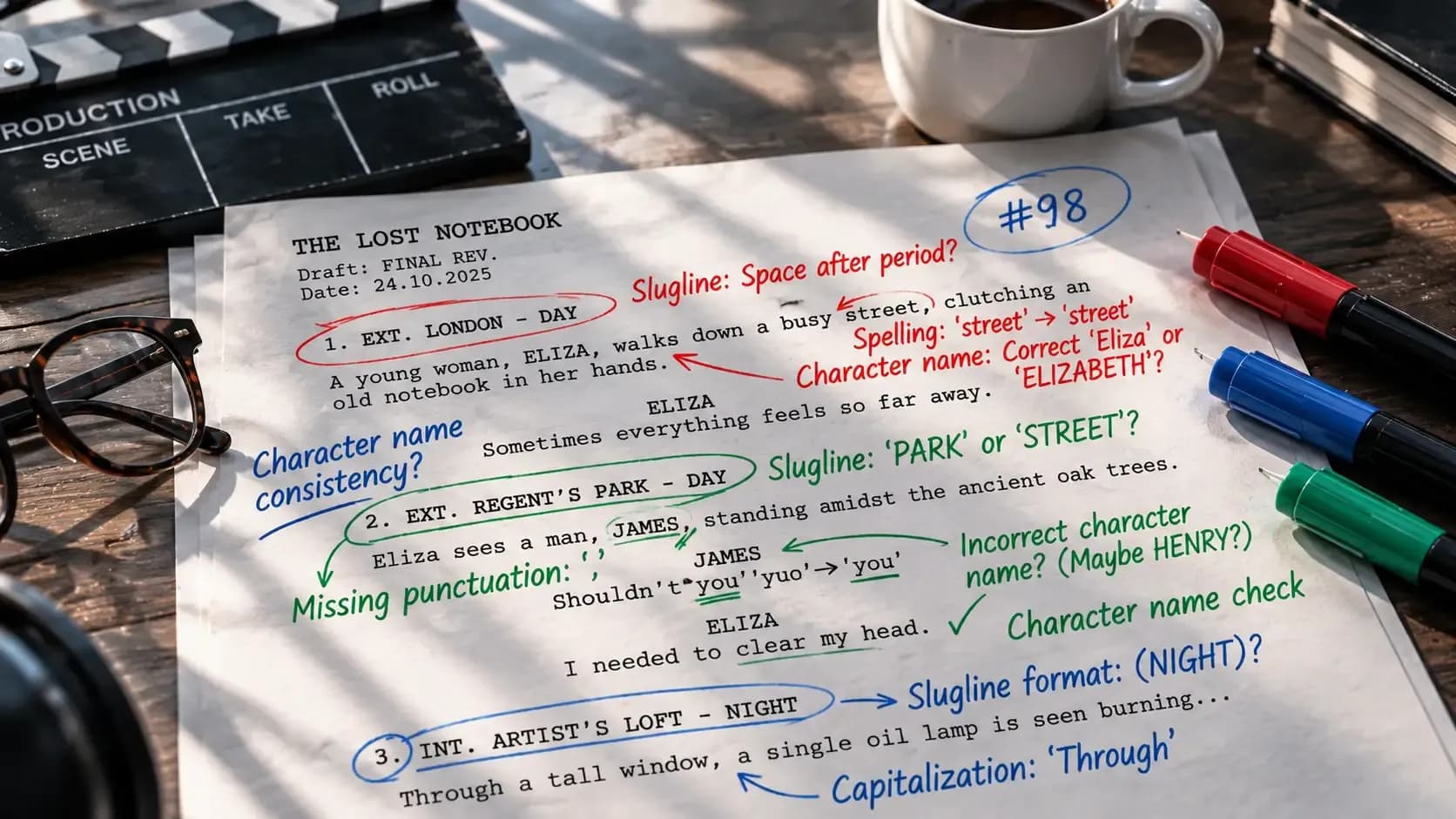
Small screenplay errors can create confusion for readers and problems during production. Learn how to spot inconsistent character names, scene headings, continuity issues and formatting mistakes before submitting your script.
Explore a complete sample analysis and understand the feedback format.