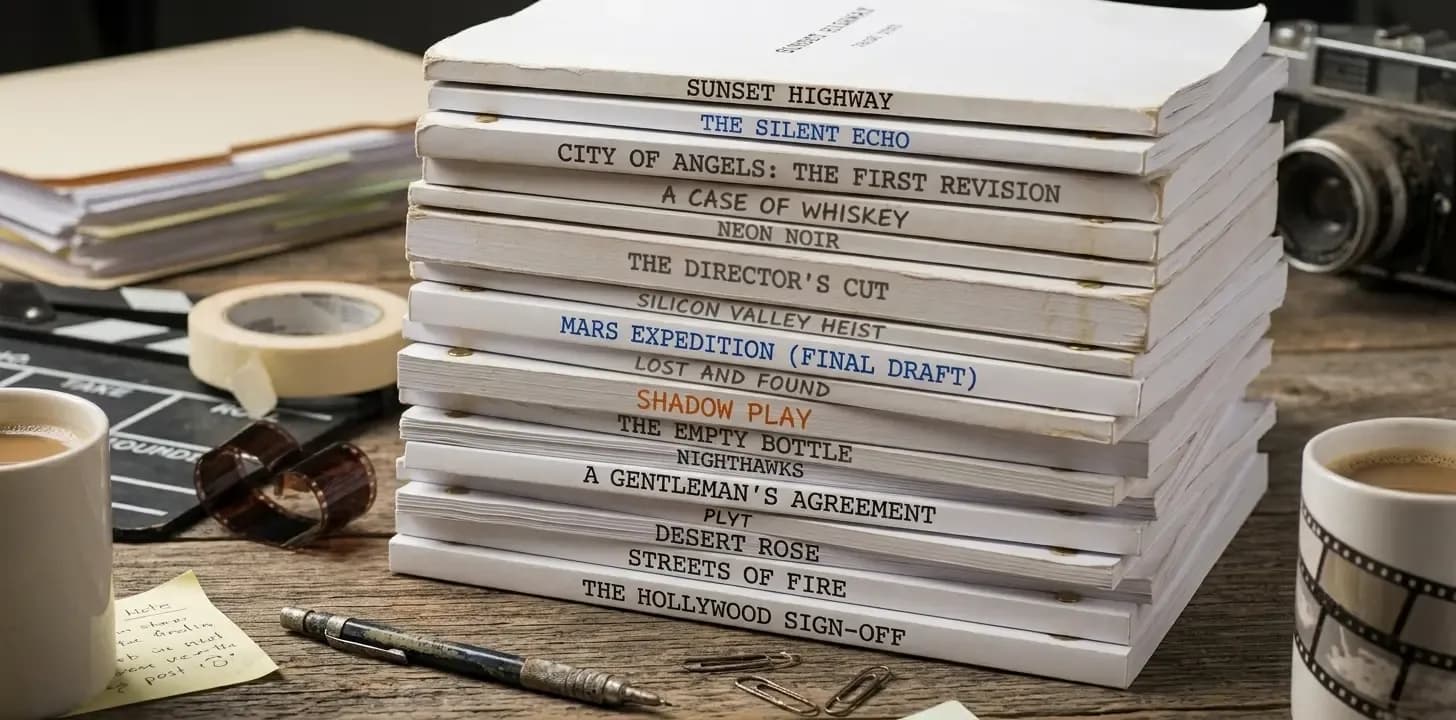
Ask a screenwriter how long their script is and they will almost certainly answer in pages, not words. A novelist measures their work in word count. A screenwriter measures theirs in pages. The reason for this is one of the most practical conventions in the industry, and understanding it changes how you think about the physical document in your hands.
The rule is simple: one page of properly formatted screenplay equals approximately one minute of screen time. A 100-page screenplay is, in theory, a 100-minute film. This is not a precise formula; action-heavy sequences can move faster, dialogue-heavy scenes can run slower but as a working approximation, it is reliable enough that the entire industry has organized itself around it.
Which means that page count is not just a formatting detail. It is a signal. Before a producer reads a single word of your screenplay, the page count tells them something about the film you are proposing to make.
Why Films Have a Specific Running Time
Before addressing how long a screenplay should be, it is worth understanding why films are the length they are in the first place. The answer is partly psychological and partly economic. Psychologically, there is a ceiling on how long an audience can sustain focused attention in a darkened room before the experience becomes exhausting rather than immersive. Most filmmakers put that ceiling somewhere between two and two and a half hours for a mainstream narrative film. Below ninety minutes, a film can feel underdeveloped as though the story was not fully explored. Beyond two and a half hours, audiences begin to feel the length in a way that works against the film rather than for it.
The economic dimension is equally practical. Cinema operators schedule films in blocks. A ninety-minute film can run four times in a day; a three-hour film can run twice. Streaming platforms have their own internal data about when viewers drop off and what running times perform best in different genres. Distributors factor running time into their calculations about which markets a film can reach and how it will be packaged.
None of this determines the length of any individual film. Great films exist at nearly every length. But it explains why there is a conventional range, and why departing significantly from that range draws attention.
Analyze your script with Poetika
Get instant feedback on your screenplay in minutes.
Film Formats and Their Lengths
The film industry distinguishes between formats not just by genre or budget but by running time. These distinctions matter because they determine how a film is distributed, which festivals it can enter, and what kind of production it requires.
Short film: Generally defined as any film under 40 minutes, though most festivals and platforms set their own specific cutoffs. In practice, the most common short films run between 5 and 20 minutes. Short films are the primary training ground for new directors and writers, the dominant format at film schools, and a significant presence at festivals. They are rarely commercially distributed in the traditional sense but have found a substantial home on streaming platforms and online.
Medium-length film: The least common format; films running roughly between 40 and 70 minutes occupy an awkward middle ground that is too long to program easily as a short and too short to be marketed as a feature. Some festivals have specific categories for this length; most distribution channels do not. Films in this range are often the result of a feature that was cut significantly in post-production, or a short that expanded beyond its original scope.
Feature film: The dominant commercial format. A feature film is conventionally defined as any film over 70 minutes, though in practice most theatrical features run between 85 and 130 minutes. The 90-to-120-minute range is the industry's center of gravity; long enough to tell a complete, developed story, short enough to fit comfortably into an evening's viewing.
Television formats: Television operates on its own set of length conventions. A standard drama episode runs between 40 and 60 minutes. A comedy episode runs between 20 and 30 minutes. A limited series or miniseries episode may run anywhere from 45 to 90 minutes depending on the platform and the project. These distinctions matter for screenplay formatting because a television pilot is a different document from a feature screenplay, with its own conventions and expectations.
Screenplay Page Counts by Format
Given the one-page-per-minute rule, the page counts for each format follow logically from the running times above.
Short film screenplay: A short film script of five minutes is five pages. A short of twenty minutes is twenty pages. There is no lower limit; a short can be a single page but most short scripts submitted to festivals and production companies run between five and fifteen pages. Longer short scripts, up to thirty or forty pages, are less common but exist.
Feature screenplay: The standard range is 90 to 120 pages, with most professional scripts landing between 95 and 110. This is the range that a producer, development executive, or competition reader expects to see when they open a feature screenplay. It signals that the writer understands the format and has structured a story that fits the conventions of the form.
Within that range, genre creates some variation. Action and thriller scripts tend toward the shorter end (90 to 100 pages) because action sequences move faster on screen than they read on the page. Character-driven dramas and comedies with substantial dialogue tend toward the longer end (105 to 115 pages) because dialogue scenes play closer to real time. Horror scripts are often among the leanest, with many running under 100 pages.
Television pilot screenplay: A drama pilot runs between 45 and 65 pages for a one-hour episode. A comedy pilot runs between 22 and 32 pages for a half-hour episode. These are softer conventions than feature page counts streaming platforms in particular have expanded what is acceptable but they remain useful reference points.
Why Page Count Matters to the Industry
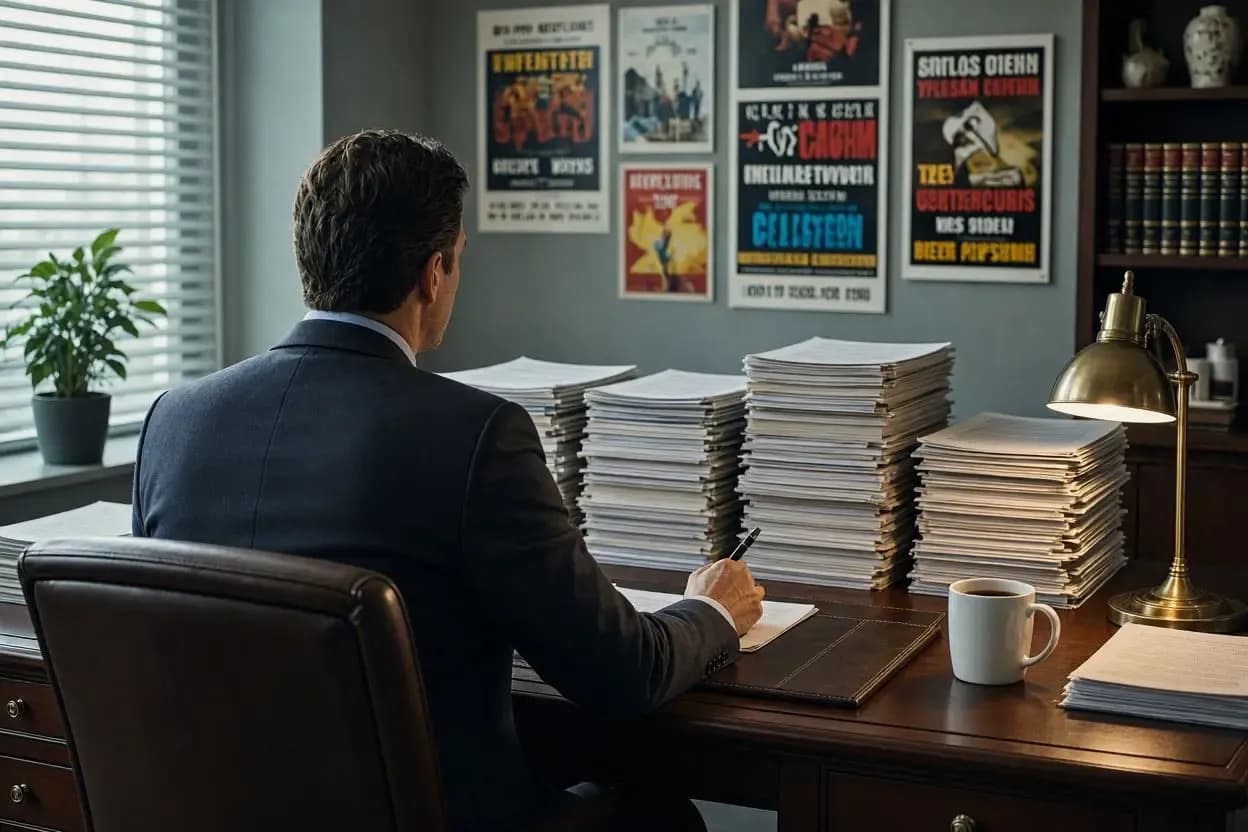
A screenplay's page count communicates something before the first word is read. This is one of the more uncomfortable truths of the industry, and it is worth being direct about it. A feature screenplay that arrives at 160 pages is, before it has been opened, a problem. It signals either a story that has not been disciplined into its proper shape, or a writer who does not understand the conventions of the form. Either reading is damaging. A development executive who has read thousands of scripts knows that most overlong first submissions cannot simply be trimmed the excess pages usually indicate structural problems that run through the entire script. The page count, in this sense, is a leading indicator of what the read will be like.
A feature screenplay that arrives at 70 pages raises a different concern: is this a full story, or a treatment dressed up in screenplay format? Is the world developed enough? Are the characters given enough space? Occasionally a very lean 75-page script turns out to be exactly right for the story it is telling. More often, the brevity indicates that the second act has not been fully developed.
Neither of these concerns is insurmountable. A great script at 140 pages will still be read, and has been. But a writer who understands why the conventional range exists, and who has made a deliberate decision to work within it or depart from it, is in a stronger position than one who arrived at their page count by accident.
When the Rules Bend
The conventions of screenplay length are exactly that conventions, not laws. They exist because they reflect practical realities about how films are made and distributed, but they have always accommodated exceptions.
Some of the most celebrated screenplays in history fall outside the standard range. Lawrence of Arabia runs over three and a half hours. Once, the Irish musical, runs under ninety minutes and feels complete. Certain genres have developed their own conventions that differ from the mainstream: animated features are often shorter, epic historical films are often longer, and experimental work may reject the convention entirely.
The more important point is that the exceptions are made by writers and filmmakers who understood the rules before they departed from them. A 140-page first feature screenplay from an unknown writer reads differently from a 140-page script delivered by a writer with three produced credits. The same page count carries different meaning depending on the context in which it arrives.
For a writer early in their career, working within the conventional range is a form of respect for the reader's time and a signal of professional awareness. It says: I know how this industry works, and I have made choices accordingly. Departing from the range is a choice that should be made deliberately, with a clear understanding of what that departure communicates.
How Poetika Works?
Explore a complete sample analysis and understand the feedback format.
Page Count as Communication
The page count of a screenplay is not a constraint imposed on writers from outside. It is a reflection of the form itself of the relationship between the page and the screen, between the written word and the running minute, between the document a writer produces and the experience an audience has.
Understanding why the conventions exist makes it easier to work within them skillfully, and easier to depart from them when the story genuinely requires it. A screenplay that is exactly as long as it needs to be no longer or no shorter, is one of the clearest signals of a writer who has fully understood what they are making. That is what the page count, ultimately, communicates. Not just how long the film will be. But how well the writer knows their own story.