Everyone Is Performing for a Camera Nobody Else Can See: Writing Mockumentary
Poetika BlogNovember 19, 202413 min read
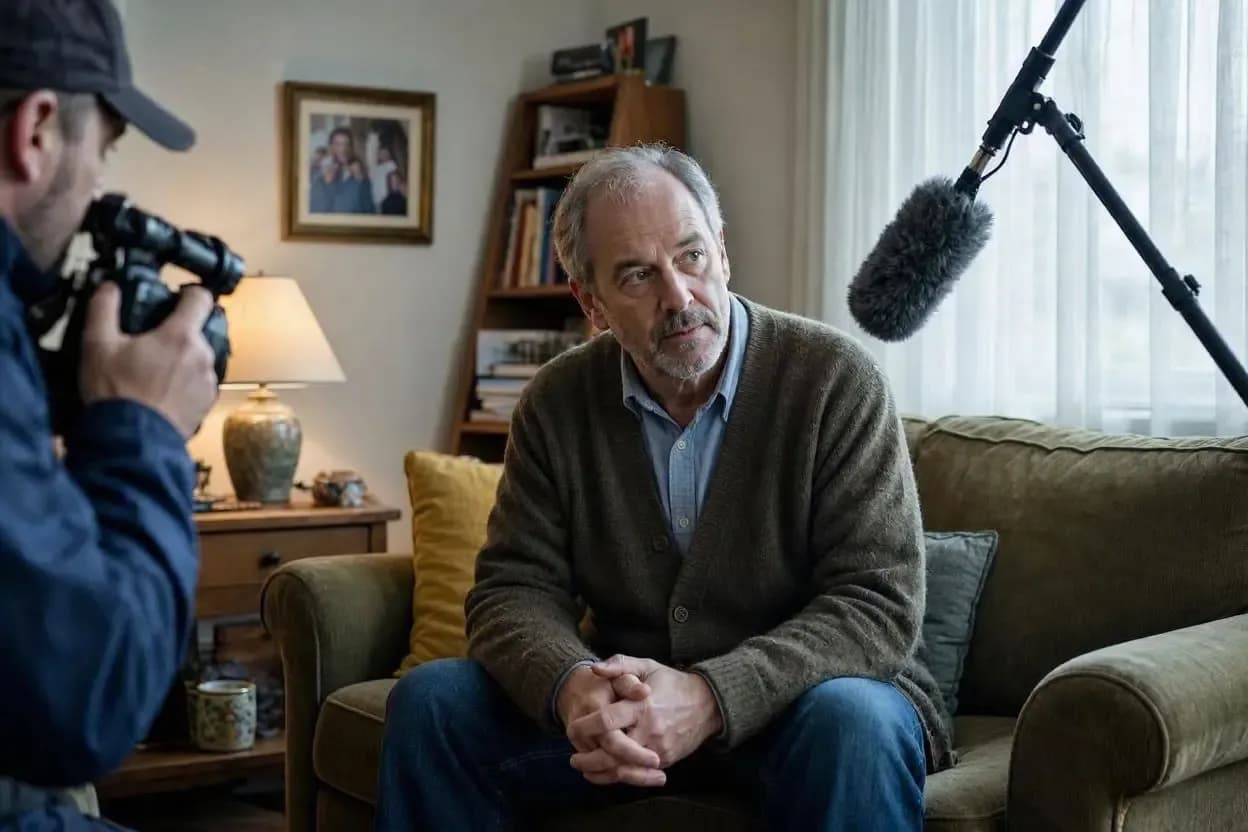
There is a camera in the room. Everyone knows it is there. And yet nobody acknowledges it directly at least not in the way you would acknowledge a stranger standing in the corner of your living room. The characters go about their lives, argue with their colleagues, confess their secrets, and pursue their goals, all while being filmed by a crew they have apparently agreed to let follow them around indefinitely.
This is the central paradox of mockumentary, and it is the engine that generates everything the format does well. The moment a character becomes aware of the camera really aware, in the way that changes how they behave a gap opens between who they are and who they are performing. That gap is where the comedy lives. And, in the best examples of the form, it is also where the drama lives. If you want to write mockumentary, understanding that gap is where you start.
How Poetika Works?
Explore a complete sample analysis and understand the feedback format.
Mockumentary is a fictional narrative that adopts the visual and structural conventions of documentary filmmaking. It uses handheld cameras, talking head interviews, naturalistic lighting, and the general aesthetic of observed reality to tell a story that is entirely invented.
The form has a longer history than most people realize. Robert Reiner's This Is Spinal Tap (1984) is widely credited as the foundational text: a fake documentary following a fictional heavy metal band on a disastrous American tour. The film was so precise in its imitation of the documentary form and so committed to its characters' obliviousness that some audiences initially believed it was real.
What followed was decades of expansion. The Office (both the original Ricky Gervais version and the American adaptation) demonstrated that the format could sustain long-form character drama as effectively as comedy. What We Do in the Shadows applied mockumentary conventions to vampire mythology with deadpan precision. American Vandal used the format to satirize the true crime documentary genre itself. Abbott Elementary proved the format was still commercially and critically vital in the 2020s.
The reason mockumentary works so consistently is structural. The documentary framing creates an implicit claim of authenticity this is what actually happened, observed by a crew that was simply there to record it. That claim, applied to fictional material, produces a specific kind of irony: the audience knows it is not real, the characters do not know they are in a story, and the gap between those two positions is the space in which the format operates.
It also solves a specific problem of exposition. In a conventional drama, information is delivered through dialogue and action. In mockumentary, it can be delivered directly to camera a character tells us exactly what they think, what they want, and how they feel, without the awkward contrivance of having them explain themselves to another character who already knows. The talking head interview is exposition that feels earned.
The Boundaries of the Form And Where They Get Interesting
Before Werner Herzog made Family Romance, LLC (2019), the line between mockumentary and documentary felt relatively stable. Mockumentary used documentary conventions to tell fictional stories. Documentary used those same conventions to tell true ones.
Herzog's film unsettled that boundary in a way that is genuinely instructive for writers working in the mockumentary form. The film follows Yuichi Ishii, a real Japanese man who runs a company that hires actors to play missing family members for clients who need them a father for a wedding, a friend for a social obligation, a relative for a reunion. Herzog cast Ishii as himself and filmed him doing his actual work, but shaped the material with a scripted narrative and directed scenes that blurred the line between what was observed and what was staged.
A staged family portrait from Werner Herzog’s Family LLC.
The result is neither documentary nor mockumentary in the conventional sense. It is something in between a film that uses the aesthetic of documentary observation to explore a subject (the performance of human connection) that is itself about performance. The camera is there. Everyone knows it is there. And no one is quite sure anymore what is real.
For a mockumentary writer, the lesson of Family Romance, LLC is not technical but philosophical: the form is most alive when it is conscious of what it is doing. The camera's presence is not just a stylistic choice. It is a question about performance, authenticity, and the relationship between observation and behavior. The best mockumentary writing asks that question constantly, even if it never answers it directly.
The Technical Mechanics of Mockumentary
Understanding what makes mockumentary look like mockumentary is essential for writing it because the page needs to establish those conventions clearly enough that every collaborator understands the world they are building.
The Talking Head
The talking head is mockumentary's most distinctive formal element: a character seated alone (or occasionally in pairs), speaking directly to an unseen interviewer, usually against a relatively neutral background. It is the format's version of interior monologue a way of accessing a character's private thoughts and reactions without the camera having to be present for the events being described.
Talking heads serve several narrative functions simultaneously. They can advance the plot (a character describes something that happened off-screen), comment on events (a character reflects on something we have just seen), create irony (a character says something that contradicts what we know to be true), or reveal character (a character says something that tells us more about them than they intend).
The most effective talking heads do several of these things at once. A character who describes an event with total confidence while the intercutting footage shows something entirely different is generating plot information, character revelation, and comedy simultaneously.
Vérité Footage
The observational footage the scenes the crew has apparently "just been there to film" should feel different from the talking heads in both visual style and narrative function. These scenes are the present tense of the story: things happening now, observed by a camera that is trying not to interfere but inevitably does.
On the page, vérité footage is written in a more compressed, active style than conventional scene description. Camera movements are implied rather than specified. Action is described as it would appear, not as it is staged. The prose should feel like it is keeping up with events rather than orchestrating them.
The Crew's Presence
One of the most powerful tools in mockumentary writing is the acknowledgment of the crew's existence not just the camera, but the people operating it. Characters occasionally address the operator directly. The interviewer's questions (usually unheard) shape the talking head responses in ways that reveal what is being asked. Crew members sometimes become inadvertent participants in the action.
This presence, handled carefully, deepens the format's central irony: the documentary crew, ostensibly neutral observers, are themselves part of the story they are supposedly just recording.
Character in Mockumentary
The mockumentary format creates a specific kind of character problem and a specific kind of character opportunity that conventional screenplay writing does not.
Every character in a mockumentary has at least two versions of themselves: the person they are when they think the camera is watching, and the person they are when they forget. The gap between those two versions is the character. A character who is identical in both modes is flat. A character whose public performance and private reality are in constant, visible tension is alive.
Michael Scott in The Office is the clearest example of this dynamic. His talking head interviews reveal a man who genuinely believes he is beloved, respected, and funny — a perception that the observational footage systematically contradicts. The comedy is generated by the gap. The pathos — and The Office is a genuinely affecting show beneath the comedy — comes from moments when that gap closes, when the performance drops and we see the person underneath.
When you create characters for a mockumentary, ask this question for each one: what do they want the camera to see? The answer reveals the performance. The second question: what does the camera actually see? The answer reveals the truth. The distance between those two answers is your character.
Story Structure in Mockumentary
The three-act structure does not disappear in mockumentary it is reorganized. The talking head format allows a writer to distribute narrative information differently from conventional screenplay structure, which creates specific opportunities.
Talking heads can be used to foreshadow. A character mentions something in a talking head that has not yet happened in the observational footage, creating anticipation. They can be used to recontextualize — a talking head placed after an event can retroactively change its meaning. And they can be used to create irony, particularly dramatic irony, when the audience knows something the talking head character does not.
The episode structure of most mockumentary television also creates a specific rhythm: a contained event or situation that unfolds across the episode, with the talking heads commenting on it from an implied future vantage point. Even in feature-length mockumentary, this rhythm tends to persist — the format works best when it has a specific situation to observe, rather than a diffuse narrative to track.
What mockumentary does not do well is surprise. The documentary framing implies that the events being recorded have already happened — the crew was there, they filmed it, we are watching the cut. This makes conventional thriller mechanics difficult to sustain. The format is better suited to comedy, character study, and satire than to narrative suspense.
Comedy, Drama, and Tone
Mockumentary is not inherently a comedy format, though it is most commonly used as one. The form's relationship to tone is more flexible than it first appears, and understanding that flexibility is one of the most useful things a writer can take from the genre's history.
The Office is categorized as a comedy, but its most powerful moments are not funny. The documentary format creates an unusual kind of emotional access: because the characters are being observed rather than performed, their vulnerability reads as real in a way that conventional sitcom vulnerability often does not. When Tim Canterbury looks directly at the camera after a moment of quiet devastation, the audience feels it precisely because the format has spent twenty episodes establishing that the camera simply records what is there.
American Vandal pushed the format further, using mockumentary conventions to explore the true crime documentary form itself — its ethical compromises, its tendency to construct narratives around incomplete evidence, its relationship to the people whose lives it documents. The result was a show that was funny and formally sophisticated and genuinely uncomfortable, sometimes simultaneously.
What We Do in the Shadows, on the other hand, commits entirely to deadpan absurdism: the documentary crew observes a flat share of vampire flatmates with the same neutral attention a real documentary crew would bring to a family of suburban homeowners. The comedy comes entirely from the gap between the gravity of the observational format and the ridiculousness of the subject.
When you decide the tone of your mockumentary, the most important decision is how seriously the format itself is being taken. Is the mockumentary crew aware of how strange the situation is? Do they ever break their neutral observer stance? How much does the format comment on itself? The answers to these questions will define the tonal register of everything that follows.
Writing the Format: A Practical Guide
A mockumentary screenplay uses the same basic format as a conventional screenplay, with several specific adaptations.
Talking head scenes are formatted as standard INT. scenes, usually with a parenthetical indicating the interview context:
INT. CONFERENCE ROOM - DAY (TALKING HEAD)
DAVID sits alone, slightly too close to the camera. He adjusts his tie twice before speaking.
DAVID I think the team is really gelling right now. We're in a good place. A very good place.
He nods, apparently waiting for a follow-up question.
DAVID (CONT'D) Better than last month, anyway.
Vérité scenes are written with a looser, more kinetic quality than conventional scene description. Camera movements can be noted minimally "THE CAMERA FOLLOWS David into the break room" but over-specification of shots should be avoided. The feel of the prose should match the feel of the footage: slightly out of breath, slightly behind the action.
The crew's questions, when they shape a talking head response, can be indicated in parenthetical or simply implied by the response itself. Some writers include them in brackets as unheard dialogue; others trust the response to carry the implication. Either approach works; consistency matters more than method.
B-roll the illustrative footage that plays over narration or as scene transitions can be described briefly in scene headings or as action lines. Keep it specific but lean: "B-ROLL: The parking lot. A single shopping cart drifts slowly toward the wall." The image should do more work than the words.
Common Mistakes
Using the format as decoration: The most common error is treating the mockumentary aesthetic as a visual style applied to a conventional story. If removing the talking heads and handheld cameras would leave the story entirely intact, the format is not doing any work. The mockumentary conventions should be structural they should change what information the audience has, when they have it, and how they feel about the characters.
Making talking heads into exposition dumps A talking head in which a character simply explains what happened or what is about to happen is a missed opportunity. The best talking heads reveal character, create irony, or recontextualize events ideally all three at once. If a talking head could be replaced by a title card without losing anything, it needs to be rewritten.
Inconsistent camera logic Decide early what the rules of the documentary crew's presence are, and stick to them. Can they be in two places at once? Do they follow specific characters? Are there spaces they cannot access? Inconsistency in these rules breaks the format's implicit contract with the audience.
Forgetting that characters know they are being filmed Every scene in a mockumentary is a scene in which the characters are aware, at some level, that they are being observed. This awareness should affect their behavior not always obviously, but always. A character who behaves identically whether or not the camera is present is a character who has not been fully realized within the format.
Analyze your script with Poetika
Get instant feedback on your screenplay in minutes.
Mockumentary is one of the most formally self-aware modes of storytelling available to a screenwriter. It is a format that is always, at some level, about the act of observation about what changes when a camera enters the room, about the performance that emerges in response to being watched, about the gap between what people show the world and what the world actually sees.
Werner Herzog understood this when he made Family Romance, LLC. a film about a man whose job is to perform human connection, observed by a camera whose presence makes everything a performance. The mockumentary form, turned on itself, becomes a meditation on its own central question.
That question is worth sitting with before you write a word of your screenplay: what happens to people when they know they are being watched? Your answer is the film.
Christopher Nolan's The Odyssey may be his biggest production yet, but it also feels like the inevitable destination of a career built around memory, time, and the impossible journey home.
Every few years, a beloved novel gets adapted into a film. The announcement generates excitement; finally, that book is becoming a movie. And then, more often than not, something goes wrong. The film arrives and feels thin, rushed, or strangely hollow. The characters who felt so vivid on the page seem flat on screen. The story is technically all there, but whatever made the book extraordinary has somehow failed to survive the journey.
It is Monday morning. Over the weekend, twelve new scripts arrived. Nine more came in the week before. Somewhere in the inbox are scripts that have been waiting since last month, along with a few that have been there even longer. In two hours, the development meeting starts, and there is still a stack of material that nobody has had time to read.