The Ordinary Extraordinary: Deconstructing Magical Realism in Literature
Poetika BlogJuly 22, 20259 min read
When a rain of yellow flowers falls over a town following the death of an old man, no one in Gabriel García Márquez's Macondo calls a scientist, panics, or questions the laws of physics. They sweep the petals off the porch and carry on with their morning. This moment captures the defining paradox of magical realism: a literary mode where the miraculous is treated with matter-of-fact indifference, and the mundane is observed with awe.
Far from being a subgenre of fantasy or a synonym for surrealism, magical realism is a distinct narrative philosophy. It does not construct alternative worlds with rigid magic systems; instead, it embeds impossibilities directly into our recognized reality, using the supernatural not as an escape from truth, but as the sharpest tool to reveal it.
The Genealogy of a Literary Movement
The term magischer Realismus (magic realism) was coined in 1925 by German art critic Franz Roh to describe a post-expressionist visual art movement that sought to uncover the inherent mystery lurking within ordinary objects. Its literary incarnation, however, flourished decades later and an ocean away.
In the mid-20th century, Cuban novelist Alejo Carpentier articulated the concept of lo real maravilloso — the marvelous real — arguing that Latin American history, defined by the brutal collision of indigenous mythologies, African traditions, and colonial violence, was inherently surreal. Traditional European realism was simply inadequate for capturing a reality where political dictatorships felt as absurd as ancient myths, where the boundaries between history and legend had always been porous.
During the Latin American Boom of the 1960s and 1970s, writers brought this mode to the world stage. García Márquez, Isabel Allende, Julio Cortázar, and Jorge Luis Borges proved that the form could carry the full weight of a continent's historical and political experience. The mode then expanded far beyond Latin America, proving to be a universal literary strategy for writers navigating post-colonial trauma, historical violence, and cultural duality across the globe from Toni Morrison's American South to Salman Rushdie's post-partition India to Haruki Murakami's contemporary Tokyo.
Analyze your script with Poetika
Get instant feedback on your screenplay in minutes.
To understand how magical realism functions on the page, it must be distinguished by its narrative mechanics — the specific choices that separate it from neighboring genres.
1. Authorial Reticence
In fantasy, the author spends considerable page length explaining how magic works: its rules, costs, and origin. In magical realism, the narrator practices absolute reticence. The strange occurrence is presented deadpan, without justification, moralizing, or shock. The narrative voice treats the miraculous with the same calm precision it applies to the weather or the price of bread.
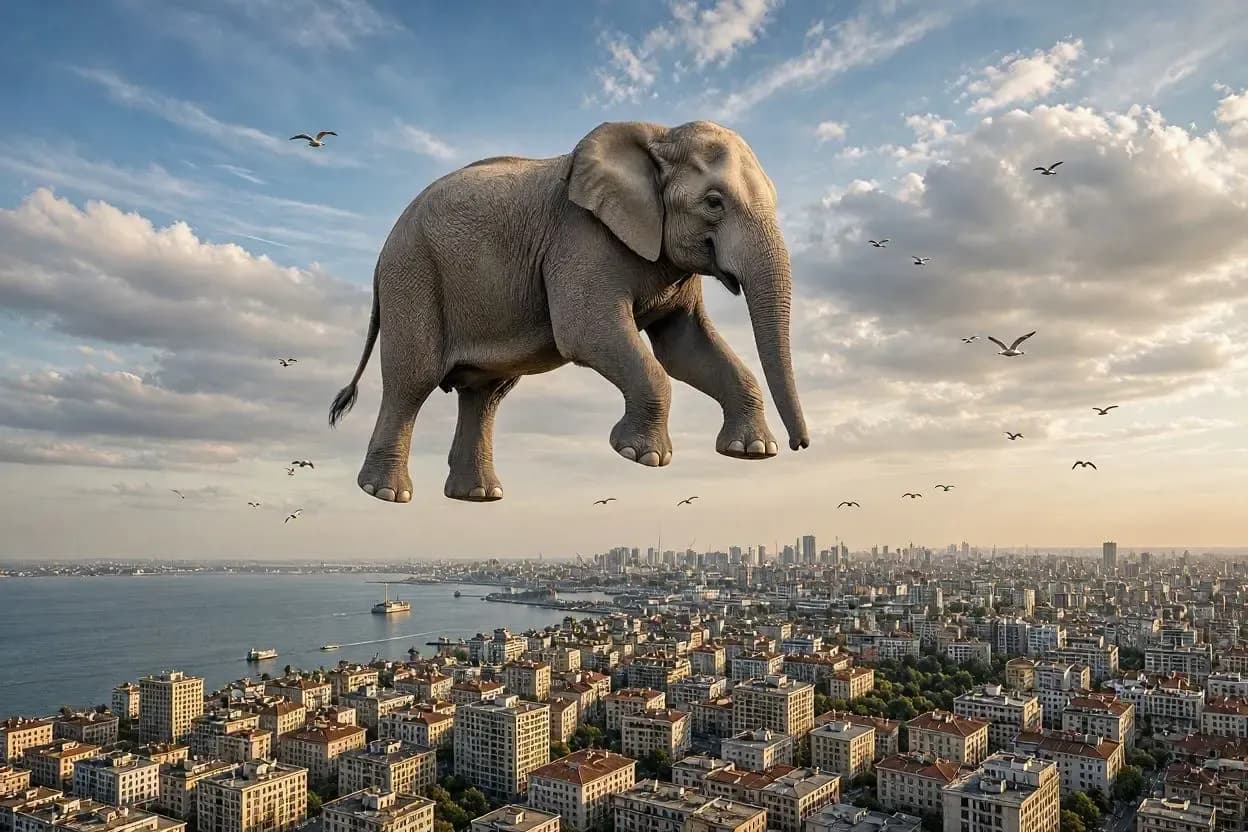
García Márquez described this technique in a 1981 interview with The Paris Review: "If you say that there are elephants flying in the sky, people are not going to believe you. But if you say that there are four hundred and twenty-five elephants flying in the sky, people will probably believe you." Specificity of detail is the mechanism of belief. The more precisely the impossible is described, the more completely the reader accepts it.
2. Political and Historical Subtext
Magical realism is rarely whimsical for the sake of whimsy. The magic almost always serves as a metaphor for historical trauma, political censorship, or social injustice that defies rational explanation.
In Toni Morrison's Beloved, the physical manifestation of a ghost represents the inescapable, living legacy of slavery — a wound so deep it cannot remain in the past. In Salman Rushdie's Midnight's Children, the telepathic abilities granted to children born at the exact moment of India's independence mirror the chaotic, hopeful, and ultimately fractured birth of a new nation. In both cases, the supernatural element carries meaning that realistic fiction could not contain without distortion. The magic is the only precise language available for what the writers are trying to say.
3. Hyper-Specific Realism
For the magic to hold weight, the non-magical elements must be rendered with meticulous, sensory detail. The temperature of the room, the scent of boiling coffee, the exact year and geopolitical tension — all anchored in rigorous, observed reality. The more grounded the setting, the more seamless the miraculous integration becomes.
This is the counterintuitive engine of the mode: it is precisely because the world is so real, so specific, so physically present that the impossible elements are credible. A levitating priest in a vaguely described, generically "magical" world is fantasy. A levitating priest in a village where we know the quality of the afternoon light and the names of the neighbors is something else entirely.
4. Fluidity of Time and Memory
Time in magical realism rarely moves linearly. It loops, stagnates, or collapses in on itself. Ancestors walk among the living. Prophecies are read before they are lived. Decades pass in a single afternoon. This temporal fluidity is not arbitrary — it reflects how human memory and cultural history actually operate. The past is not past; it is present in the bodies and stories of the living. Magical realism simply makes that truth visible.
Magical Realism vs. Neighboring Genres
Because the genre is so frequently conflated with fantasy or surrealism, understanding the structural differences is essential.
The key distinction is the characters' relationship to the impossible. In fantasy, the extraordinary is extraordinary characters recognize it as such and respond accordingly. In magical realism, the extraordinary is ordinary. It has always been there. It requires no explanation because the world has never worked any other way.
A comparative overview of Magical Realism, High/Low Fantasy, and Surrealism.
Global Masters and Essential Reading
While rooted in Latin America, magical realism is a genuinely global literary tradition.
Gabriel García Márquez — One Hundred Years of Solitude (Colombia)
The foundational text. Seven generations of the Buendía family unfold through yellow butterfly plagues, levitating priests, and endless civil wars. The novel established the formal conventions that subsequent writers would inherit, challenge, and transform.
Isabel Allende — The House of the Spirits (Chile)
A sweeping family saga interweaving clairvoyance and political revolution during Chile's 20th-century upheaval. Allende demonstrates how the mode can carry both intimate domestic drama and broad historical violence simultaneously.
Toni Morrison — Beloved (United States)
A devastating examination of memory, trauma, and maternal love, haunted by the physical embodiment of an enslaved child. Morrison's use of the mode demonstrates that magical realism is not a Latin American property, it is a strategy available to any writer whose subject exceeds the capacity of conventional realism.
Salman Rushdie — Midnight's Children (India/UK)
A sprawling post-colonial epic combining allegory, myth, and political history in post-partition India. Rushdie expanded the mode's formal range, incorporating elements of oral tradition and satirical comedy alongside its characteristic temporal fluidity.
Haruki Murakami — Kafka on the Shore (Japan)
A modern, urban evolution of the genre where raining mackerel, talking cats, and metaphysical portals sit alongside contemporary Tokyo life. Murakami demonstrates how the mode adapts to new cultural contexts without losing its essential character.
Crafting Magical Realism: A Guide for Writers
For writers working in this tradition, the central challenge is avoiding what might be called meaningless eccentricity — the use of strange or fantastical elements that carry no metaphorical or emotional weight, that exist only to signal that the writer has read García Márquez.
Start with the real world.
Establish the social, economic, and physical landscape before introducing anything impossible. If your setting does not feel entirely real and the reader cannot feel the texture of the place and the weight of its history the magic will read as a cheap special effect rather than an organic truth. The impossible can only be seamlessly integrated into a world that has first been made completely present.
Never explain the magic.
Resist the urge to create pseudo-scientific or mystical origin stories for the phenomenon. The moment a character begins researching why someone is floating, or seeking a rational explanation for the impossible event, you have shifted the mode. Explanation signals to the reader that the magic is an anomaly — something that requires justification. Magical realism requires the opposite: the impossible is simply there, as it has always been, as natural as rain.
Anchor the magic in emotion and theme.
The miraculous event should amplify the psychological or thematic reality of the characters. A heart that slowly turns to stone should reflect a character's emotional paralysis not serve as an interesting visual detail. A woman who ages backward should illuminate something true about memory, grief, or the impossibility of return. The magic is not decoration. It is meaning made physical.
Maintain absolute tonal consistency.
The prose tone used to describe a carpet being laundered must be identical to the tone used to describe that same carpet flying across the city. This uniformity of voice is the formal mechanism that makes the mode work: by treating the impossible with the same calm specificity as the ordinary, the narrator trains the reader to accept both on equal terms. Any shift in tone or any hint of wonder, irony, or qualification breaks the contract.
Let the magic carry what realism cannot.
The most powerful uses of magical realism emerge when a writer confronts subject matter that resists conventional realistic treatment: historical atrocity, collective trauma, the experience of political oppression, the weight of cultural memory across generations. Ask yourself: what is the emotional or historical truth at the center of this story that straightforward realism cannot fully capture? The answer to that question is where the magic belongs.
How Poetika Works?
Explore a complete sample analysis and understand the feedback format.
Magical realism reminds us that reality is not a fixed, objective monolith, but a subjective tapestry woven from history, perception, myth, and emotion. It emerged from cultures and histories where the miraculous and the brutal had always coexisted, where the boundary between the living and the dead was a matter of ongoing negotiation, where political reality was so extreme it could only be captured by language that exceeded the merely factual.
The yellow flowers fall on Macondo. No one is surprised. And in that ordinary acceptance of the extraordinary, the genre makes its deepest argument: that the world has always been stranger, more layered, and more alive with meaning than the conventions of realism can contain. The writers who understood this most completely were the ones who stopped trying to contain it and let it in.
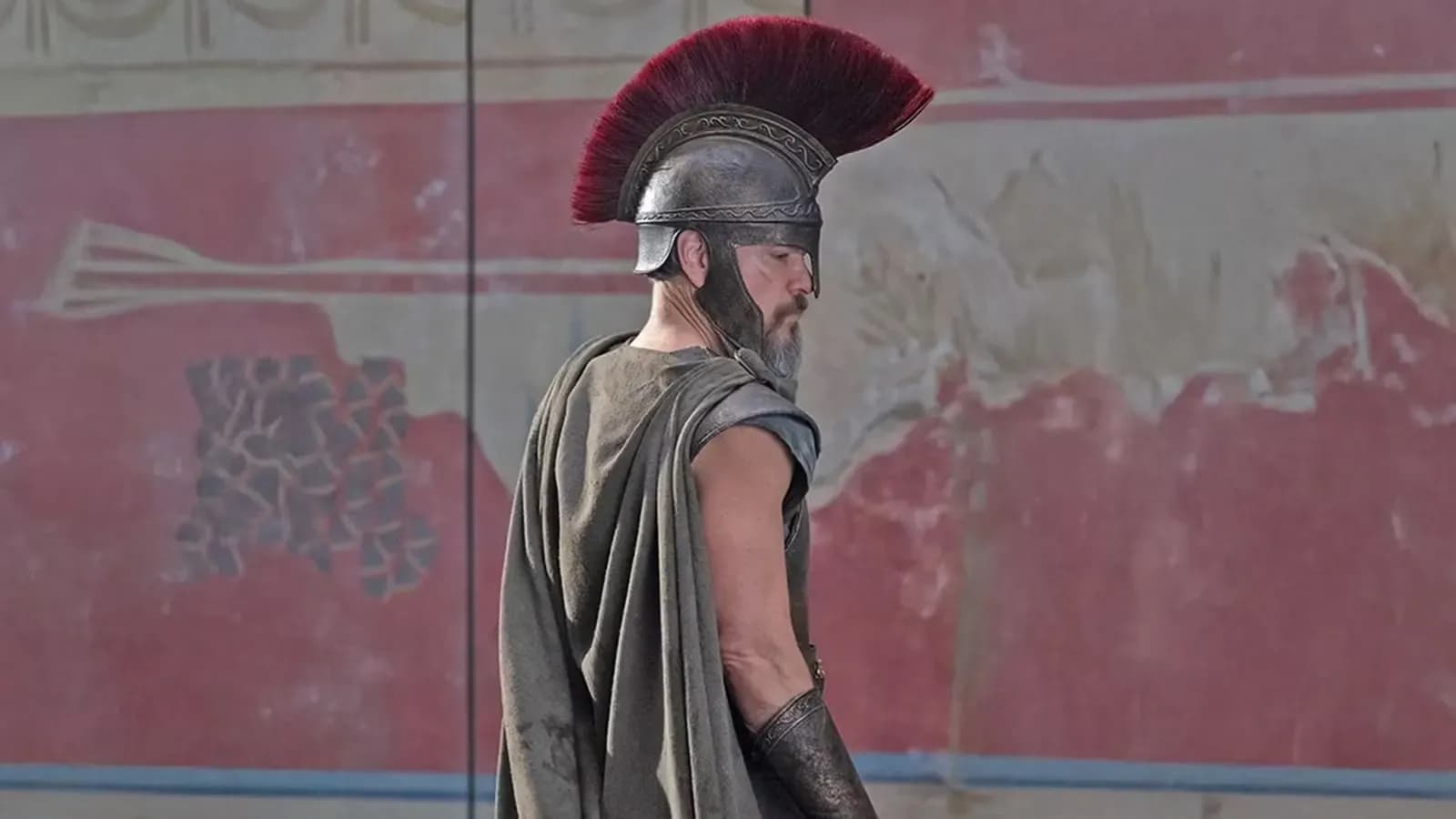
Christopher Nolan's The Odyssey may be his biggest production yet, but it also feels like the inevitable destination of a career built around memory, time, and the impossible journey home.
Every few years, a beloved novel gets adapted into a film. The announcement generates excitement; finally, that book is becoming a movie. And then, more often than not, something goes wrong. The film arrives and feels thin, rushed, or strangely hollow. The characters who felt so vivid on the page seem flat on screen. The story is technically all there, but whatever made the book extraordinary has somehow failed to survive the journey.
It is Monday morning. Over the weekend, twelve new scripts arrived. Nine more came in the week before. Somewhere in the inbox are scripts that have been waiting since last month, along with a few that have been there even longer. In two hours, the development meeting starts, and there is still a stack of material that nobody has had time to read.