Spoiler note: this post discusses the endings of Rocky, Casablanca, The Godfather and Breaking Bad, and key turns in Black Panther and A Separation.
Character motivation is the reason a character does what they do: the desire, fear or belief that pushes them to act and makes their choices make sense to an audience. In a screenplay, motivation is what turns a character from someone things happen to into someone who makes things happen. It links the inside of a character (what they feel and believe) to the outside of the story (what they do on screen), and every scene that moves forward does so because somebody wants something.
You can have a brilliant high-concept premise, a clever twist and a perfectly timed midpoint, and the script will still read flat if the reader doesn't understand why the people in it are doing anything. A shark terrorizing a beach town is a situation; a police chief afraid of the water who still goes to sea to kill it is a story.
This guide covers want and need, the four drives behind most choices, motivation for villains and antiheroes, and the motivation problems readers flag most often.
What is character motivation in a screenplay?
On the page, motivation answers the question a reader asks in every scene: why is this person doing this? When the answer is clear, the reader leans in. When it is missing, they start noticing the writer moving the pieces around.
Motivation does three jobs in a screenplay, and it is what separates a protagonist who drives the story from one who merely reacts:
- It creates action. A character who wants something will try to get it, and those attempts are your scenes.
- It creates conflict. When the thing a character wants is blocked, by another character, by circumstances or by themselves, you have drama.
- It creates meaning. What a character is willing to give up for their goal tells the audience who they are, and often what the film is about.
Scenes linked by "and then" feel episodic; scenes linked by "but" and "therefore" feel inevitable, and that chain only works if each choice comes from what a character wants (see the "but and therefore" rule in screenwriting).
Want vs. need: the core mechanics of motivation
Most screenwriting teachers split motivation into two layers: what the character consciously wants, and what they actually need.
The want: the external goal
The want is the concrete, visible objective the character is chasing. It can be filmed, and you can tell at the end whether they got it. Stop the bomb. Win the race. Get the money. Save the parents. In Rocky (1976), Rocky Balboa's want becomes clear on the night before the fight: he doesn't expect to beat Apollo Creed, but he wants to go the distance, to still be standing at the final bell.
The need: the internal deficit
The need is the emotional or moral change the character must go through to become whole. It is usually something they don't know they lack, tied to a flaw, a fear or an old wound. Rocky needs to prove to himself that he is not a nobody, that his life is worth something.
Writers sometimes connect the need to hamartia, the term Aristotle uses in the Poetics for the error or flaw that brings about a tragic hero's downfall. The principle helps: the need is usually where a character's flaw lives. (We cover flaws in depth in character flaws and how to write them.)
When want and need collide
The most satisfying stories put the want and the need in tension, so that the character can't have both, or can only get the need by letting go of the want. In Casablanca (1942), Rick Blaine wants to stay out of other people's wars; his line "I stick my neck out for nobody" sums up the want. What he needs is to commit to something larger than his own hurt. At the end he gives up Ilsa, the person he wants most, to serve that larger cause. We trace that shift scene by scene in Rick Blaine's character arc in Casablanca.
Rocky shows another version: he loses on a split decision, but he goes the distance, and the need is met.
When the want and the need pull in different directions, the result is a character arc: the visible journey from the person who wanted one thing to the person who understands what they needed.
The four universal drivers of character action
Underneath specific wants, most motivation grows out of a few basic human drives. Psychologists have mapped them in different ways (Abraham Maslow's 1943 hierarchy of needs is the best known); screenwriters can work with four.
1. Survival and safety
The most primal drive: staying alive, or protecting a position in the world that feels like survival. In Gravity (2013), Ryan Stone's want is simply to get back to Earth after debris destroys her shuttle. The survival plot is driven by something quieter: she is still grieving the death of her young daughter, and part of her has stopped wanting to live. Survival stories work best when the physical threat presses on an emotional one.
Survival can also be economic: in Vittorio De Sica's Bicycle Thieves (1948), Antonio Ricci's hunt for his stolen bicycle is a fight to keep his job and feed his family.
2. Duty and morality
Some characters act because a code tells them to: honor, justice, loyalty or responsibility. In High Noon (1952), Marshal Will Kane has just married and is about to leave town when he learns that an outlaw he sent to prison is arriving on the noon train. The townspeople refuse to help him, and his new wife begs him to go. He stays because leaving would betray who he is. Duty works because it can be tested: every scene asks what the character will sacrifice to honor it.
3. Ambition and power
The pursuit of status, control, legacy or recognition. These motivations fuel rise-and-fall stories and many antagonists. Ambition is most interesting when it hides another drive underneath it: in The Social Network (2010), the film opens with Mark Zuckerberg being dumped and closes on him alone, hoping she will accept a friend request. The ambition is real, but so is the hunger to belong.
4. Love and belonging
The drive to protect, win back or connect with other people: family, a partner, a community. In Hayao Miyazaki's Spirited Away (2001), ten-year-old Chihiro takes a job in a bathhouse for spirits because her parents have been turned into pigs, and only she can free them. Audiences often connect with this drive fastest.
Most memorable characters combine drives, and the best scenes set them against each other. Asghar Farhadi's A Separation (2011) is built on two decent people with conflicting motivations: Simin wants to leave Iran to give their daughter a better future, while Nader refuses to abandon his father, who has Alzheimer's. Both are acting out of love and duty. Neither is wrong, which is exactly why the film is so painful.
How to write motivation for antagonists and antiheroes
The villain is the hero of their own story
A villain without a motivation is a plot device; with one, they become a second protagonist pulling the story the other way. Test it by telling the story from the antagonist's point of view. If it sounds like a story, with a want, a need and a reason, the villain will feel real. (For more on the relationship between the two roles, see understanding protagonist and antagonist.)
Black Panther (2018) is a modern example. Erik Killmonger's plan is extreme: he wants to seize Wakanda's throne and send its weapons to oppressed people of African descent around the world. But it is grounded in specific history: as a boy in Oakland he lost his father, N'Jobu, killed by T'Challa's father, King T'Chaka. The audience can reject his methods and still feel the force of his argument, and by the end it has changed the hero too.
Relatability is not the same as approval
Your job is to make an antagonist or antihero understandable, not likable: the audience should follow the logic of a terrible choice while hoping it fails.
- Ground extreme choices in a recognizable wound. Grief, humiliation and betrayal are universal; the response to them is what makes a character dangerous.
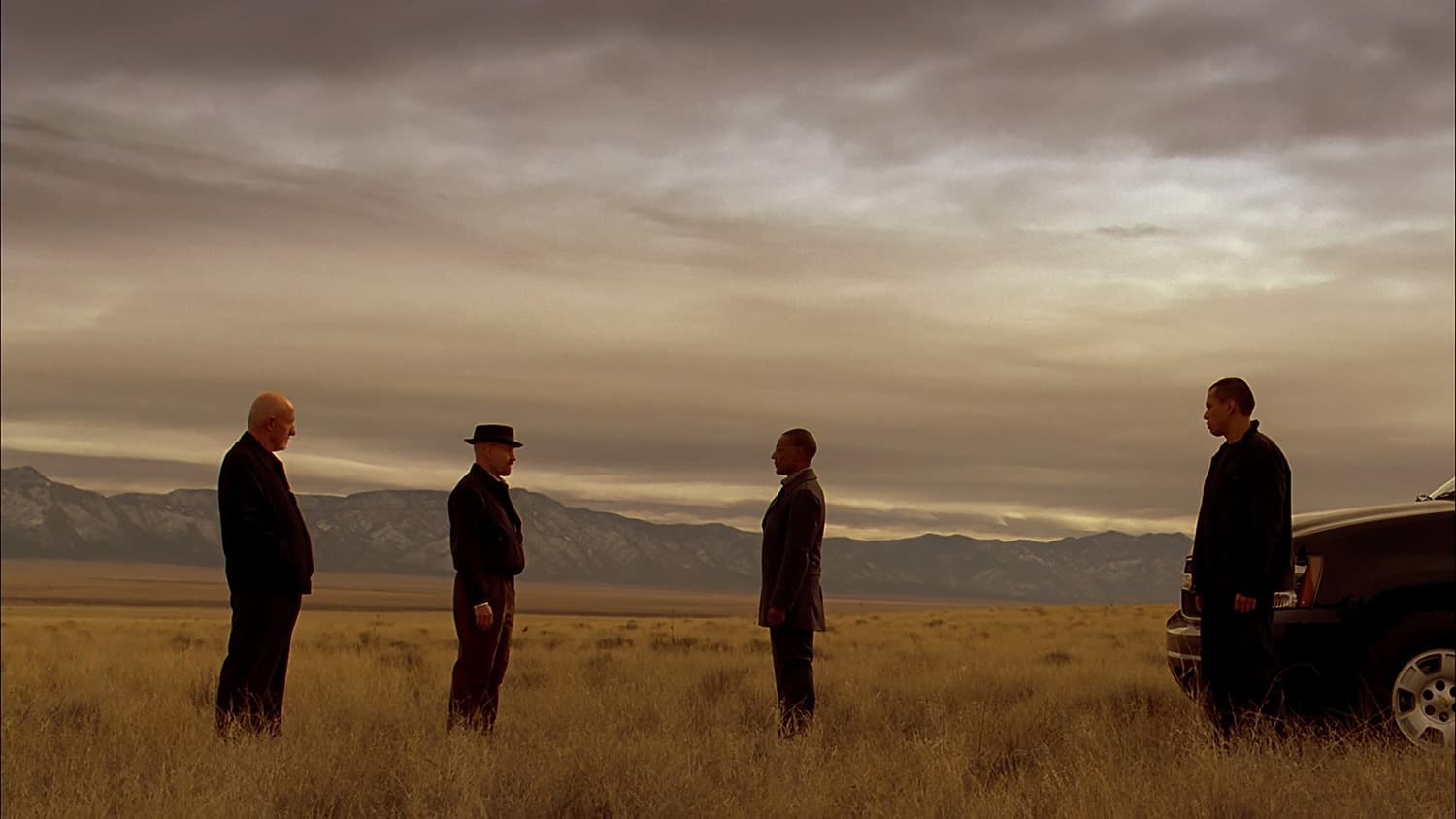
- Let the motivation evolve. In Breaking Bad, Walter White starts cooking meth after a terminal cancer diagnosis, telling himself he is providing for his family. By the final episode he admits he did it for himself. The shift from need to pride is the series.
- Know when a character works without a backstory. The Joker in The Dark Knight (2008) tells contradictory stories about his scars. His motivation is not a wound but an idea: to prove that anyone can be pushed into chaos. Alfred's description, "Some men just want to watch the world burn," works because the film treats the Joker as a force testing Batman's code. That is a deliberate choice, not an absence of thought.
Common character motivation problems and how to fix them
Readers rarely write "the motivation is weak." They write "the protagonist feels passive" or "the second act loses momentum," and most of those notes trace back to motivation.
Failing the "why now?" test
A story should begin at the moment the character can no longer avoid acting. If a character has been unhappy for ten years, the reader wants to know why they finally do something today. The answer is usually the inciting incident: an event that turns a background desire into an urgent goal. Walter White had been frustrated for years; the cancer diagnosis is what makes him act now. In Akira Kurosawa's Ikiru (1952), a bureaucrat who has spent decades doing nothing at his desk learns he has stomach cancer, and only then does he search for a way to make his remaining time matter.
Fix: write down what changes on the day your story begins. If nothing does, either find the event or start the story later.
Arbitrary plot choices
This is the character who goes into the dark basement alone or keeps a vital secret for no reason, because the plot needs them to. Readers spot it instantly.
Fix: for every major choice, ask whether this person, with this want and this fear, would plausibly do this. If not, change the circumstances so the choice becomes necessary, give them a reason the audience can see, or let a different character make the move.
Inconsistent driving forces in Act II
Characters are allowed to change their goals. Arcs depend on it. What they can't do is change them off screen. In The Godfather (1972), Michael Corleone begins as the son who wants nothing to do with the family business. His motivation shifts in visible steps: he protects his father at the hospital, volunteers to kill Sollozzo and McCluskey, and ends the film as the new Don. Each step is dramatized, so the transformation feels earned rather than arbitrary.
Fix: map your protagonist's goal at the start of the script, at the midpoint and before the climax. Every change needs a scene that causes it.
A quick motivation checklist for your script
- Can you state your protagonist's want in one sentence, as something we can see on screen?
- Do you know what they need, even if they don't?
- Do the want and the need pull against each other at some point?
- Is it clear why the story starts now, on this day?
- Does every major choice follow from what the character wants and fears?
- Does your antagonist have a goal that makes sense from their side?
- Is every change in motivation caused by a scene we see?
- Does the climax force the character to choose between what they want and what they need?
If you want an outside view of how clearly these motivations come across, Poetika can analyze your screenplay and return structured notes on character, structure and conflict, including where a reader may lose track of why your characters act.
Plot is what happens, motivation is why we care
When the audience understands what a character wants, needs and fears, every obstacle matters and every sacrifice lands. When they don't, even a spectacular plot becomes events happening to strangers. Before you fix structure or polish dialogue, ask: why does this person do this, and why now?
Ready to see whether your characters' motivations come through for a reader? Upload your screenplay to Poetika and get a structured analysis of your draft.
FAQ
What is the difference between character motivation and character goal?
A goal is what the character is trying to achieve, such as winning a fight or escaping a prison. Motivation is why they want it: the fear, desire or belief behind the goal. Two characters can share the same goal for completely different reasons, and those reasons shape how far each one will go to reach it.
What are examples of character motivation in film?
Rocky Balboa wants to go the distance to prove he is not a nobody. Will Kane in High Noon stays to face a killer out of duty. Chihiro in Spirited Away works in a spirit bathhouse to save her parents. Killmonger in Black Panther acts out of grief and anger at injustice.
Can a character have more than one motivation?
Yes, and the most interesting characters usually do. A character might be driven by ambition and by a need for love, or by duty and by fear. Conflicting motivations inside one person create internal conflict, and forcing the character to choose between them often produces the strongest scenes and the climax of the story.
How do you show character motivation without exposition?
Show it through choices, especially costly ones. Let the character take a risk, refuse an easy way out or sacrifice something for their goal. Behavior, reactions and small details reveal motivation more convincingly than a speech, and they let the audience work out the reason for themselves, which makes it more memorable.