Not All Heroes Are Good. Not All Villains Are Evil. Understanding Protagonist and Antagonist
A writer's guide to the two forces that drive every story — and why most people misunderstand both.
June 11, 202411 min
Read Spoiler note: this post discusses the endings of Psycho, One Flew Over the Cuckoo's Nest, No Country for Old Men, Avengers: Infinity War, the Star Wars trilogy and Breaking Bad.
Iconic movie villains are antagonists whose goals, logic and screen presence are so clearly drawn that they define a story's stakes and outlive the film itself. The Joker, Hannibal Lecter, Darth Vader and Hans Gruber are not memorable because they are evil; they are memorable because they want something specific, they believe they are right, and every scene they enter forces the hero to change or lose.
A great hero defines the journey, but a great antagonist defines what the journey costs. That is why screenwriters study villains as closely as protagonists. This list gathers 13 of the most iconic antagonists in film and television, grouped by the kind of threat they represent, with a note on what each one teaches about writing. The final sections turn those lessons into questions you can ask of your own script.
Aristotle never wrote about villains as such. His Poetics is about action: a tragedy moves us to pity and fear because the people in it pay for their choices. A story with a weak opposing force has nothing that makes those choices costly. (We look at Aristotle's ideas through a modern lens in our piece on Homer's Odyssey, Aristotle's Poetics and Nolan.)
The villains audiences remember tend to share four qualities:
Not every antagonist is a villain; our guide to protagonist and antagonist explains the difference.
These antagonists set out to prove an idea about the world.
In Christopher Nolan's film, written with Jonathan Nolan, Heath Ledger's Joker wants no money and no throne. He wants to prove that Gotham's decency is a thin coat of paint. He tells different stories about his scars, burns a mountain of cash and stages a test on two ferries, each holding the trigger for the other's bomb. His real target is Batman's one rule: that he will not kill. Ledger won a posthumous Academy Award for the role.
Lesson for writers: an antagonist with a thesis attacks the hero's values, not just the hero's body.
Thanos, played by Josh Brolin, believes the universe's resources cannot sustain all of its life, so he sets out to erase half of it. The screenplay by Christopher Markus and Stephen McFeely gives him the journey usually reserved for heroes: a goal, a painful sacrifice when he gives up Gamora for the Soul Stone, and a victory. The film ends with half of all life gone and Thanos resting, his work done.
Lesson for writers: a villain who is the hero of his own story becomes frightening precisely because we can follow his reasoning.
Joel and Ethan Coen's adaptation of Cormac McCarthy's novel gives Javier Bardem's hitman a captive bolt pistol, an unforgettable haircut and a code. In the gas station scene, he asks a shopkeeper to call a coin toss without telling him what is at stake. Chigurh behaves less like a man than like fate, and near the end he follows his code even when nothing forces him to. Bardem won the Academy Award for Best Supporting Actor.
Lesson for writers: rules make a villain more frightening than rage, because the audience can see the logic coming and still can't stop it.
When the American Film Institute ranked the greatest screen villains in 2003, its top five were Hannibal Lecter, Norman Bates, Darth Vader, the Wicked Witch of the West and Nurse Ratched. Three of them work on the mind before they touch the body.
In Jonathan Demme's film, written by Ted Tally from Thomas Harris's novel, Anthony Hopkins plays Lecter for only a small part of the running time, mostly behind glass. He still dominates the story. His exchange with Clarice Starling is a trade, information for personal memories, and every session strips away another layer of her defences. Hopkins won Best Actor, and the film won all five of the major Academy Awards.
Lesson for writers: intelligence is a weapon. A villain who understands the hero better than the hero does needs no action scene to be a threat.
Alfred Hitchcock's film, written by Joseph Stefano from Robert Bloch's novel, kills its apparent heroine, Marion Crane, less than halfway through. The audience then finds itself watching shy, polite Norman, played by Anthony Perkins, as he cleans up after "Mother". The final reveal, that Mother is long dead and lives on inside Norman's mind, turns the sympathy we gave him into horror.
Lesson for writers: let the audience like the villain before they understand him, and the reveal does twice the work.
Miloš Forman's adaptation of Ken Kesey's novel gives Louise Fletcher a villain who never raises her voice. Ratched controls the ward through rules, schedules and group therapy sessions that turn patients against themselves. She breaks the young Billy Bibbit with a single threat to tell his mother, and Randle McMurphy's rebellion ends in a lobotomy. Fletcher won the Academy Award for Best Actress.
Lesson for writers: the most chilling antagonists can be institutions with a human face, convinced they are helping.
These antagonists are larger than life, with something human underneath.
George Lucas built Vader from a black mask, the breathing of a respirator and the voice of James Earl Jones. In The Empire Strikes Back (1980), Vader tells Luke Skywalker that he is his father, and the villain becomes family. In Return of the Jedi (1983), he turns on the Emperor to save his son, completing one of the best-known redemption arcs in film.
Lesson for writers: a villain who was once the hero's ideal gives the conflict a personal wound. See how arcs like this are built in our guide to character arc.
In his first feature film role, Alan Rickman plays the leader of a group that seizes Nakatomi Plaza on Christmas Eve. They pose as political terrorists, but Hans is a thief after bearer bonds in the building's vault. The screenplay by Jeb Stuart and Steven E. de Souza, from Roderick Thorp's novel, makes him John McClane's opposite: tailored, educated, always calm. When they finally meet, Hans fakes an American accent and plays a frightened hostage.
Lesson for writers: an action villain should be a match for the hero's mind, not just his fists.
Peter Jackson's trilogy, written with Fran Walsh and Philippa Boyens, barely shows Sauron as a body; he is an eye, a voice and a growing darkness. The villain the audience actually watches is the Ring, which corrupts Gollum, tempts Boromir and, at the crucial moment on Mount Doom, wins over Frodo himself.
Lesson for writers: an antagonist can be a force that works through the people the hero trusts, including the hero.
Television gives an antagonist years instead of two hours.
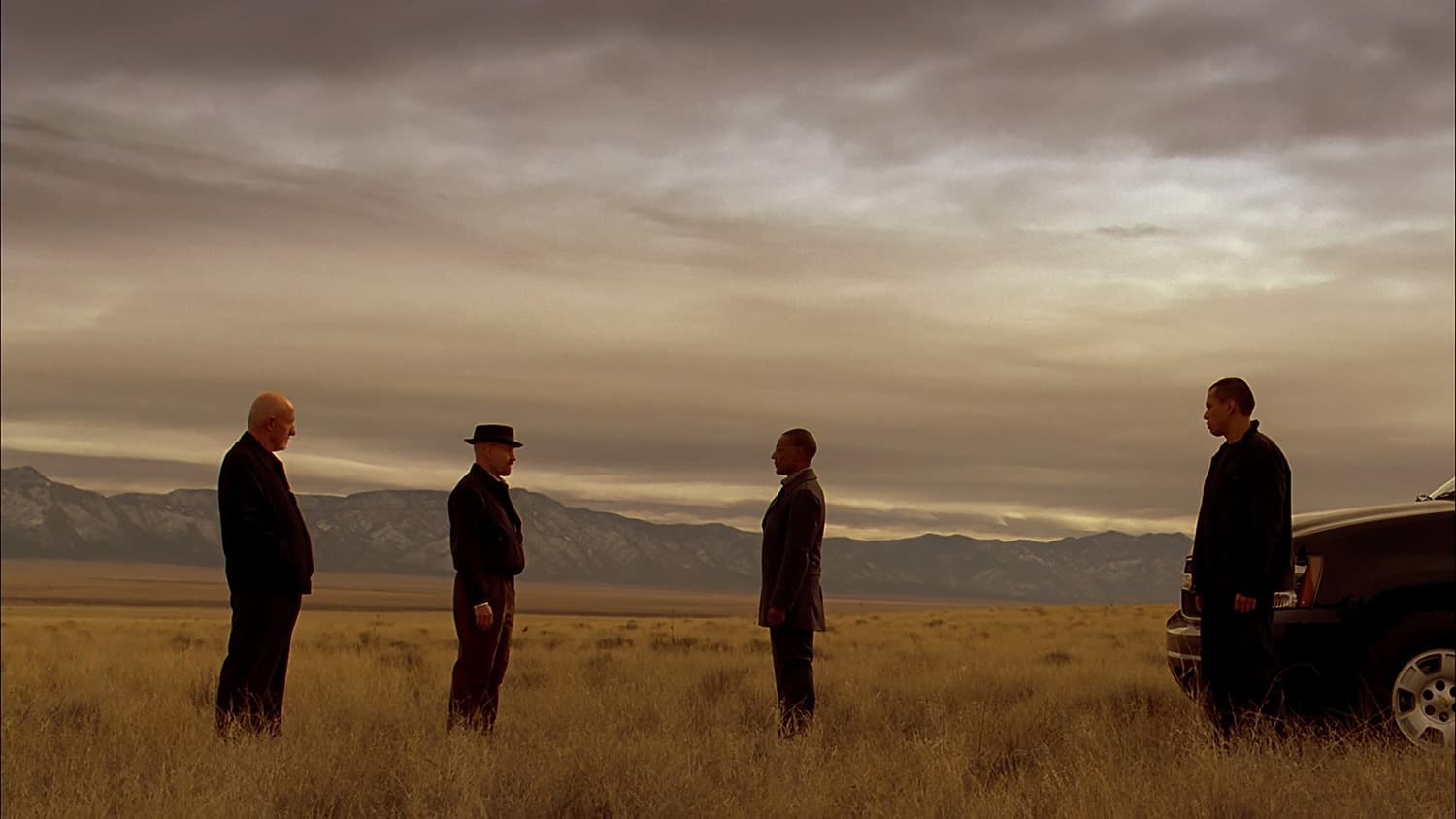
Vince Gilligan described his plan as turning Mr. Chips into Scarface, and Bryan Cranston's chemistry teacher makes that journey over five seasons. Walt starts making meth to provide for his family and ends as Heisenberg, the one who knocks. In the finale, he finally admits he did it for himself because he liked it. He is the rare protagonist who becomes the antagonist of his own story.
Lesson for writers: the most disturbing villain may be the one the audience has been rooting for. Our character arc examples look at how such negative arcs work.
Lena Headey's Cersei, adapted by David Benioff and D. B. Weiss from George R. R. Martin's novels, is driven by a single love: her children. In a world that underestimates her because she is a woman, she plays politics without mercy, and in the season six finale she destroys the Great Sept of Baelor with wildfire to wipe out her enemies at once.
Lesson for writers: a motive the audience recognises, like a parent's love, can justify almost any cruelty in the character's own mind. Our guide to character motivation explains why that matters.
Developed by Eric Kripke from the comic by Garth Ennis and Darick Robertson, The Boys imagines what Superman would be like if he were raised by a corporation and never learned empathy. Antony Starr plays Homelander as a god with the ego of a neglected child: he lets a plane full of passengers crash rather than risk his image, then craves the crowd's love the next morning.
Lesson for writers: turn a familiar heroic archetype inside out and the audience sees both at once. Our list of character archetypes is a good place to start.
Created for television by Phoebe Waller-Bridge from Luke Jennings's novellas, Killing Eve pairs MI5 officer Eve Polastri (Sandra Oh) with Villanelle (Jodie Comer), a playful, fashion-obsessed assassin. The cat-and-mouse becomes a mutual obsession, and the line between hunter and hunted blurs. Comer won an Emmy for the role in 2019.
Lesson for writers: an antagonist who fascinates the protagonist creates a relationship, not just a chase.
Side by side, these 13 share the same craft lessons.
A strong antagonist also makes the protagonist better. Without Lecter, Clarice is just a trainee; with him, she has to face herself. That is why the anatomy of a great protagonist always includes the forces that test them.
Before you rewrite, check your villain against these questions:
You know what you meant, so an outside read helps: you can run your screenplay through Poetika to get a structured analysis of character, conflict and stakes, then compare it with notes from human readers.
Great villains stay with us long after the film ends because they challenge how we think about morality, power and human nature. When you return to your own script, ask yourself: is your antagonist just an obstacle, or a force with a worldview of its own? And which villain on this list would you most like to have written?
There is no single answer, but lists keep returning to the same names. The American Film Institute's 2003 ranking placed Hannibal Lecter first, followed by Norman Bates and Darth Vader. Audience polls often add the Joker. What these characters share is a clear goal, a coherent worldview and a presence that dominates every scene they appear in.
An antagonist is any character or force that opposes the protagonist's goal; a villain is an antagonist the story presents as morally wrong. A rival, a parent or a storm can be an antagonist without being a villain. Every villain is an antagonist, but not every antagonist is a villain, and some of the best stories blur the two.
Villains usually drive the plot. The hero often reacts, while the villain acts, sets the stakes and makes the choices that create conflict. Writers also give villains more freedom: they can break rules, speak bluntly and reveal uncomfortable truths. When an antagonist's logic is coherent, audiences remember it because it lingers as a question.
Start with what the villain wants and why, then write their reasoning as if they were the protagonist. Give them a past or a belief that explains their choices without excusing them, and let them be right about something. Finally, connect their goal directly to the hero's so that one can only win if the other loses.
A writer's guide to the two forces that drive every story — and why most people misunderstand both.
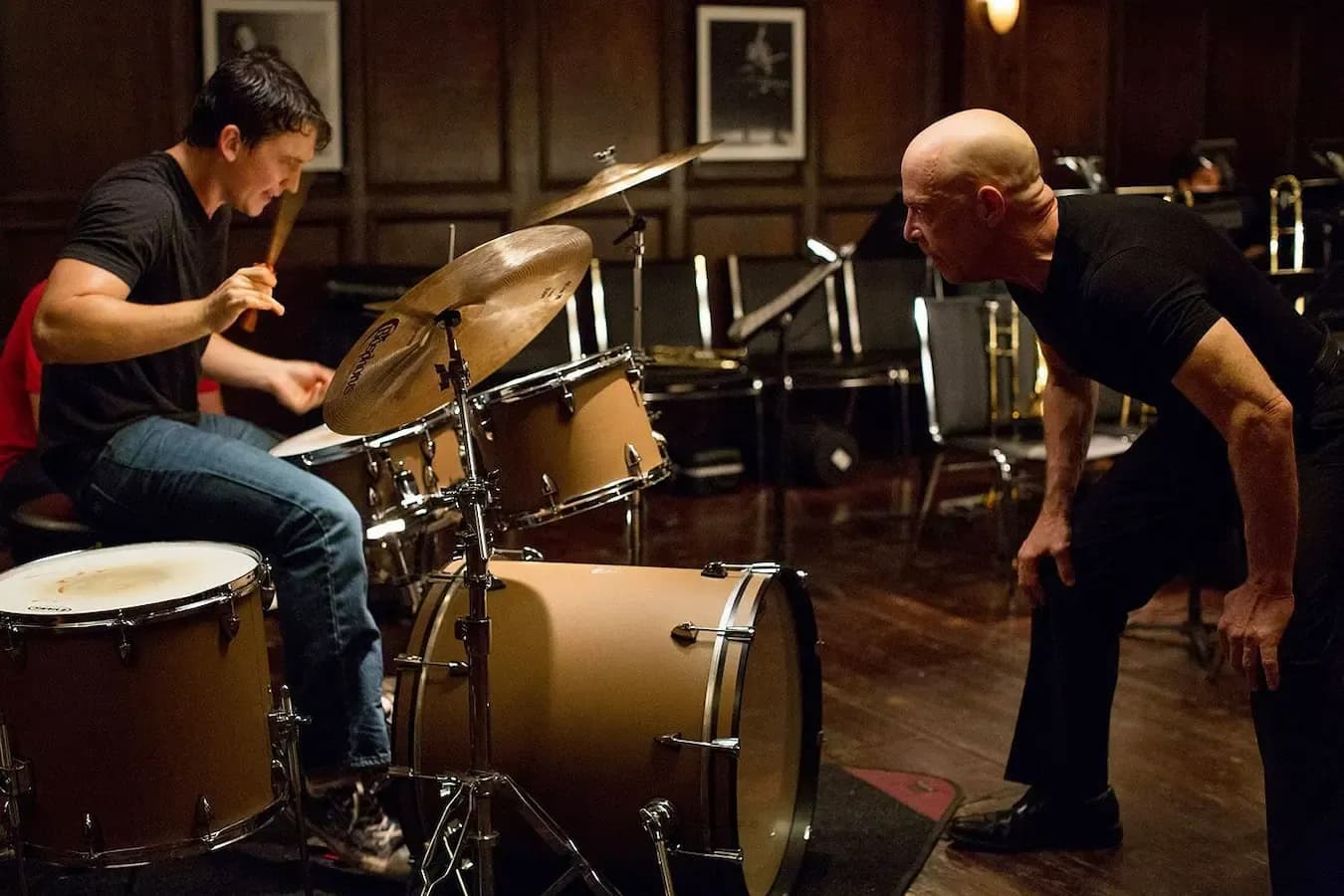
Think of a film that stayed with you long after the credits rolled. Not because of its plot twists or visual effects, but because of what happened to the person at its center. The way they started as one thing and ended as something else or the way the story made you desperately wish they had. That experience has a name: character arc. And it is the single most important structural element separating characters who feel alive from characters who merely function.
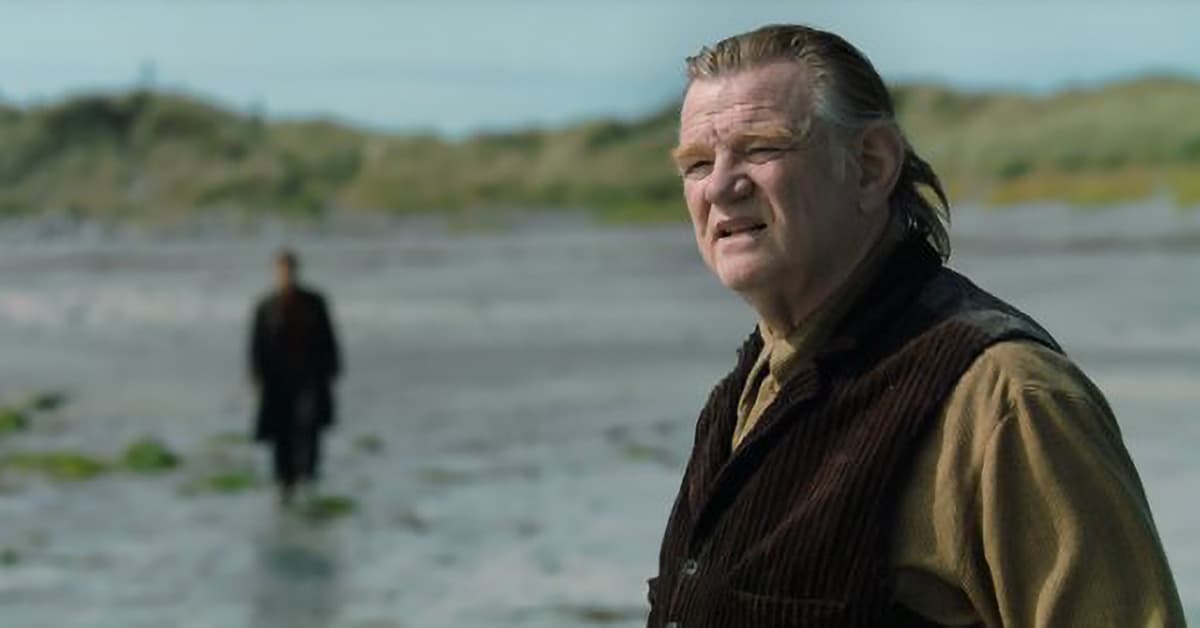
Characters are the story. Plot is simply what happens when particular people, with particular desires and particular contradictions, come into contact with the world around them.
Explore a complete sample analysis and understand the feedback format.