Script feedback is an outside reader's response to your screenplay: where the story held them, where it lost them, and what was unclear on the page. Useful script feedback depends on three things you control: sending the script at the right moment, choosing readers who suit what you need to learn, and asking specific questions instead of "did you like it?" The rest is how you listen, sort the notes and decide what to change.
Writing a screenplay is solitary work, but film is a collaborative medium. Producers, actors and audiences will only know what is on the page. Feedback is the first time you find out what is actually there.
When is your script ready for feedback?
Share too early and you waste your readers' attention; too late and you have polished the wrong draft.
- Don't share the very first draft. A draft written in one rush is full of problems you would catch yourself: typos, format slips, scenes you meant to cut. Fix what you can see first, so readers spend their notes on the story.
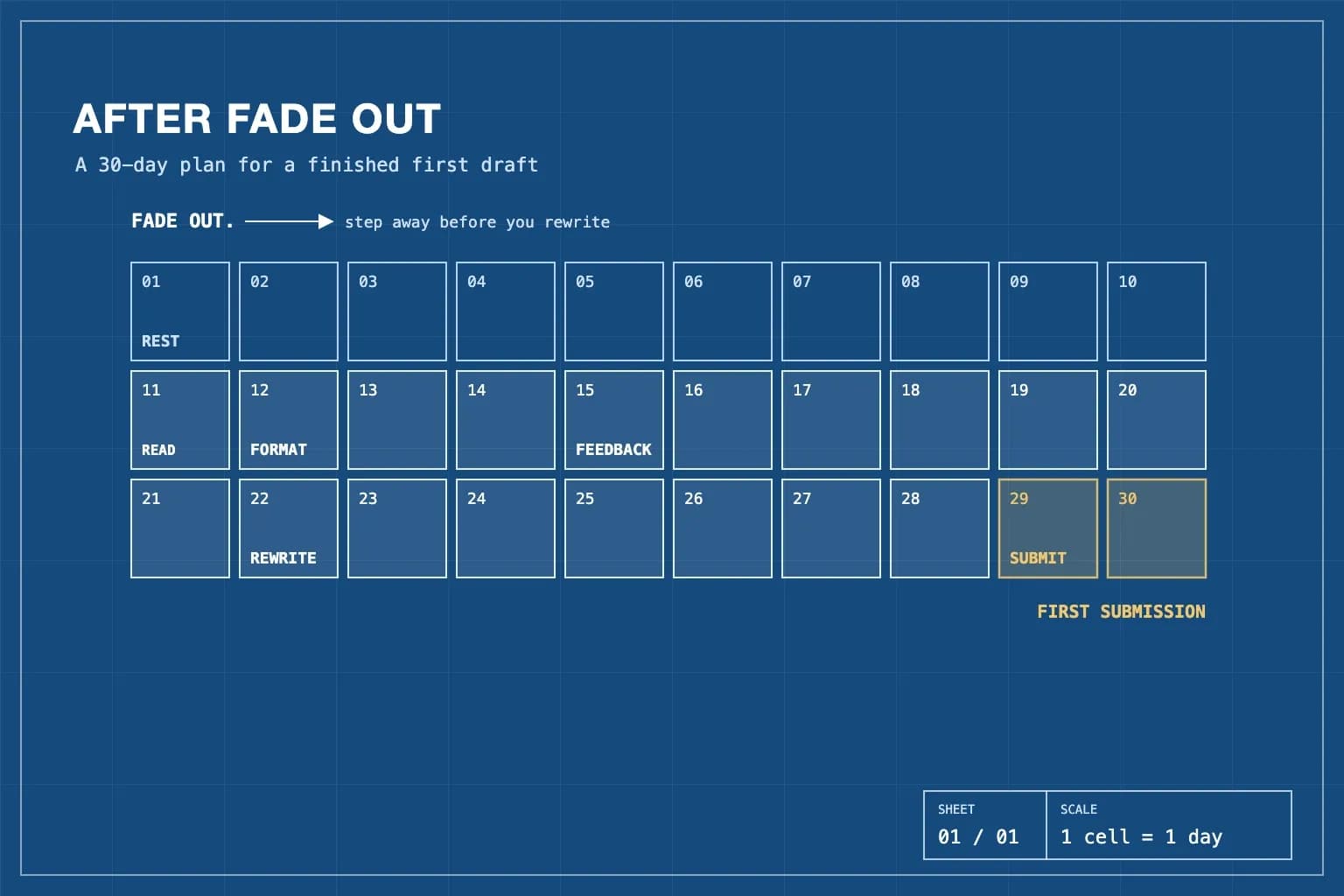
- Put the script in a drawer. Leave it alone for a week or two, then reread it in one sitting. You will see repetition and confusion you could not see while writing. Our guide on what to do after finishing a screenplay sets out this resting period in a 30-day plan.
- Know what this draft needs. An early draft needs feedback on the concept, the protagonist and the structure. A late draft needs feedback on scenes, dialogue and pacing. Asking someone to comment on dialogue when the second act doesn't work yet gets you notes on the wrong problem.
If you can state the story in one sentence and name what your protagonist wants, the draft is ready for someone else.
Who should read your script?
Different readers are good at different things. The most useful feedback usually comes from a mix, each chosen for what they can see that you cannot.
- Fellow screenwriters and writing groups: best for structure, format and craft. They know how a screenplay reads and can tell you where the act breaks fall or why a scene runs long. The risk is that they may judge your script by how they would write it.
- Non-writers who watch a lot of films: best for emotional response and clarity. They won't name a structural problem, but they will tell you honestly that they got bored at page 50 or didn't care about the hero. That is often the most important note you will get.
- Actors at a table read: best for dialogue. Hearing lines spoken exposes stiff speech, repeated beats and scenes that go on too long; see why your script isn't finished until it's spoken aloud.
- Professional readers and consultants: best for an objective, market-aware evaluation before you submit to producers, agents or contests. A script reader reads the way the gatekeepers do, and a script consultant will tell you what your friends won't.
Some readers are worth avoiding, at least for now:
- The cheerleader, usually a close friend or family member, who loves everything and gives you nothing to work with.
- The rewriter, who tries to turn your story into the one they would have written: a different genre, a different ending, a different hero.
- The wrong audience, such as someone who dislikes horror reading your horror script. Their notes will be about the genre, not your draft.
What structured development looks like
Writers' labs show how much the right feedback can do. Ryan Coogler developed Fruitvale Station (2013) at the Sundance Institute's Screenwriters Lab in 2012, where he worked through the script with creative advisors and then rewrote it with their feedback. The film went on to win the Grand Jury Prize and the Audience Award at the 2013 Sundance Film Festival. Labs and development programmes in other countries, such as TorinoFilmLab in Italy, follow a similar model of repeated feedback across drafts.
How to ask for script feedback
The quality of the notes you get depends heavily on what you ask. "What did you think?" invites a verdict, and verdicts are hard to use. Specific questions invite observations, which you can act on.
Send each reader a short note with the script that says what kind of draft it is and what you want to learn. Then give them a handful of questions, such as:
- Where did you get bored, or start skimming?
- Where were you confused about what was happening or why?
- Whose story is this, and what do they want?
- Which character felt least clear in their motivation?
- Did any scene feel repetitive or unnecessary?
- Was the ending satisfying, and did it follow from what came before?
- What do you remember most, a day after reading?
Ask readers to note their reactions as they read, in the margin or with page numbers, rather than writing a summary at the end. A remark like "lost me here, p. 47" is worth more than a polished paragraph written afterwards, because it tells you exactly where the problem is.
A feature takes a few hours to read properly, so give readers time, and thank them whatever they say.
How to receive notes without defending your script
Getting notes is hard. You have spent months on the script and someone has just told you that the scene you love does not work. The instinct is to explain, and explaining is the habit to break.
- Listen, don't defend. If a reader missed something, the page did not deliver it. You won't be in the room when a producer reads your script, so "but in the next scene she…" is not a fix. Write down what they say and ask follow-up questions only to understand it better.
- Ask "where" and "why". "It was slow" becomes useful when you learn it was slow from page 40 to 60 because nothing changed for the protagonist.
- Wait before you decide. Read the notes, then put them away for a day or two. Notes that sting on day one often look obvious on day three.
- Remember what feedback is. A note is a report on how one draft read to one person. It is not a judgment of your talent.
Look for patterns, not single opinions
One reader's reaction is a data point. Several readers reacting the same way is a finding.
- If three readers lose interest in the same stretch of act two, something there isn't working, even if each describes it differently.
- If one reader dislikes a line of dialogue, it may be taste. Weigh it, but don't rewrite the scene for it.
- If readers contradict each other, look for what both notes have in common. "The ending is too dark" and "the ending feels unearned" may both point to a turn that hasn't been set up.
Audience reactions work the same way at the other end of the process. Test screenings exist because a crowd reveals patterns a single viewer can't: Paramount reshot the ending of Fatal Attraction (1987) after test audiences reacted badly to the original version. Whatever you think of that decision, a strong, repeated reaction tells you something real about how a story plays.
The problem is usually right; the solution often isn't
Readers are very good at feeling where a story breaks. They are much less reliable at saying how to fix it. When a note comes with a solution attached ("cut the flashback", "make him funnier"), look for the problem underneath it, sometimes called the note behind the note.
The early history of Toy Story (1995) shows why this matters. While Pixar was developing the film for Disney, notes pushed for more "edge", and in a story reel screened in late 1993 Woody had become so harsh and unlikable that the production was halted. The fix was not a new set of instructions. The story team reworked the film so that Woody's jealousy came from his love for Andy, which made him a character an audience could follow even when he behaved badly. The note's concern, a story that would also hold adults, was real; the suggested fix had made the hero impossible to root for.
Pixar later built its review process around this lesson. Ed Catmull describes in Creativity, Inc. (2014) how the studio's Braintrust gives directors candid notes but has no authority to impose them: the filmmaker decides what to do. That is a good model for any writer. Readers diagnose; you prescribe.
How to turn script feedback into a revision plan
Once the notes are in and you have had time to absorb them, resist the urge to open the script and start fixing page one. Plan first.
- Collect everything in one place. Put all notes into a single document, with the reader and page number for each.
- Sort them by category. Group notes under structure and pacing, character and arcs, scenes, dialogue, and format. Structure notes go first, because fixing them often changes the scenes and dialogue anyway.
- Mark each note. Decide whether you agree, disagree or need to think further. Notes that repeat across readers get priority.
- Write a short rewrite plan. List the three to five changes this draft must make, in your own words. If a change doesn't serve the story you want to tell, leave it off.
- Rewrite from big to small. Fix structure, then characters, then scenes, then lines. Our guide on how rewriting makes a screenplay better explains why each pass should have a clear job.
- Get fresh eyes on the new draft. Send it to at least one reader who hasn't seen the last version.
Stay true to what the story is about
Not every note should be taken. If a change would alter the core of your story, its theme, the protagonist's essential choice or the feeling you want the audience to leave with, you can decline it, as long as you have solved the problem the note pointed to. A script that tries to satisfy every reader usually ends up satisfying none of them.
Professional coverage and AI analysis
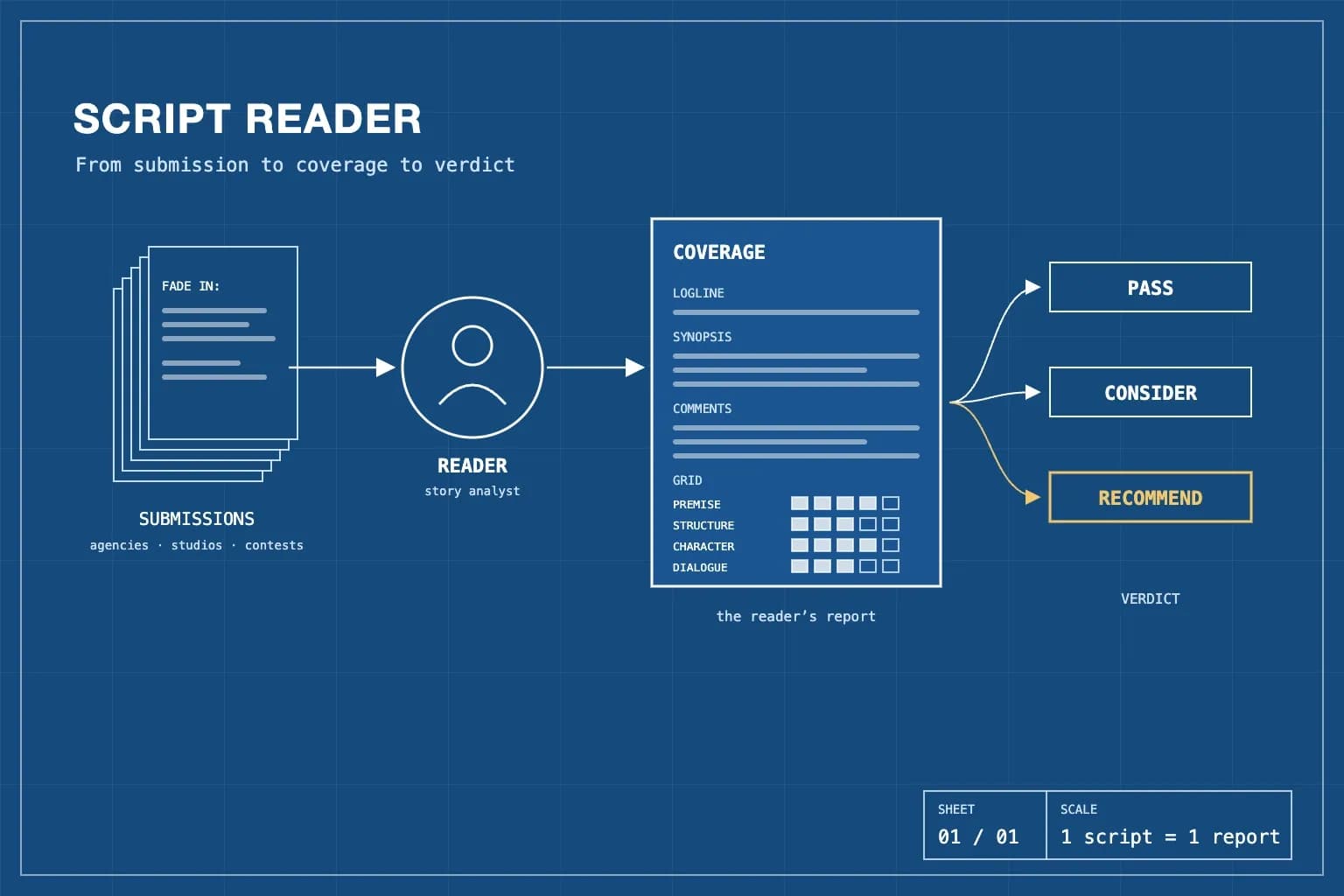
Friends and writing groups are rarely fully objective. Coverage gives you a stranger's view of the script, with a logline, a synopsis, notes and a verdict; not all script coverage is the same, so choose the kind that matches what you need to learn. And it helps to know what makes a professional script analysis worth trusting.
An AI analysis adds a fast, consistent first read you can get between drafts. You can upload your screenplay to Poetika and receive a structured report on story, structure, character, dialogue and market potential, then use it alongside your human readers: the report shows where the draft is likely to lose a reader, and your readers tell you how it felt.
How to give script feedback in return
In most writing groups, you get notes by giving them. Start with what works, describe your experience rather than your preferences ("I lost track of her goal after the party scene", not "I'd make her a lawyer"), give page numbers, lead with the two or three biggest issues, and leave the solutions to the writer.
Checklist: getting and using script feedback
- The draft has rested for at least a week and has been reread in one sitting
- Typos, format and obvious errors are fixed before anyone else reads it
- You know what kind of feedback this draft needs
- You have chosen a mix of readers: craft, audience and, if possible, professional
- Each reader has a short note and a list of specific questions
- You listened without defending and wrote everything down
- You waited a day or two before deciding what to change
- Notes are collected, sorted by category and checked for patterns
- You have a written rewrite plan of three to five changes
- A fresh reader will see the next draft
FAQ
How many people should read my script before I submit it?
There is no fixed number, but three to five readers usually give you enough to see patterns without drowning in notes. Mix screenwriters, who comment on craft, with non-writers, who tell you how the story felt. Add professional coverage or a structured analysis before you send the script to producers, agents or contests.
Where can I get feedback on my screenplay?
Writing groups, film school classes and online screenwriting communities are good places to find peer readers. Table reads with actors help with dialogue. For an outside evaluation, you can use coverage services, script consultants, labs and fellowships, or an AI analysis tool. Many writers combine several sources across drafts, using each for what it does best.
What should I do if readers give me contradictory notes?
Look for the problem both notes share. Two readers may suggest opposite fixes for the same weak spot, such as an ending that feels both too dark and unearned. Fix the underlying cause rather than following either suggestion. If the notes really are about taste, choose the option that best serves the story you want to tell.
Should I explain my script to readers before they read it?
Tell them only what kind of draft it is and what you want to learn. Don't explain the story, the characters or the theme in advance, because producers and audiences will get no such introduction. If something only works when you explain it, the page needs to do that job, and the reader's confusion is exactly the note you need.
How do I know which notes to ignore?
Give low priority to notes that only one reader raises, that reflect a dislike of your genre, or that would change the core of what your story is about. Take seriously any note that several readers share, even if you dislike their suggested fix. Ignoring a solution is fine; ignoring a repeated problem rarely is.