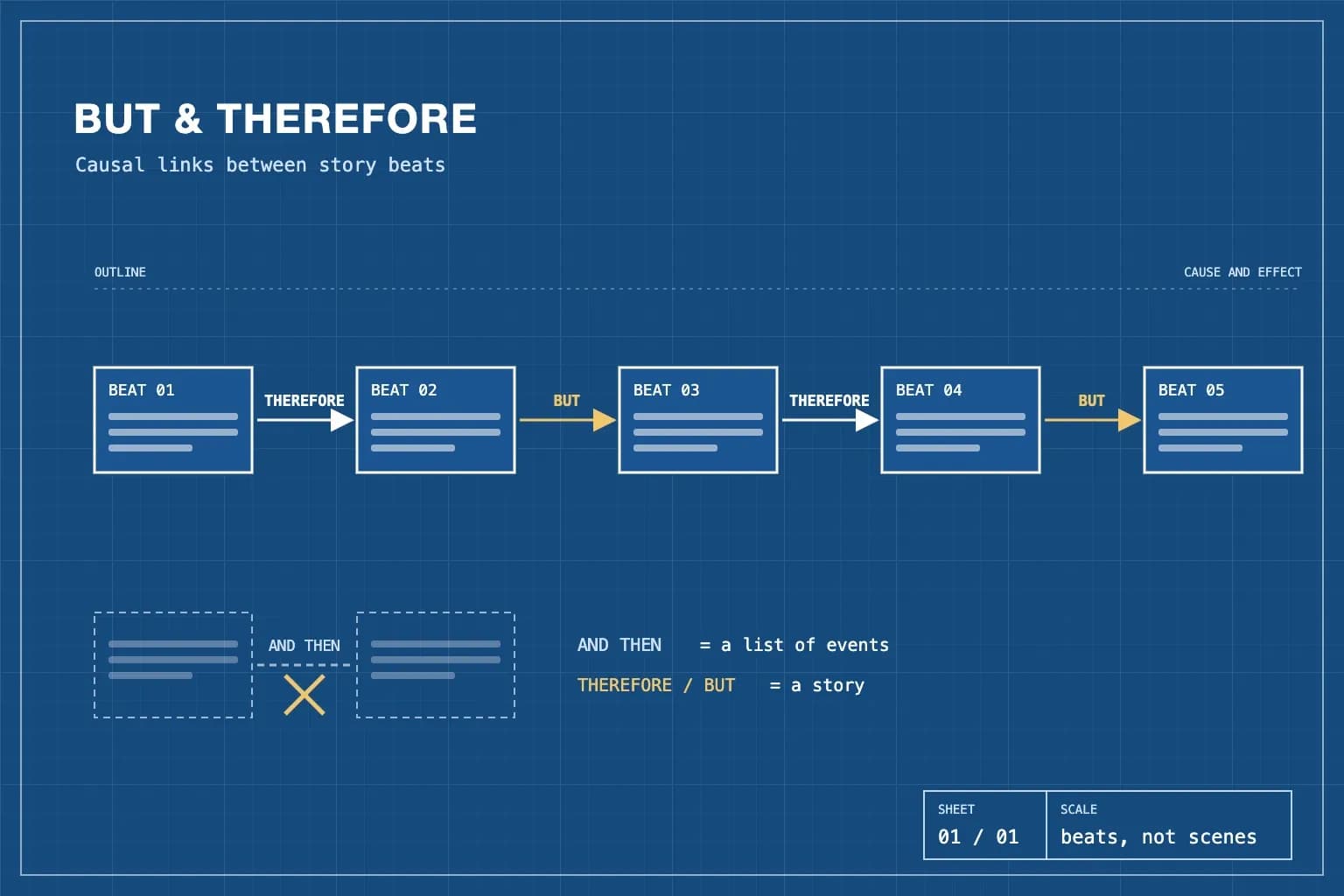
What Is the “But and Therefore” Rule in Screenwriting?
Why some scripts drag even when every scene works, and how Trey Parker and Matt Stone's “therefore or but” test finds the weak joints in an outline.
May 12, 202612 min
Read Spoiler note: this post discusses the endings of Die Hard, Jaws, The Shawshank Redemption, Back to the Future and Parasite.
Chekhov's gun is the storytelling principle that every element you introduce should earn its place: if a story shows a gun in the first act, that gun should be fired before the end. In screenwriting, it means that the objects, skills, lines and details you deliberately point the audience toward are promises, and a good screenplay keeps them. The detail you plant is called the setup; the moment it matters is the payoff.
The principle is named after the Russian playwright and short-story writer Anton Chekhov, who gave this advice to other writers more than once. It is not a law, but it will help you cut what doesn't belong and make your endings feel earned.
Chekhov's gun is a principle of economy and promise. Economy: a story has limited time, especially a feature film of around two hours, so anything that draws attention to itself and never matters is wasted screen time. Promise: when a story lingers on something, the audience assumes it will be important. If it never comes back, they feel cheated.
The "gun" can be anything. A weapon, a watch, a poster, a fear of snakes, a piece of advice. What makes it a Chekhov's gun is not the object but the attention the story pays to it.
Anton Chekhov (1860–1904) wrote plays such as The Seagull, Uncle Vanya and The Cherry Orchard. He returned to the idea in several letters and conversations, which is why it survives in different versions.
That last version is the most useful for screenwriters. Chekhov was not mainly telling writers to add guns. He was telling them to cut the ones that don't go off. Fittingly, The Seagull uses a gun in exactly this way: Treplev shoots a seagull early in the play, and the play ends with a gunshot offstage.
In screenwriting, Chekhov's gun is usually discussed as setup and payoff (sometimes "plant and payoff"). The setup introduces an element; the payoff brings it back at a moment when it matters.
Setups and payoffs are part of what makes scenes feel causally connected. A story where events follow from what came before ("therefore") feels stronger than one where they simply happen one after another ("and then"), the idea behind the but and therefore rule. A planted detail that returns is one of the clearest ways to show that connection.
Payoffs give the audience the pleasure of recognition. When the detail returns, viewers connect it to the moment it was planted, and the story suddenly feels designed rather than improvised.
Setups also protect your ending. A climax resolved by something the audience has never seen feels like cheating, the problem known as deus ex machina. The same solution, planted an hour earlier, feels earned. The difference between a convenient ending and a satisfying one is often a single scene in the first act. That is why so much of the work on how to write an ending actually happens in the opening pages.
The further apart the setup and payoff are, the stronger the effect, as long as the audience still remembers the setup. Many of the best plants happen in the first act, sometimes in the first ten pages, while the audience is still learning the world and accepts information without suspicion.
A good setup is visible but not underlined. The trick is to give the audience a reason to notice the detail that has nothing to do with its later use. A joke or a small conflict draws attention to the element while disguising its purpose.
The best plants belong to the scene for their own sake. In Back to the Future (1985), a woman collecting money to save the town's clock tower hands Marty a flyer. It feels like a comic beat about a nagging stranger, and Marty uses the flyer to write down a phone number. Only later does the flyer's real job appear: it records the exact time lightning struck the tower, which becomes the key to sending Marty home.
Details tied to a character's emotions or habits are easier to remember and harder to spot as plot devices.
The ideal payoff makes the audience think, "Of course." They didn't see it coming, but once it happens, it couldn't have been any other way. In Jaws (1975), Hooper warns that the compressed-air tanks on the boat can explode if mishandled. It plays as a tense exchange between characters who don't trust each other. In the climax, Brody jams a tank into the shark's mouth and shoots it.
A payoff should do something: solve the problem, raise the stakes, turn a scene or reveal character. A planted detail that returns only as a wink to the audience is a callback, not a payoff. The strongest payoffs move the plot.
Some setups pay off in stages: the plant, a twist that changes its meaning, and a final use. In Parasite (2019), Bong Joon-ho's South Korean thriller, a friend gives the Kim family a scholar's rock, a decorative stone said to bring wealth. At first it is a symbol of the family's hopes. Later, Ki-woo carries it into the house's hidden basement, and it is turned against him as a weapon. In the final act he returns it to a stream.
The gun takes many forms. Most fall into three groups.
Dialogue setups work especially well with dramatic irony: when the audience understands the significance of a line that the characters don't, every repetition carries tension.
A red herring is a deliberate exception to Chekhov's gun: a detail the story points to so that the audience draws the wrong conclusion. Mysteries depend on it: viewers expect every highlighted clue to matter, and the writer uses that expectation to misdirect them.
The name of the bishop in The Da Vinci Code, Aringarosa, plays on the Italian for "red herring", a joke on his role as a suspect.
A red herring is not a broken promise if it still pays off in a different way. When the false clue is revealed as false, the audience should feel that they were fooled fairly.
You know what every detail in your draft is for, so setups and payoffs are hard to judge. A checklist helps:
The last point matters more than it seems. Rewrites often break setup and payoff chains, which is one reason rewriting needs a final pass focused only on continuity. An outside read helps too, since a fresh reader catches the setups that feel too obvious and the payoffs that seem to come from nowhere. A structured analysis from Poetika reads the whole screenplay and gives notes on structure, character and plot logic, which is a quick way to spot an ending that leans on something the script never established.
Pick the moment your protagonist wins, loses or solves the central problem. Ask what makes it possible, then find where the audience first learned about it.
If it is planted in the first act, inside a scene that has another reason to exist, you have a Chekhov's gun. If it appears for the first time in the climax, write the setup.
When you want to see how your setups and payoffs read to someone who doesn't know the story, upload your screenplay for an analysis.
In Jaws (1975), Hooper warns that the compressed-air tanks on the boat can explode. The line feels like a passing piece of tension between characters. In the climax, Brody shoves a tank into the shark's mouth and fires at it. The warning is the setup; the explosion is the payoff, and it feels earned because the audience heard the rule first.
They overlap but are not identical. Foreshadowing hints at what will happen, often through mood, imagery or dialogue, and it can be vague. Chekhov's gun is more concrete: a specific element is introduced and must later matter. Every Chekhov's gun foreshadows something, but not every piece of foreshadowing is a Chekhov's gun.
The closest opposite is the red herring, a detail that seems important but deliberately misleads the audience. A broken Chekhov's gun, a setup that is simply forgotten, is also its opposite, but by accident. Deus ex machina is the reverse problem: a payoff that arrives with no setup at all.
Yes, in several forms. A letter from 1889 to the writer Aleksandr Lazarev warns against a loaded rifle on stage that no one means to fire, and memoirs by people who knew Chekhov record similar versions with a pistol or rifle on the wall. The wording varies because he repeated the idea more than once.
No. The rule applies to details the story draws attention to, not to everything on the page. Setting, atmosphere and background characters can exist purely for texture. But if a scene lingers on an object, a skill or a line, the audience will expect it to matter, and you should either pay it off or cut it.
Why some scripts drag even when every scene works, and how Trey Parker and Matt Stone's “therefore or but” test finds the weak joints in an outline.
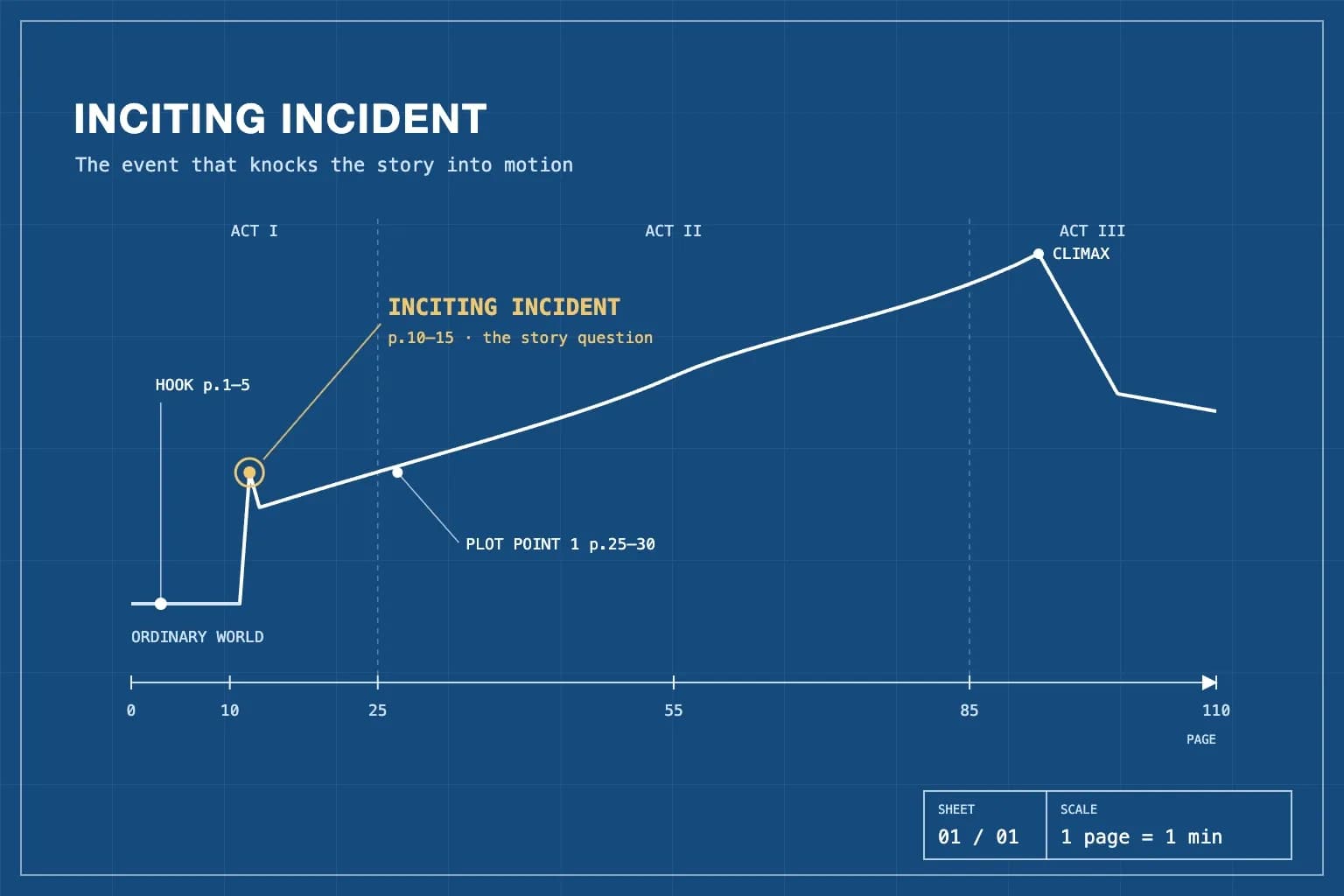
The inciting incident is the event that knocks your protagonist's life off balance and starts the story. Here is what it is, where it goes, and how to write one that works.
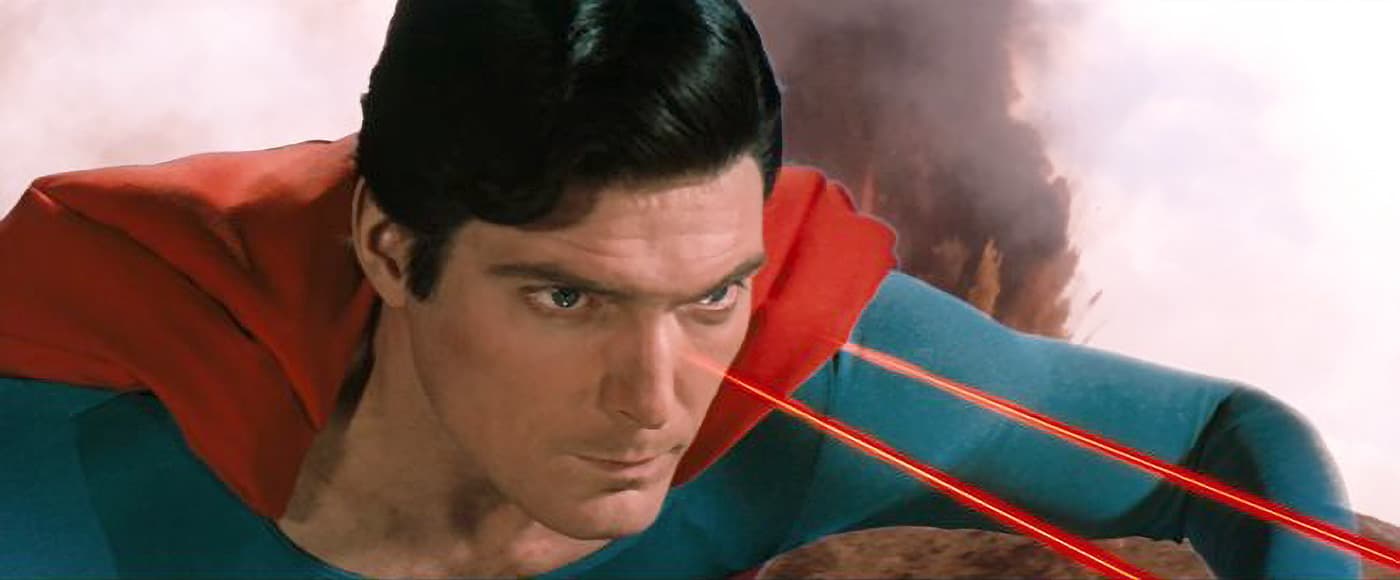
There is a familiar feeling every viewer recognizes, even if they do not have a name for it. A film is nearing its final act. The characters are trapped. The story has tightened itself into a corner. The outcome seems inevitable. And then suddenly something happens. An event, a revelation, a character, or a force arrives from outside the logic of the narrative and resolves what the story itself has not resolved.
Explore a complete sample analysis and understand the feedback format.