Spoiler note: this post discusses key twists and endings of Oedipus Rex, Romeo and Juliet, The Godfather Part II, Breaking Bad, Chinatown and Parasite.
Dramatic irony is a storytelling device in which the audience knows something important that one or more characters do not. Because viewers can see the danger, the secret or the truth before the character can, every line and decision takes on a second meaning: the character acts on what they believe, and the audience watches, unable to warn them, as those actions lead somewhere the character cannot see.
Alfred Hitchcock explained the idea with a famous example in his long interview with François Truffaut. Two people talk at a table and a hidden bomb suddenly explodes: the audience gets a few seconds of surprise. Show the audience the bomb and its timer first, and the same dull conversation becomes unbearable, because everyone wants to warn the characters. Surprise lasts seconds; suspense lasts the whole scene.
This guide explains how dramatic irony works, how it differs from tragic and situational irony, what it looks like in film and TV, and how to write it into your screenplay.
How dramatic irony works
Dramatic irony is built on an information gap. Most screenplays keep the audience roughly level with the protagonist, discovering the story alongside them. Dramatic irony deliberately puts the audience ahead.
That gap usually moves through three stages:
- The plant. The audience learns the secret: the bomb, the lie, the disguise, the killer's identity.
- The stretch. The character keeps acting without that knowledge, so every scene plays on two levels: what the character thinks is happening and what the audience knows.
- The recognition. The character finally learns the truth, or the consequences arrive before they do. This is where the tension built up during the stretch is released, as laughter, horror or grief.
The longer and more carefully the stretch is built, the more the recognition pays off. In that sense dramatic irony is a close relative of Chekhov's gun: the plant is a promise to the audience, and the scene where the secret comes out is the payoff.
Dramatic irony vs. situational and verbal irony
Writers often use the word "irony" loosely, so it helps to separate the main types:
- Dramatic irony: the audience knows something a character doesn't. The irony lies in the gap between what the character believes and what we know.
- Situational irony: an outcome is the opposite of what anyone expected, characters and audience alike. A fire station burns down; a man who spends his life avoiding risk is hit by a falling piano.
- Verbal irony: a character says the opposite of what they mean, usually knowingly, as in sarcasm.
In practice, situational irony gives you a twist; dramatic irony gives you suspense that lasts as long as you hold the gap open.
Dramatic irony vs. tragic irony
Tragic irony is a form of dramatic irony in which the thing the audience knows leads to disaster. In comedy, the secret comes out and everyone survives the embarrassment. In tragedy, the audience knows the character's choices are carrying them toward ruin, and watching becomes helpless witnessing.
The idea goes back to Greek tragedy and to Aristotle's Poetics, which we discuss in our piece on Homer's Odyssey and Aristotle's Poetics. Aristotle described the tragic hero's hamartia, a mistake or flaw in judgment, and two turning points he valued above all: peripeteia, the reversal of fortune, and anagnorisis, the moment of recognition when the hero finally sees the truth. Tragic irony lives in the space before that recognition, where the hero's well-meant choices each bring the catastrophe closer.
Why dramatic irony creates suspense
Suspense needs an audience that cares what happens and fears a particular outcome. Dramatic irony supplies the fear directly: once you show the bomb, the audience knows exactly what to dread.
It also changes the question the audience asks, from "what is going on?" to "when will they find out?", which is far more gripping.
Hitchcock built whole films on this. In Rope (1948), two young men strangle a former classmate, hide the body in a chest and serve their dinner party's buffet on top of it; the audience knows the corpse is there all evening. Hitchcock also showed the technique's limits. In Sabotage (1936), a boy unknowingly carries a bomb across London on a bus, and the film lets it go off. Hitchcock later told Truffaut he considered this a mistake: after so much suspense, the audience expected relief, and killing the boy felt like a betrayal.
The lesson is not that the bomb must never explode, but that dramatic irony creates a strong expectation, and whatever you do with it has to feel earned.
Dramatic irony examples in film and TV
Oedipus Rex: the original blueprint
In Sophocles' tragedy, a plague strikes Thebes, and the oracle says it will end only when the murderer of the former king, Laius, is found. Oedipus vows to hunt the killer down and curses him publicly. The Athenian audience already knew the myth: Oedipus himself killed Laius, his father, and married Jocasta, his mother. Every promise he makes to find the guilty man is a promise to destroy himself.
Romeo and Juliet: the timing of a tragedy
Shakespeare tells the audience from the prologue that the lovers will die. Juliet takes a potion that makes her appear dead, part of Friar Laurence's plan to reunite her with Romeo, but the message explaining the plan never reaches him. Romeo finds her in the tomb, believes she is dead and drinks poison; moments later she wakes, finds him dead and kills herself. The audience knows she is alive throughout the scene, which is what makes it so painful to watch.
Some Like It Hot (1959): irony played for laughs
Billy Wilder's comedy shows that dramatic irony is not only for tragedy: two musicians who witness a gangland massacre in Chicago hide from the mob by disguising themselves as women in an all-female band. The audience knows who they are; the band members do not. Scenes where Sugar confides in "Josephine" about men, or where a millionaire falls for "Daphne", are funny precisely because we know the truth and the other characters don't.
The Godfather Part II (1974): a family embrace
In Francis Ford Coppola's sequel, after learning that his brother Fredo betrayed him, Michael Corleone tells him he is nothing to him now. At their mother's funeral, Michael embraces Fredo, and over Fredo's shoulder exchanges a look with his enforcer Al Neri. Shortly afterwards, Fredo goes fishing on the lake alone with Neri and begins to recite a Hail Mary, the prayer he once told his nephew helps him catch fish. The audience understands what is about to happen; Fredo does not. The film then returns to a family gathering in 1941, and we watch the young brothers together knowing everything that will happen to them.
Breaking Bad: the investigator next door
Vince Gilligan's series (2008–2013) sustains dramatic irony across seasons. DEA agent Hank Schrader spends years hunting the drug manufacturer known as Heisenberg, and regularly discusses the case with his brother-in-law, Walter White, who is Heisenberg. In one scene, Hank reads Walt an inscription to "W.W." in a dead chemist's notes and jokes that it could stand for Walter White. Walt laughs along. The audience waits for the moment Hank finally understands, and it eventually comes, in a bathroom, through a book of poetry.
Parasite (2019): hiding under the table
In Bong Joon-ho's South Korean film, the Kim family has secretly taken jobs in the wealthy Park household. When the Parks return home unexpectedly, three of the Kims hide under the living-room table while the couple lie on the sofa above. Mr. Park talks about the smell of his driver, the Kim father, who is lying a few feet away and hears every word. The audience knows exactly who is listening.
When a film refuses dramatic irony: Chinatown (1974)
Some screenplays deliberately avoid dramatic irony. In Robert Towne's Chinatown, directed by Roman Polanski, the audience stays locked to private detective Jake Gittes' point of view and learns the truth about Evelyn Mulwray and her father only when Jake does. The ending lands as a shock rather than a long-dreaded inevitability. Restricted point of view creates mystery; dramatic irony creates suspense.
Why screenwriters should use dramatic irony over cheap surprises
- Suspense outlasts shock. A twist works once. Dramatic irony works as long as the gap stays open, sometimes for an entire series.
- It gives dialogue subtext. A character who talks about next year, while the audience knows they won't live to see next week, is saying two things at once.
- It deepens empathy. We ache for characters because we can see their blind spots, which is why a recognition scene can be a script's emotional peak.
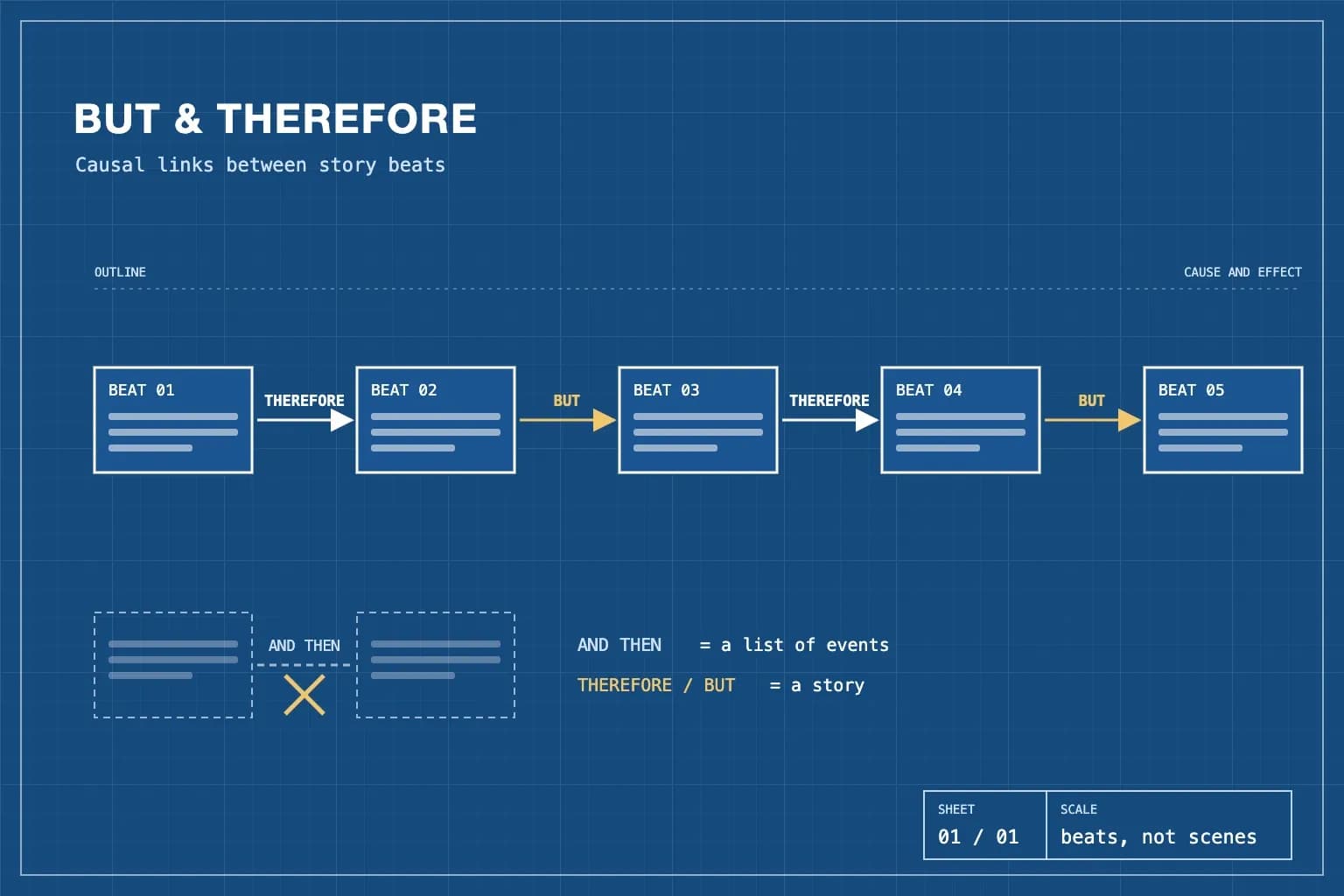
It also strengthens cause and effect: every uninformed choice moves the character closer to the reveal, in line with the "but and therefore" rule, where each scene follows from the one before instead of simply coming after it.
How to write dramatic irony into your screenplay
- Decide what the audience knows, and when. List your story's key secrets and mark the scene where the audience learns each one and the scene where each character does. The distance between them is your stretch.
- Plant the knowledge clearly. Give the secret its own shot, scene or line rather than burying it in a busy moment. If readers miss the plant, the irony that follows reads as confusion.
- Give the character good reasons. If they walk into danger because they are foolish, the audience gets frustrated; if they walk into it because of what they believe, the audience gets anxious, which is what you want.
- Write double-edged dialogue. Look for lines that mean one thing to the speaker and something very different to the audience. Othello repeatedly calls Iago "honest", and every repetition hurts more.
- Keep tightening the stretch. Raise the stakes and bring the character closer to the truth with near misses and almost-discoveries. Planning these moments beat by beat helps you control the rhythm.
- Delay the recognition, then deliver it. Hold the gap as long as the story can bear it, then pay it off. The recognition scene should change the story's direction; a secret that comes out without consequences wastes everything you built.
Readers only feel dramatic irony if the plant is clear and the stakes are obvious, exactly the things writers stop noticing after many drafts. When you run your screenplay through Poetika, you get an outside read of structure, pacing and character that helps you see whether your setups and reveals register.
Common mistakes with dramatic irony
- A muddy plant. If the audience doesn't clearly understand the secret, they can't feel the irony.
- An idiot plot. The gap only lasts because characters ignore obvious clues.
- Nothing new in the stretch. If the audience knows everything from the first scene and nothing is ever added, the tension goes slack. Layer new information as you go.
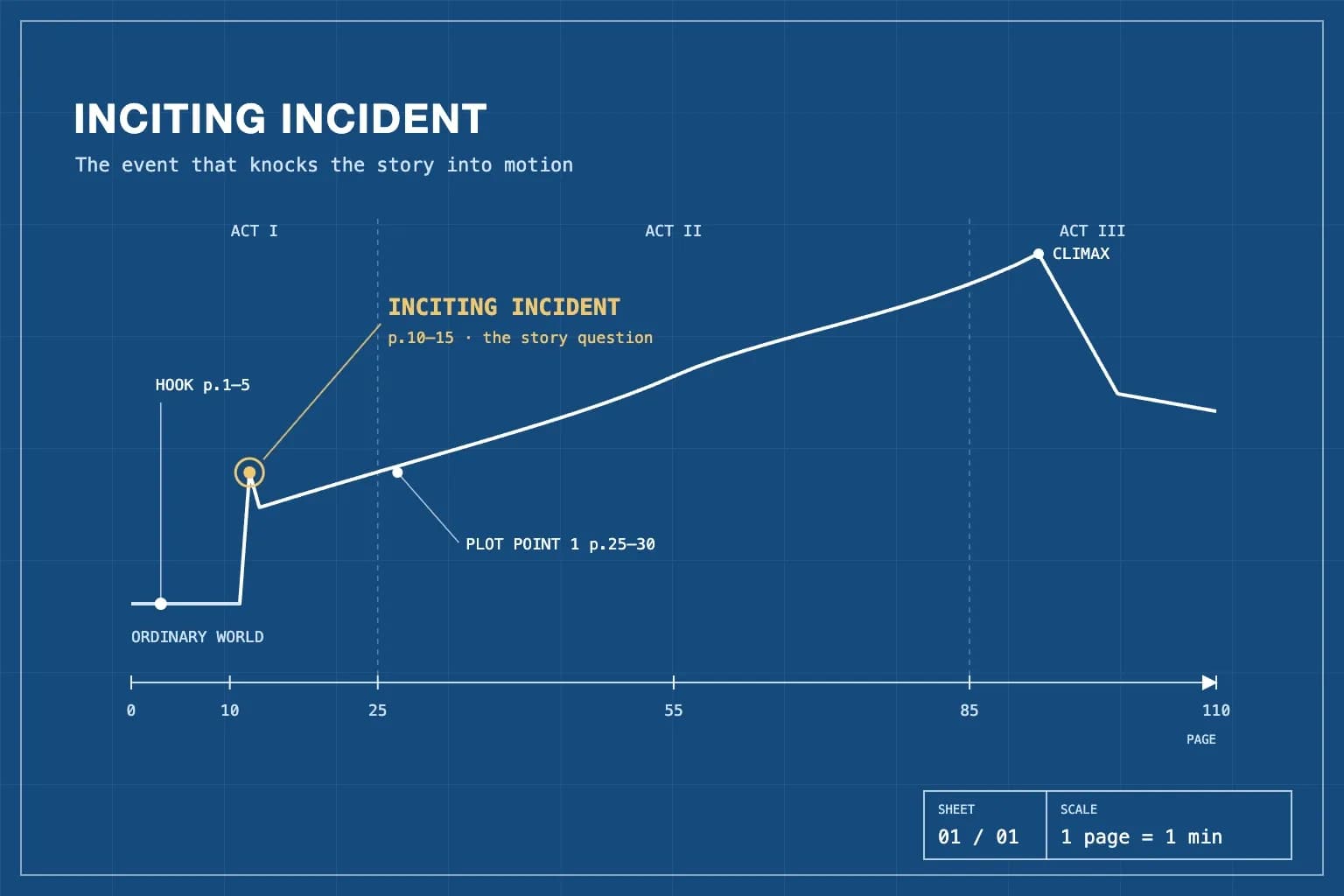
- No payoff. The recognition happens offstage or changes nothing. It should carry the weight of an inciting incident or a climax.
- An ending that cheats. A sudden rescue from nowhere undercuts the dread you built; see why endings are the hardest thing to write.
Checklist: is your dramatic irony working?
- You can name the specific thing the audience knows and the character does not
- The audience learns it clearly, in a scene of its own or a clear moment
- The character's choices make sense from their point of view
- Several lines of dialogue carry a double meaning
- The stakes rise and the character moves closer to the truth over time
- The recognition happens on the page and changes the story's direction
- The ending grows out of the situation rather than out of coincidence
Dramatic irony asks the audience to see the tragedy, or the joke, coming and to stay with it anyway. A surprise shocks for a second; a well-held gap between what we know and what the character knows can stay with an audience long after the film ends. If you want to see how the tension in your own script reads to an outside eye, try Poetika's screenplay analysis.
FAQ
What is a simple example of dramatic irony?
In a horror film, the audience sees the killer hiding in a closet while the character walks into the room, unaware. We know the danger; the character does not. That gap between our knowledge and theirs is dramatic irony, and it turns an ordinary moment of someone entering a room into a scene full of suspense.
What is the difference between dramatic irony and suspense?
Dramatic irony is a technique; suspense is the feeling it often creates. Dramatic irony means the audience knows something a character doesn't. Suspense is the anxious anticipation of what will happen. You can build suspense without dramatic irony, for example with a ticking deadline, but giving the audience a secret is one of the most reliable ways to create it.
Is dramatic irony the same as foreshadowing?
No. Foreshadowing hints at something that will happen later, and the audience may not recognize the hint until afterwards. Dramatic irony means the audience clearly knows something now that a character does not. They often work together: a story can foreshadow an outcome, then reveal the truth to the audience before the characters, turning a hint into dramatic irony.
Can dramatic irony be used in comedy?
Yes, and it is one of comedy's oldest tools. Mistaken identities, disguises and secrets the audience is in on drive films such as Some Like It Hot and Tootsie. The laughter comes from watching characters say and do things that mean something very different to us. Comedy simply releases the tension with embarrassment instead of tragedy.