Script coverage is worth it when you have a complete, revised draft and want an honest outside read before you submit it: a structured report that shows how your screenplay reads to a stranger, what works, what doesn't and what to fix first. It is usually not worth it for a first draft you haven't reread yet, or if you expect a report to sell the script for you. Coverage doesn't make a screenplay better on its own. It tells you where to work, and the rewrite does the rest.
Most writers reach the same wall at some point. You have read your script so many times that you can no longer see it, and the people around you are either too kind or too unfamiliar with screenplays to tell you what is wrong. Coverage exists for that moment. This guide explains what script coverage is, the 15 concrete ways it can improve a screenplay, how to read the notes without losing your nerve, what coverage cannot do, and how to choose the kind that fits your draft.
What is script coverage?
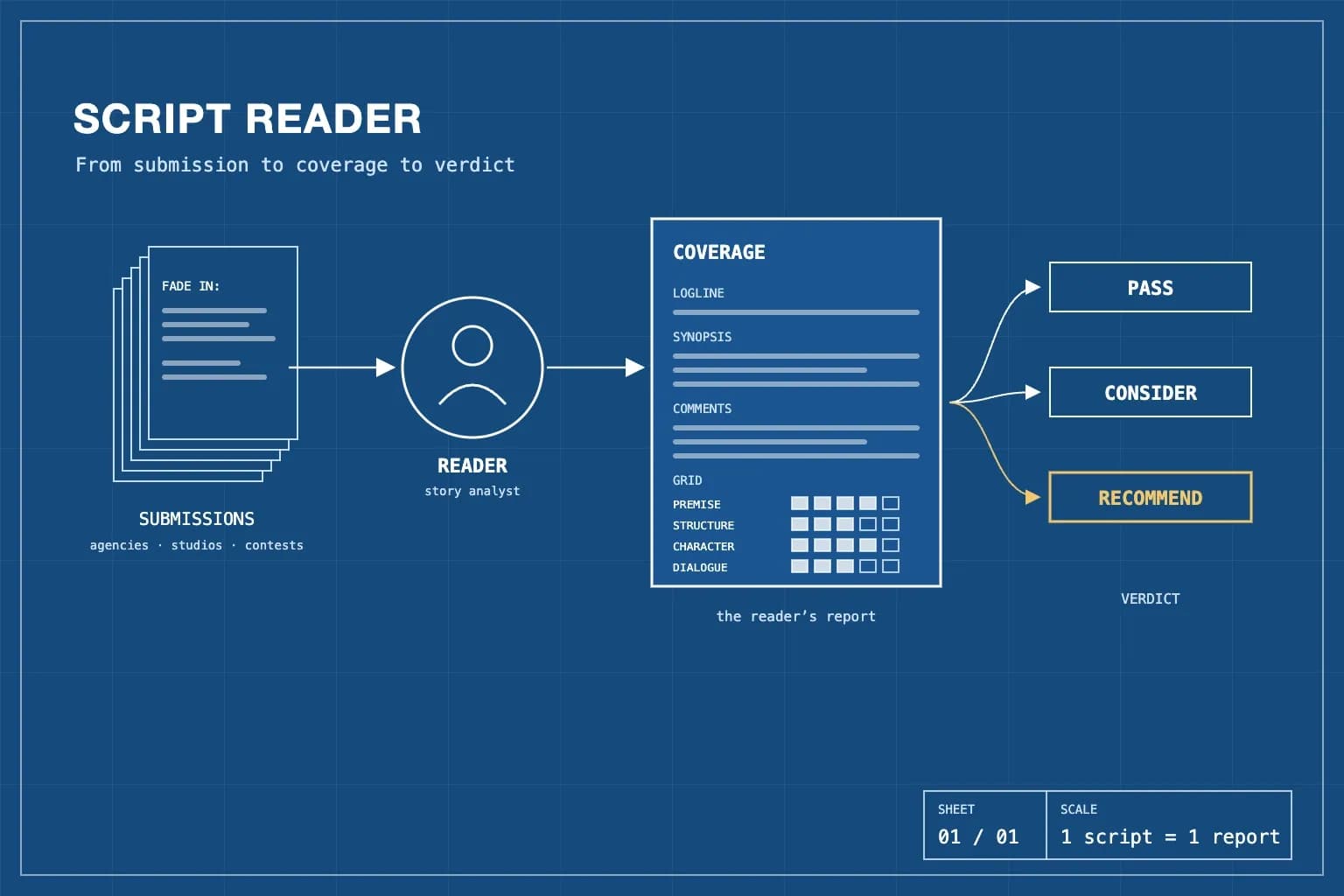
Script coverage is a written evaluation of a screenplay. The term comes from the film industry, where script readers at production companies, agencies and contests "cover" submissions so that busy decision-makers don't have to read every page themselves. A traditional coverage report contains:
- Logline: the story in one or two sentences.
- Synopsis: a summary of the plot from beginning to end.
- Comments: the reader's assessment of premise, structure, character, dialogue, pacing and market potential.
- Grid: ratings for each element, often from poor to excellent.
- Verdict: usually pass, consider or recommend.
When a writer orders coverage, the format stays similar but the purpose changes. Industry coverage helps a company decide; writer-facing coverage helps a writer improve. Some services focus on a verdict, others on detailed development notes. If you want to compare them, read our guide to the different types of script coverage.
Is script coverage worth it? The short answer
Coverage costs money, time or both, so the honest answer depends on where your draft is and what you want from it.
- Usually worth it: you have finished at least one rewrite, you can't see the script clearly any more, and you are about to submit to contests, managers or producers.
- Worth it with care: you are stuck between drafts and need someone to point at the biggest problem, or you want to test whether a premise is strong enough before investing another rewrite.
- Usually not worth it yet: the draft is a first pass you haven't reread, you want praise more than notes, or you hope a good report will open doors by itself.
The 15 benefits below are what coverage can give you when the timing is right.
15 ways script coverage can improve your screenplay
1. It gives you a fresh perspective
After months with a script, you read what you meant rather than what is on the page. A reader meets the story cold, the way every producer and contest judge will. Their confusion, boredom or excitement is information you cannot generate yourself, however carefully you reread.
2. It reveals structural problems
Structure problems are hard to see from inside a draft because each scene feels necessary to the writer. A good report shows where the story actually turns: whether the inciting incident arrives too late, whether the second act repeats the same beat, or whether the climax resolves a different question from the one the opening raised.
3. It clarifies your premise and logline
Every coverage report begins with the reader's own logline. Compare it with yours. If the reader describes a different story, or struggles to describe one at all, the premise is not yet clear on the page. That gap is a direct guide for both the rewrite and how to write a logline that matches the script you actually wrote.
4. It strengthens your protagonist
Among the most common notes in coverage is some version of "the protagonist is passive". Readers look for a character who wants something, makes choices and pays for them. Clarice Starling in The Silence of the Lambs (1991) drives her story by deciding what to trade with Lecter; coverage will tell you whether your lead drives yours or simply watches events unfold.
5. It improves supporting characters
Readers notice when secondary characters exist only to deliver information or agree with the hero. Coverage can flag characters who could be merged, cut or given their own point of view. A strong supporting character, like Captain Renault in Casablanca (1942), has wants of his own that press on the protagonist rather than simply serving him.
6. It sharpens dialogue
Writers tend to hear their dialogue in their own voice, so every character sounds right to them. A reader will point out characters who sound alike, speeches that explain what the audience already knows, and exchanges where people say exactly what they feel. These notes are often the quickest to act on.
7. It fixes pacing and tempo
Pacing is about how the script feels to read, and that is something only a reader can tell you. Coverage often identifies where attention drifted: a long run of scenes without a turn, an opening that takes twenty pages to start, or a third act that rushes the payoff the whole script was building towards.
8. It spots plot holes and inconsistencies
You know your backstory, so you fill gaps without noticing them. A reader does not. Coverage catches the character who knows something they were never told, the timeline that doesn't add up, the rule of the world that changes when the plot needs it to, and the convenient rescue that undercuts the ending.
9. It helps you raise the stakes
"Low stakes" is a note readers give when they don't understand what the protagonist stands to lose, or why it matters. In Jaws (1975), the threat is not only the shark but a mayor who keeps the beaches open for the summer trade; the pressure is personal, public and timed. Coverage tells you whether your stakes come across with the same force.
10. It identifies your genre and target audience
A reader can tell you whether the script reads as the genre you intended. A thriller with long stretches of character drama, or a comedy whose biggest scenes aren't funny, sends mixed signals to buyers. Knowing what genre your film is helps you shape tone and pitch. Mixing genres can work, as Get Out (2017) shows with horror and social satire, but only when the blend feels deliberate.
11. It highlights format and presentation issues
Format won't sell a script, but sloppy format signals inexperience before the story has a chance. Coverage flags inconsistent scene headings, overloaded action lines, camera directions, unusual page counts and typos. These are easy fixes, and readers notice them on the first page. Our guide on why screenplay format matters explains the standards readers expect.
12. It shows how a reader might receive your script
The verdict and grid are a rehearsal for the real thing. A pass from a hired reader is far cheaper than a pass from the producer you hoped to impress, because you can still change the script. Seeing your draft scored element by element shows which parts of it would hold up in a submission pile.
13. It helps you prioritize your rewrite
A draft can have twenty problems, but usually two or three cause most of the others. Good coverage separates foundation issues, such as a weak premise, an unclear goal or a broken second act, from surface issues like dialogue polish. That order matters: fixing lines in a scene you will later cut is wasted work. Our guide to how rewriting makes a screenplay better explains why the big fixes come first.
14. It prepares you for pitching and submission
The reader's logline, synopsis and comments are a preview of how industry people will talk about your script. If the reader sees a different hook from the one you planned to pitch, adjust either the pitch or the script. Many writers also borrow the reader's clearest phrasing when they revise their query letters and summaries.
15. It builds your skills as a writer
The longest-lasting benefit is not one better draft but a better eye. When several reports point to the same habit, such as late openings or on-the-nose dialogue, you start catching it while you write. Over time, coverage teaches you to read your own pages more like a professional reader would.
How to read and use coverage notes
Coverage is only worth what you do with it. A few habits help you get the most out of a report:
- Read it once, then put it away. First reactions to criticism are defensive. Come back a day or two later and read it again with a pen.
- Separate the symptom from the cure. Readers are usually right that something isn't working and less reliable about how to fix it. A note saying "cut the flashback" may really mean "I was confused about when this happened".
- Look for patterns. One reader's taste is an opinion. The same note from two or three readers, or from coverage and a table read, is a problem to solve.
- Sort notes by size. List foundation notes (premise, protagonist, structure), then scene notes, then line notes. Rewrite in that order.
- Keep what serves your story. You are not obliged to take every note. Reject notes that would turn your script into a different film, but be honest about why you are rejecting them.
- Test the rewrite. After revising, get a new read, ideally from someone who hasn't seen the earlier draft.
What script coverage cannot do
Knowing the limits of coverage helps you judge whether it is worth it for you.
- It cannot sell your script. A strong report is useful for your confidence and your rewrite, but buyers rarely care what a paid reader thought.
- It cannot rewrite your script. Coverage points at problems; the solutions still have to come from you.
- It is not an objective score. Readers have tastes, blind spots and genre preferences. Treat any single report as one informed opinion.
- It does not replace a full development relationship. Coverage is usually a single read. Ongoing feedback over several drafts is closer to consulting; we compare these roles in what makes a professional script analysis.
- It cannot fix a script that isn't finished. Coverage of an incomplete draft tells you mostly what you already know.
Choosing the right kind of coverage
Different kinds of coverage suit different stages of a script:
- Industry-style coverage: a logline, synopsis, short comments and a verdict. Best when your script is close to ready and you want to know how a company reader might respond.
- Development notes: longer, more detailed feedback focused on the rewrite rather than the verdict. Best between drafts, when you know something is wrong but not what.
- Consultation: ongoing work with one consultant over several drafts or calls. Best for a project you plan to develop over months.
- AI script analysis: a structured report generated in minutes, which you can repeat after every rewrite. Best for a fast first pass and for checking whether a revision actually fixed the problems you targeted.
These options also work well together. Many writers start with a quick structured read to catch the obvious problems, rewrite, and then spend their human-reader budget on a cleaner draft. When you run your screenplay through Poetika, the report covers logline, synopsis, structure, character, dialogue and market notes, so you can see where a draft stands before you show it to a human reader or submit it anywhere.
Whatever you choose, ask a few questions first: who will read the script and what is their background, what does the report include, can you see a sample, and is the feedback aimed at a verdict or at your rewrite?
FAQ
Is script coverage worth it for beginners?
Yes, once you have finished and revised a complete draft. Beginners often gain the most because coverage names problems they have not learned to see yet, such as passive protagonists or late openings. Coverage of a first draft you haven't reread is less useful; reread and rewrite once yourself before asking someone else to read.
How many times should I get coverage on one script?
There is no fixed number, but one read per major draft is a common rhythm. Getting several reports on the same draft helps you separate one reader's taste from real problems. Getting coverage again after a rewrite shows whether your changes worked, ideally from a reader who has not seen the earlier version.
What is the difference between coverage and notes?
Coverage is a standardized report with a logline, synopsis, comments and usually a verdict, originally written for decision-makers. Notes are feedback written for the writer, focused on how to improve the draft. Many writer-facing services blend the two, so check what a report includes before you order it.
Can a "pass" from coverage still be useful?
Very much. Most scripts get a pass from readers, and the comments explaining why are often more useful than a recommend would be. A pass from a reader you hired costs you little, and it tells you what to fix before a producer, manager or contest judge reads the script and passes for the same reasons.
Does AI script coverage replace a human reader?
Not entirely. AI analysis is fast, consistent and easy to repeat after each rewrite, which makes it useful for early drafts and for checking revisions. A human reader brings taste, industry context and an emotional response. Many writers use AI analysis first and save human readers for a cleaner draft.