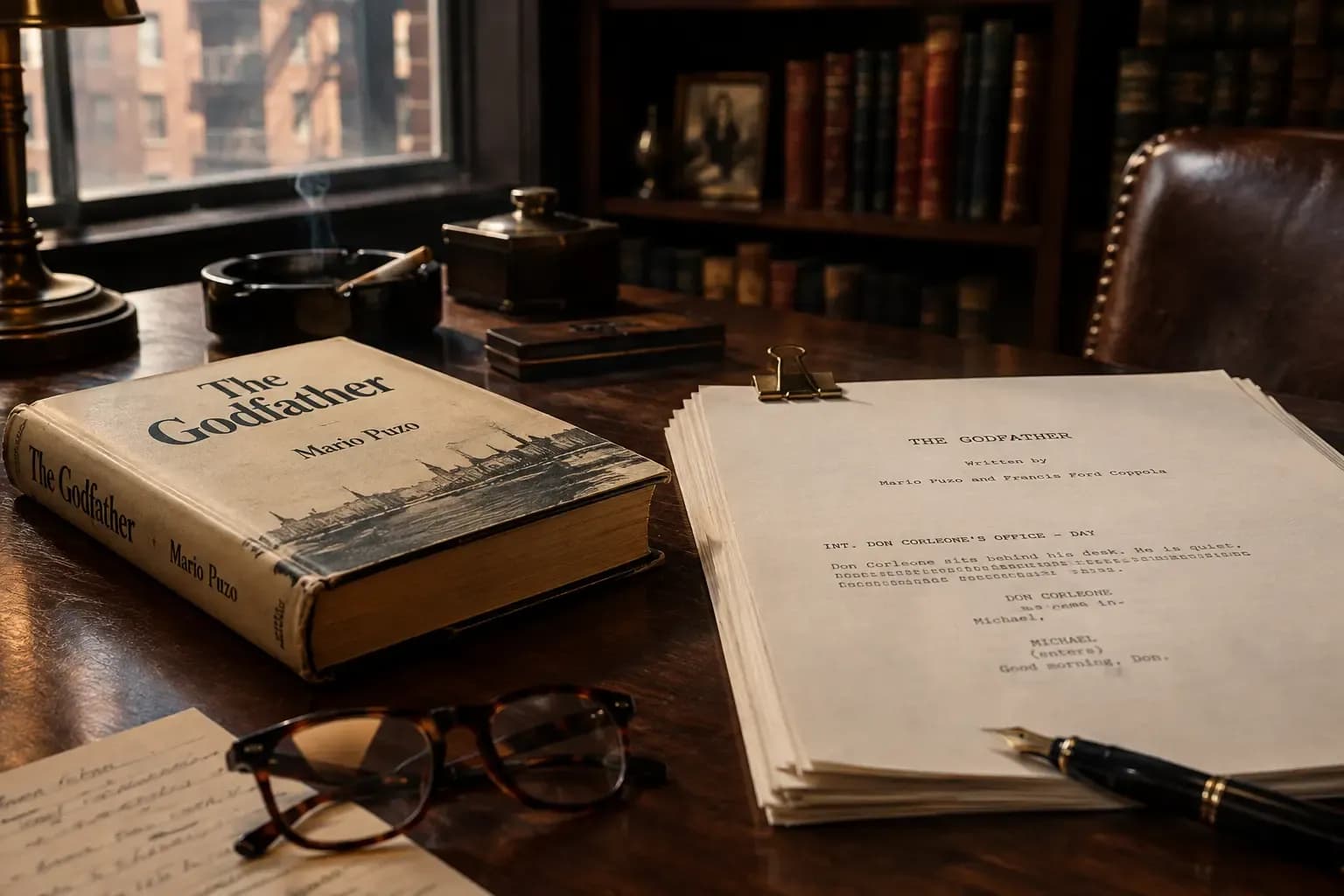
Why a Great Novel Doesn't Always Make a Great Screenplay
A great novel can become a disappointing film. A modest novel can inspire a remarkable one. The difference often lies not in the quality of the original story, but in how the story is told.
Guides on screenwriting, filmmaking, story structure and script analysis.

A great novel can become a disappointing film. A modest novel can inspire a remarkable one. The difference often lies not in the quality of the original story, but in how the story is told.

It is Monday morning. Over the weekend, twelve new scripts arrived. Nine more came in the week before. Somewhere in the inbox are scripts that have been waiting since last month, along with a few that have been there even longer. In two hours, the development meeting starts, and there is still a stack of material that nobody has had time to read.
Ask ten screenwriters what "script coverage" means, and most will give you the same answer: a reader's report that determines whether a screenplay receives a Pass, Consider, or Recommend. They're not wrong. But they're only describing the industry's most familiar form of coverage. Behind the scenes, many other types of coverage quietly influence whether a screenplay gets made, who joins the project, how much it costs to produce, and whether it creates legal or financial risks.

Picture the scene: a writer walks into a producer's office. They have forty seconds. The producer has heard three pitches already this morning, has two more after this, and is thinking about a project that has been in development for eighteen months and still does not have a second act.

There is a moment in Billy Wilder's Double Indemnity when Walter Neff, sitting alone in a darkened office, bleeding out from a gunshot wound, dictates his confession into a recording machine. He knows he is dying. He knows he has been played. And he tells the whole story anyway not because it will save him, but because there is a certain dignity in naming exactly how you destroyed yourself.

A sustainable screenwriting career rarely develops in a straight line. For most writers, there is no single moment when everything changes. There is no guaranteed progression from finishing a screenplay to finding an agent, selling a project, and becoming a full-time writer. Careers tend to develop through a series of smaller opportunities: a strong script that gets read by the right person, a short film that demonstrates a writer's voice, a workshop that leads to a producer relationship, a television sample that opens a new door, or a project that finds funding several years after it was first written.

Most screenwriting books promise the same thing: a better screenplay. They offer structures, principles, checklists, and story models designed to help writers solve narrative problems. What they rarely explain is that each book is built on a different idea of what a screenplay actually is.

Great films are often remembered through their protagonists. We speak of Michael Corleone rather than the structure of The Godfather, Travis Bickle rather than the plot of Taxi Driver, Charles Foster Kane rather than the investigative framework of Citizen Kane. This is not because character is more important than story, but because story is often experienced through character.
Explore a complete sample analysis and understand the feedback format.